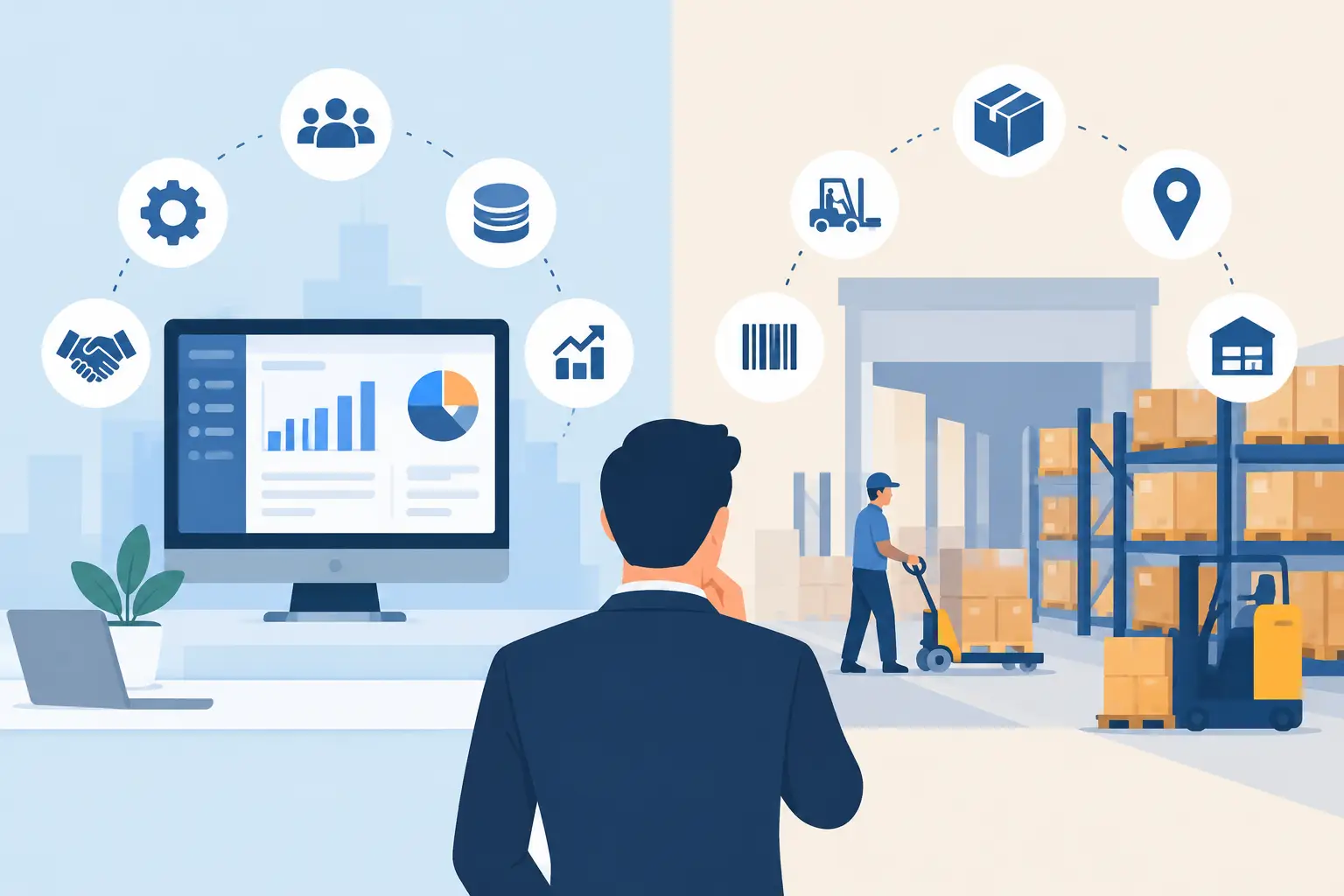
A finance manager closes the month in their accounting package, while the warehouse team counts stock from a spreadsheet, production records sit on a shared drive, and sales staff call around to confirm what can be promised to customers. Each tool may work on its own. Together, they create delays, duplicated data and too many versions of the truth. That is the practical issue behind cloud ERP vs accounting software for growing Australian businesses.
Accounting software is designed to keep the books accurate. Cloud ERP goes further by connecting finance with the operational activity that creates the numbers: purchasing, stock movements, jobs, labour, production, sales, delivery and customer service. Neither is automatically the right choice. The better fit depends on how your business operates, where information breaks down, and what growth needs to look like over the next few years.
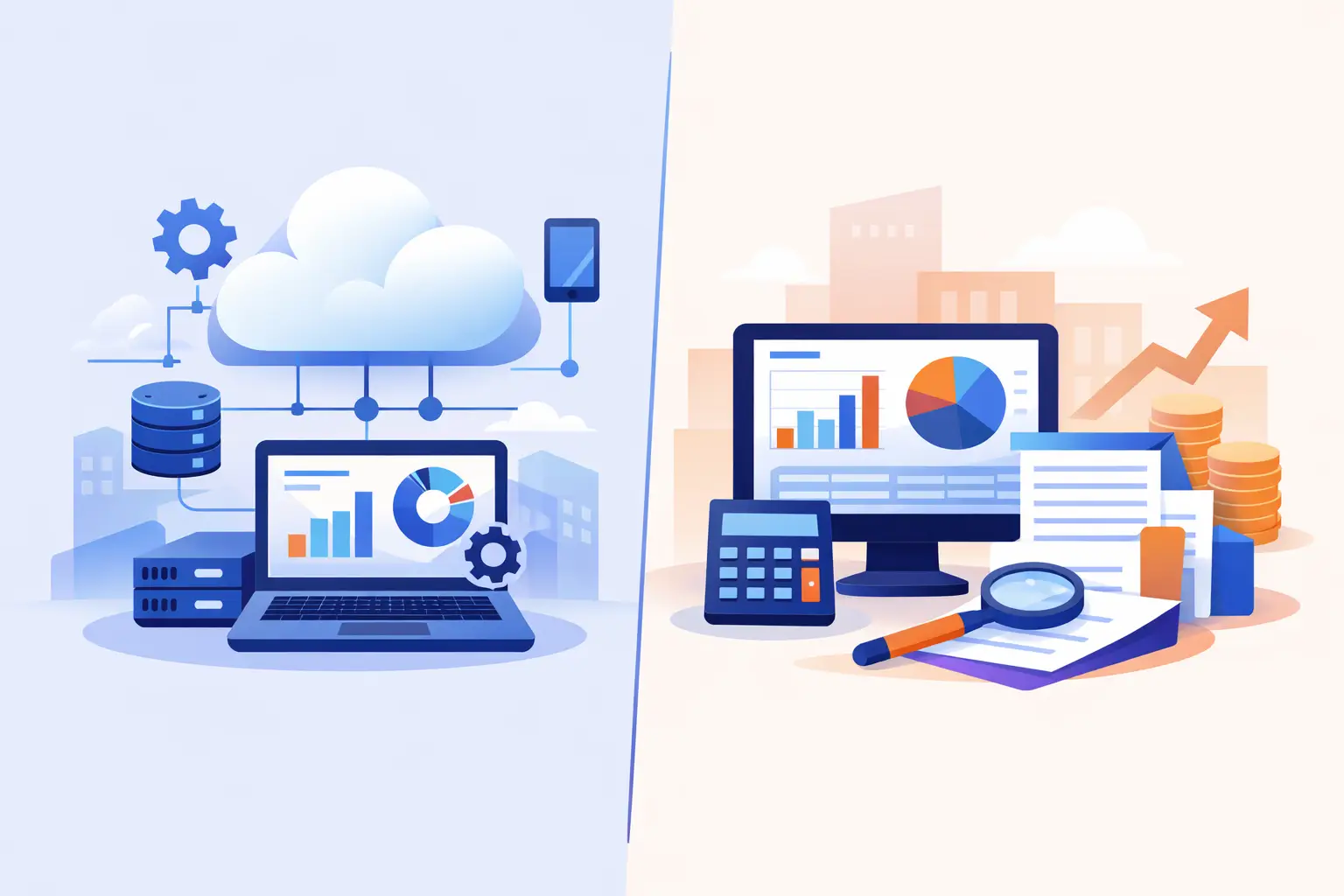
Cloud ERP vs accounting software: the core difference
Accounting software is finance-first. It records transactions, supports invoicing and bills, manages accounts payable and receivable, helps with bank reconciliation, and produces financial reports. For a small professional practice or a straightforward service business, that can be enough. The work is largely completed before it reaches the finance system, so accounting remains the central record.
Cloud ERP is operations-first as well as finance-connected. It uses one shared data environment for the business activities that affect revenue, cost, stock, capacity and profitability. When a purchase order is received, inventory can update. When materials are issued to a work order, production costs can be captured. When a sales order is fulfilled, billing and financial entries can follow the operational event rather than being keyed in later.
This distinction matters most when the business has moving parts. A manufacturer needs to know material availability, machine output, wastage, labour and work in progress. A labour-hire business needs a reliable connection between shifts, approvals, client billing and payroll inputs. A hospitality group needs point-of-sale activity, stock consumption and financial visibility to line up. Accounting software can receive information from these processes, but it rarely manages them as one connected workflow.
A simple way to think about it
Accounting software answers: “What happened financially?”
Cloud ERP also answers: “What is happening operationally, why is it happening, and what should we do next?”
That broader view does not make ERP a replacement for sound financial control. It makes finance more useful because the numbers are linked to the operational drivers behind them.
Where accounting software remains a good fit
A standalone accounting system is often the sensible choice for a business with a limited number of transactions, simple services and little need to manage stock, production or complex job costing. It is usually quicker to start with, easier for a small team to administer and lower in initial cost.
For example, a consulting business with a few staff, straightforward time billing and no physical inventory may only need invoicing, expense management, payroll integration and clear financial reporting. Adding a full ERP too early can introduce unnecessary process and administration.
Accounting software can also work well when specialist applications already run particular functions effectively and data volumes are manageable. The trade-off is the need for integrations, exports or manual checks between systems. That cost is not always obvious at purchase time. It appears later in reconciliation work, missed stock adjustments, reporting delays and staff time spent correcting duplicate records.
The question is not whether accounting software has enough features. It is whether finance is the only area that needs a trusted, current view of the business.
When a cloud ERP becomes the better operational choice
Businesses usually outgrow accounting-led processes in stages. The first signal is often not a finance problem. It may be a warehouse manager maintaining separate stock figures, a production planner relying on whiteboards, or a project manager unable to see committed costs until month-end.
Cloud ERP is worth considering when operational teams need shared controls, not just shared files. Common triggers include multiple locations, growing stock lines, batch or serial traceability, make-to-order production, recurring field activity, complex pricing, project-based delivery or a rising volume of manual hand-offs.
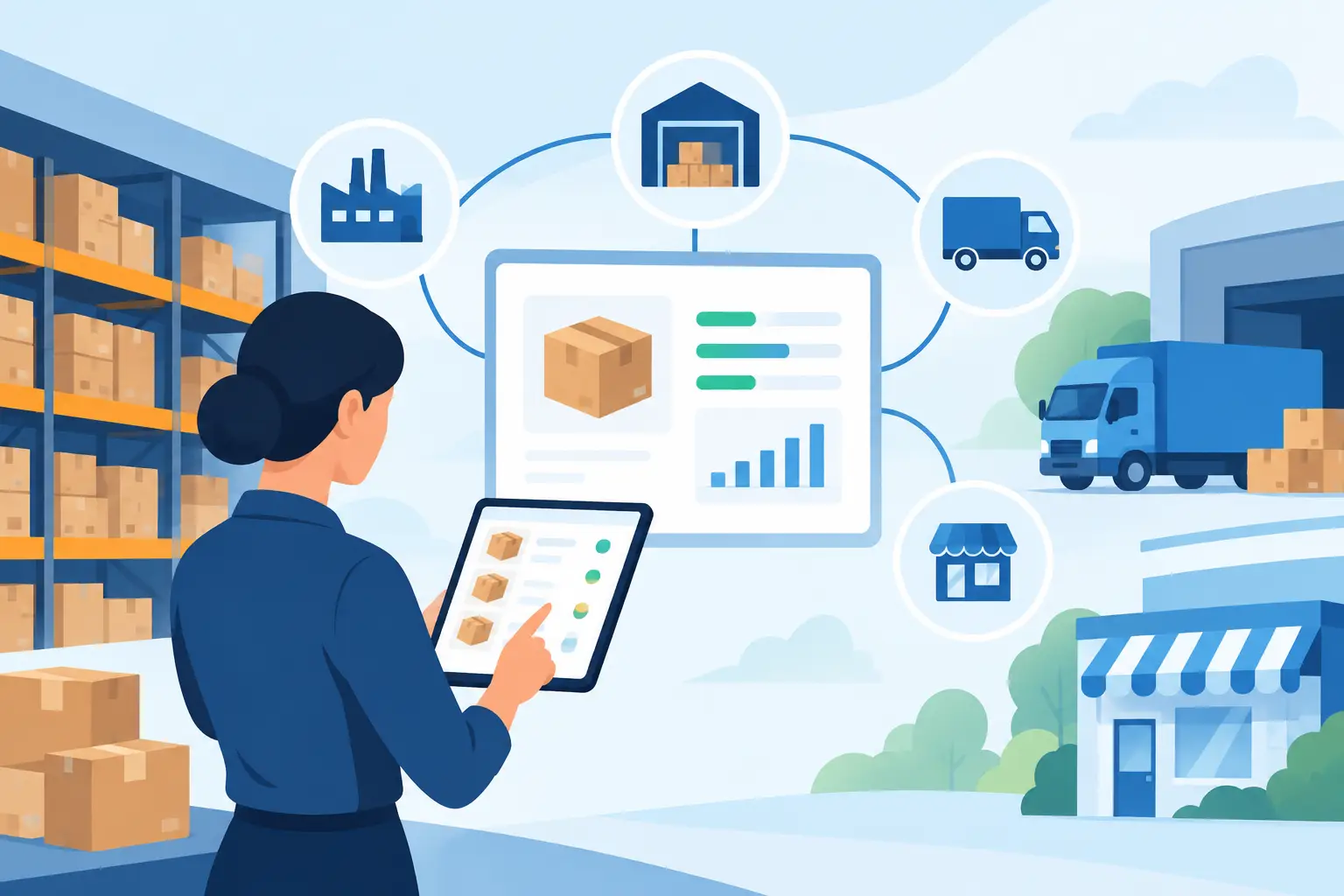
A connected system can bring purchasing, inventory, sales, production planning, billing and financial accounting into one place. This means a business can assess available stock before committing to an order, see purchase commitments against budgets, track job margins while work is underway, and review performance without waiting for an end-of-month export.
For industries with physical processes, the opportunity is larger still. ERP can be configured around manufacturing routings, plantation harvesting, leather tannery processing, garment washing cycles or warehouse movements. Machine and PLC data can also be brought into the operational picture where appropriate, helping teams compare planned output with actual production activity. That level of visibility is beyond the intended role of a general accounting platform.
Compare the decision across daily work, not feature lists
Feature lists can make both products look similar. A more useful comparison is to follow a real order or job through the business.
Take a distributor receiving an urgent customer order. In an accounting-only environment, staff may check stock in a separate system, email purchasing for confirmation, prepare a delivery document, then raise an invoice once dispatch is confirmed. Each step can be handled, but the information often travels between people and systems.
With cloud ERP, the sales order, stock allocation, purchase requirement, warehouse pick, dispatch and invoice can form a connected process. Management can see the order status and expected margin while the work is in progress. The benefit is not simply speed. It is control over commitments, exceptions and customer promises.
The same applies to production. Accounting software can record the finished financial result, but an ERP can support bills of materials, work orders, production scheduling, material consumption, quality checkpoints and work-in-progress tracking. For a manager deciding whether to take a large order, that information is more valuable before production starts than after the ledger is closed.
Cost is broader than the subscription price
Cloud ERP generally requires more planning than accounting software. Processes need to be mapped, master data cleaned, approvals agreed and users trained. Custom industry workflows, legacy data migration and integration requirements can all affect implementation cost and timing.
That effort is justified when it replaces a genuine operational burden. If teams spend hours each week reconciling stock, re-entering invoices, chasing timesheets, checking production records or building reports in spreadsheets, the current cost is already real. It is simply spread across wages, delays, errors and lost management attention.
A good business case should consider both sides. Include subscription and implementation costs, but also measure manual effort, inventory variance, delayed invoicing, write-offs, missed purchasing opportunities and poor visibility of job profitability. For many mid-sized firms, the strongest return comes from fewer workarounds and better decisions rather than one dramatic automation.
It also pays to avoid buying an oversized system for problems that do not exist. A modular cloud ERP approach can let a business begin with finance, sales and inventory, then add production, projects, point of sale, labour hire functions or sector-specific workflows as operations mature. Configuration should support the way the business needs to run, without turning every existing workaround into a permanent software rule.
Reporting, AI and governance change the value equation
Accounting reports are essential, but they are typically backward-looking. ERP reporting can combine financial and operational measures: stock turns beside cash commitments, production output beside material costs, labour utilisation beside project margin, or sales performance beside fulfilment capacity.
With Power BI analytics, teams can build role-specific views for owners, finance, warehouse leaders and production managers without relying on a monthly spreadsheet pack. AI-enabled tools can further assist with routine queries, document handling, forecasting support and voice-based access to operational information. These tools are most useful when the underlying data is connected and governed properly. AI cannot correct a fragmented process that records the same product, customer or job differently in four systems.
Security and accountability also deserve attention. As more departments operate from one platform, access controls, audit trails, backups and managed security become part of the ERP decision. Cloud systems can provide strong control, but only when roles, approvals and data ownership are designed deliberately. The goal is not to give everyone access to everything. It is to give each team timely access to the information required for their work.
Choosing the right next step
Choose accounting software when your operation is simple, finance is the main system of record and staff are not spending significant time joining data across disconnected tools. Choose cloud ERP when daily operations depend on connected inventory, jobs, production, labour, purchasing, sales and reporting.
For businesses in manufacturing, trading, warehousing, hospitality, plantations or labour hire, the decision often becomes clear by looking at one question: can you see the financial and operational position of a customer order, job or production run without asking several people to update a spreadsheet?
OneBusiness is designed for organisations that need that connected view, with configurable industry workflows, operational modules, analytics and managed implementation support. The right starting point is a practical process review: identify where information is re-entered, where approvals stall, and which decisions are currently made with incomplete data. Those pressure points will show whether a better accounting tool is enough, or whether a connected operating platform will give the business more control and confidence.