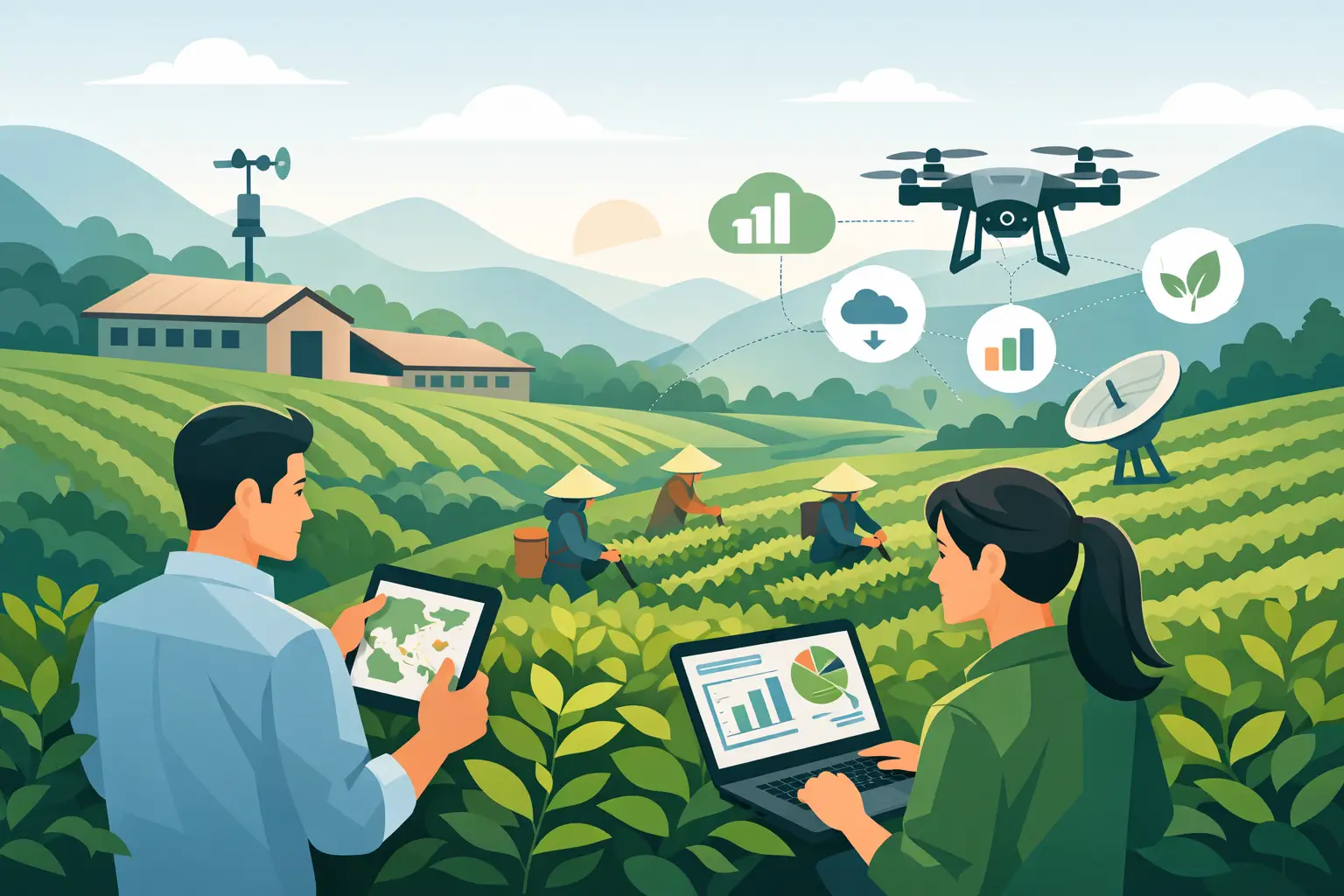
A tea estate can record a strong plucking day and still lose margin before the leaf reaches the buyer. Labour hours may sit in one spreadsheet, field collection in another, factory production records on paper, and dispatch figures in an accounting system that does not reflect actual stock. Plantation management software for tea brings those operational records together, so managers can see what happened from block to finished tea – and act on it while it still matters.
For tea businesses, the value is not simply replacing paper forms. It is creating a reliable operating picture across the estate, collection points, factory, warehouse and finance team. That picture supports better daily decisions: where to deploy workers, whether green leaf quality is holding, which production batches are profitable, and whether finished-goods inventory matches sales commitments.
What tea plantation software needs to connect
Tea operations have a long chain of dependencies. Weather affects plucking volume. Field conditions affect quality. Labour availability affects collection timing. Collection timing affects leaf condition at the factory. Factory throughput, fuel or power use, packaging availability and order schedules then affect the final margin.
When each team uses a separate system, managers spend too much time reconciling records. A supervisor may know the kilos collected by a plucking gang, while finance only sees payroll totals. The factory may have production yields by shift, but no easy way to compare them with green leaf received from a particular estate or division. Warehouse staff may count finished tea correctly, yet sales can still promise stock that has been allocated elsewhere.
A connected platform should link field activity, labour, production, inventory, sales and financial accounting in one place. That does not mean every operation needs the same level of complexity. A smaller estate may begin with harvest, attendance, stock and invoicing. A multi-estate operation with its own factory may need production recipes, quality checkpoints, machine connectivity, batch traceability and detailed cost allocation.
The right level depends on the size of the operation, export requirements, processing model and reporting obligations. The principle remains the same: each transaction should be captured once, then used by the people who need it.
Plantation management software for tea across the crop cycle
From field rounds to leaf collection
The daily work begins in the field. Supervisors need to plan plucking rounds by section, monitor attendance, assign teams and record green leaf weights. Mobile-friendly data entry matters here, particularly where supervisors are working across large areas with limited time at a desk.
A useful system can record the estate, division, block, worker or team, collection point, date and quantity. It should also allow notes on leaf quality, weather conditions or rejected material where those measures are part of the estate process. This creates a clearer basis for labour payment, productivity analysis and field performance reviews.
The practical benefit is accountability without creating extra administration. If a block is underperforming, management can compare yield, labour input, prior harvest patterns and available field observations rather than relying on a delayed monthly report.
Factory intake, processing and quality control
Once green leaf reaches the factory, traceability becomes more valuable. The business should be able to record intake by source and time, then follow material through withering, rolling, fermentation or oxidation, drying, sorting, grading and packing. The exact workflow will vary by tea type and factory configuration, so configurable production stages are preferable to a rigid template.
Production planning should account for available leaf, machine capacity, expected yield, packaging materials and customer demand. Recording actual output against planned output helps factory teams identify recurring losses, bottlenecks and downtime.
Quality checks need to sit within the process, not in a separate notebook that is never reconciled with stock. Moisture readings, grade results, tasting outcomes, contamination checks and rework decisions can be attached to batches. If a buyer raises a quality query, the business can trace the relevant finished lot back through processing records and, where required, to its field source.
Warehouse, sales and export readiness
Tea is sold by grade, packing format, batch and customer specification. Warehouse control therefore needs more than a single finished-goods quantity. It should show what is on hand, what has passed quality release, what is reserved for orders, what is in transit and what is approaching a storage or dispatch threshold.
Integrated sales and billing records reduce the risk of quoting stock that does not exist or invoicing a shipment with the wrong product grade. For businesses supplying domestic channels and export customers, the system should also support the documentation and commercial records needed for each shipment. The goal is not more paperwork. It is fewer handoffs between warehouse, sales and finance.
The features that make a measurable difference
Many software products can record inventory or issue invoices. Tea operations benefit when the platform handles the conditions that create cost and risk on the ground. When evaluating options, look for capabilities that support these five areas:
- Field and harvest records by estate, division, block, worker, team and collection point.
- Labour hire, attendance, wage inputs and productivity measures connected to harvest outcomes.
- Batch-based production planning, quality controls, yield tracking and finished-tea traceability.
- Inventory control for green leaf inputs, packaging, spare parts, finished grades and dispatch allocations.
- Financial accounting and cost reporting that connect operational activity to margin, not just general ledger balances.
Cloud access is also significant for geographically distributed estates. Managers, factory teams, warehouse staff and finance personnel can work from the same current data rather than circulate different versions of a spreadsheet. Role-based permissions allow each person to see and enter what is relevant to their job without exposing sensitive payroll, pricing or financial information unnecessarily.
Turning operational data into better decisions
The strongest reason to adopt an integrated system is not data collection. It is the ability to ask better questions and receive answers before the reporting period has closed.
For example, a manager may want to compare green leaf yield per hectare against labour hours by block. A factory manager may need to review output yield by shift, machine, season or input source. Finance may want a current cost view that includes labour, packaging, utilities, production overheads and stock movement. Sales may need to understand which grades are available to fulfil a new order without compromising existing allocations.
Dashboards built with tools such as Power BI can make these measures accessible without asking users to interpret raw transaction tables. The dashboard design should be disciplined, however. Too many charts create noise. A useful operational dashboard focuses on exceptions: yield below target, material variances, unplanned downtime, low packaging stock, overdue receivables or orders at risk.
AI can assist with forecasting harvest volumes, identifying unusual yield patterns and handling routine user queries through voice-enabled assistance. It should support human judgement rather than replace it. Seasonal conditions, local knowledge and quality decisions remain critical inputs in tea production.
For factories with automated equipment, PLC and machine data integration can provide another layer of visibility. Machine run time, temperatures, energy consumption, stoppages and output can be aligned with production batches. This is particularly useful where management is trying to reduce avoidable downtime, improve consistency or understand the cost of energy-intensive processing stages.
Choosing a system without overbuying
A common mistake is selecting software based on a feature checklist without examining the daily workflow. Start by mapping how information currently moves from the field to the factory, warehouse, sales team and accounts office. Identify where figures are re-entered, where approvals slow work down and where stock or cost information becomes unreliable.
Then ask implementation-focused questions. Can the system handle your existing tea grades, estates, collection points and production stages? Can it be configured for your payroll or labour arrangements? Will users be able to enter records from mobile devices? Can historical data be imported cleanly? Does the provider offer support during the seasonal pressure points that matter most to the business?
Customisation is worthwhile when it reflects a real operating advantage, such as a specialised intake process, distinctive quality grading method or equipment integration. It becomes costly when it simply recreates every old spreadsheet habit. Good implementation partners challenge unnecessary complexity while preserving the controls that make the business work.
Security and data ownership should also be considered early. Cloud software needs proper user access controls, backups, monitoring and a clear process for managing devices and permissions. For growing businesses, managed cybersecurity services can be as valuable as the application features themselves.
A practical path to implementation
Tea estates do not need to digitise every process on day one. A staged rollout is often safer. Begin with the transactions that create the greatest visibility gap, such as green leaf collection, labour records, factory batch tracking or finished-goods inventory. Validate the data structure, train supervisors and resolve exceptions before expanding into deeper costing, dashboards and machine integration.
OneBusiness can be configured around these linked workflows, combining ERP modules for finance, inventory, production, sales and labour with analytics and industry-specific operational controls. The objective is a practical system that teams will use each day, not a technology project that sits beside the operation.
The best outcome is a calmer operation: field teams know what to record, factory managers can see what is arriving and what is being produced, warehouse staff can trust stock positions, and finance can report from the same source of truth. When the next harvest day brings pressure, the business has information ready to support a confident decision.