A production line can be running at full speed while its most useful information is trapped inside a PLC, machine controller or operator logbook. Finance sees material costs after the shift. The warehouse sees stock movements later. Production managers are left reconciling output, downtime and waste from separate sources. This industrial IoT data guide explains how to turn those machine signals into usable operational information, without creating another disconnected system.
For manufacturers, processors, warehouses and plantations, industrial IoT is not simply about fitting more sensors. The value comes from connecting trusted data to the decisions people already make: what to produce, when to service an asset, how much material to buy, whether a batch meets specification, and where margin is being lost.
What industrial IoT data actually includes
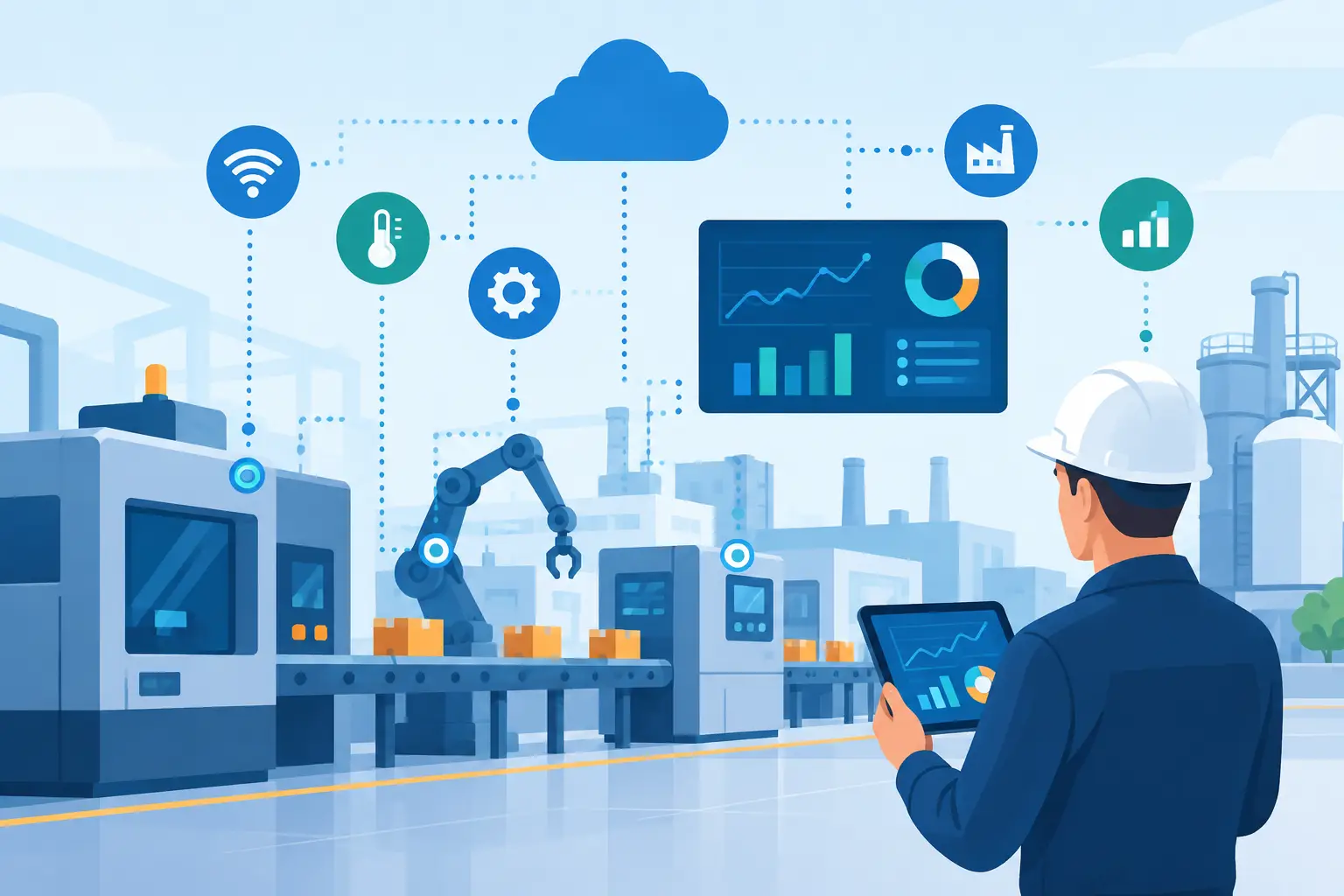
Industrial IoT data is information generated by connected physical equipment. It can come from PLCs, sensors, industrial machines, smart meters, vehicle trackers, weighbridges, refrigeration systems, scanners and environmental monitoring devices. Depending on the operation, this may include machine run hours, cycle counts, temperature, pressure, energy use, vibration, moisture, speed, output quantity and fault codes.
Raw data on its own rarely helps a manager. A temperature reading matters when it is tied to a batch, storage location, production order or quality threshold. A machine stop matters when it is assigned a reason code and linked to labour, planned output and maintenance history. The aim is to give data business context, so it can support action rather than sit in a dashboard no one checks.
A garment washing facility, for example, may collect water temperature, wash-cycle duration and chemical dosing data. When those readings connect to production orders and recipe records, supervisors can investigate inconsistent finishes, control chemical consumption and demonstrate process traceability. The same principle applies to a packaging line, a tannery drum, a cold room or an agricultural pump.
Start with decisions, not devices
The most common industrial IoT mistake is buying hardware before defining the operational problem. A business may capture thousands of readings every minute, then discover it has no agreed process for using them. Begin with the decisions that currently rely on guesswork, delayed reports or manual records.
For many operations, the first priority is one of three areas: production visibility, asset reliability or resource control. Production visibility focuses on actual output, cycle time, stoppages and rejects. Asset reliability focuses on run hours, faults and maintenance triggers. Resource control tracks inputs such as energy, water, fuel, chemicals or raw materials against output.
Choose a small number of measures that can change an operational outcome. If a filling line regularly misses its planned quantity, measure actual count, speed and downtime by cause. If cold-storage energy costs are rising, measure consumption by unit and compare it with temperature, loading and operating hours. Clear use cases make it easier to justify the work and prevent data collection becoming an expensive science project.
Define the operational event
An event is a meaningful occurrence, not every signal received from a machine. Examples include a production order starting, a machine stopping for more than five minutes, a temperature moving outside a permitted range, or a pump reaching a service threshold.
For each event, define who needs to know, what should happen next and where the result should be recorded. A fault alert may create a maintenance request. A completed production count may update work-in-progress and finished-goods stock. An out-of-range quality reading may place a batch on hold until it is reviewed. This is where machine connectivity becomes part of a controlled business process.
Connect machine data to ERP records
The strongest industrial IoT programmes connect shop-floor information with the ERP records that run the business. That includes items, bills of materials, production orders, assets, warehouse locations, employees, jobs, customers and financial accounts.
Without this connection, a dashboard might show that a machine produced 8,200 units, but it cannot reliably show which order used the time, which batch consumed the material or whether the job remained profitable. With the right data model, production counts can support inventory updates, material consumption, labour reporting, quality checks and cost analysis.
Integration does not mean every sensor must write directly into accounting. That would create noise and risk. A better approach is to collect machine data through an industrial gateway or integration layer, validate it, then send approved events into relevant ERP workflows. The ERP remains the business system of record, while the industrial layer handles high-frequency device communication.
This separation also makes scale more manageable. A business can begin by integrating a single machine or line, prove the value, then add assets and sites without redesigning its finance and inventory processes each time.
Make data trustworthy before making it visible
Real-time insights only help if users trust them. In industrial environments, poor data quality can come from failed sensors, incorrect machine tags, lost network connections, duplicate records and inconsistent shift practices. A dashboard cannot fix those problems after the fact.
Set practical rules for data ownership. Operations should own the meaning of production states and downtime reasons. Maintenance should own asset structures, service rules and fault classifications. Finance should agree how machine-derived activity affects stock, costs and revenue recognition. IT or a technology partner should manage integration, access, monitoring and security.
Data should also be checked against physical reality. If a line reports 10,000 units produced but the warehouse receives 9,300, the difference needs an agreed explanation: scrap, rework, samples, scanner error or an incorrectly configured counter. Regular reconciliation builds confidence and identifies where workflows need adjustment.
Use sensible retention and reporting rules
High-frequency sensor readings can grow quickly. Not every second-by-second record needs to live forever in the ERP. Keep detailed source data where it can be analysed when required, while storing summarised events and transactions in the systems daily users rely on.
For example, vibration readings may support a maintenance model in an industrial data platform, while the ERP stores the resulting service alert, work order and parts consumed. Power BI can then combine production, stock, cost and machine-event data into reports suited to supervisors, managers and owners.
Design alerts for action, not distraction
A useful alert has an owner, a threshold and a response. A warning that a machine is running hot is only valuable if someone knows whether to inspect it immediately, reduce load, schedule service or continue monitoring. Sending every exception to every manager leads to alert fatigue and missed issues.
Use different levels of urgency. A safety or product-quality limit may require an immediate stop and escalation. A rising energy trend may belong in a daily review. A maintenance trigger might create a planned job for the next available window. The right response depends on the asset, the process and the cost of interruption.
It also depends on the maturity of the operation. A business with paper-based maintenance records may gain more from basic run-hour alerts than from advanced predictive models. AI and machine learning can identify patterns in faults, quality variation or consumption, but they need reliable history and consistent operating data to be useful.
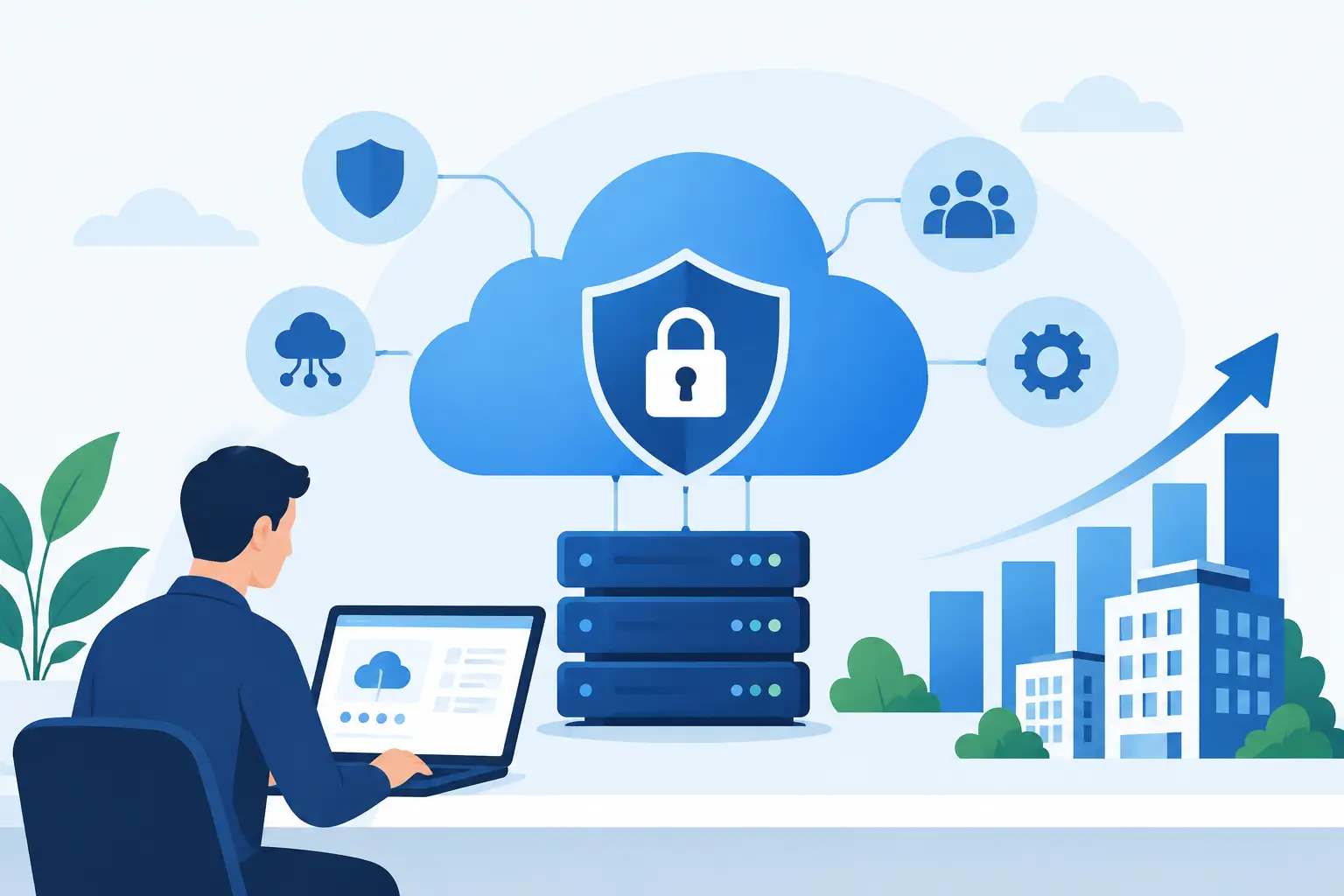
Secure the connection between operations and cloud systems
Industrial connectivity expands the attack surface of a business. PLCs and older equipment were often designed for isolated environments, not direct exposure to cloud services. Security must therefore be considered from the first design discussion.
Use network segmentation to separate operational technology from standard office systems. Restrict access by role, use encrypted communications where supported, maintain asset inventories and apply vendor updates through a controlled process. Remote support should be authorised, logged and limited to the systems required.
Equally important, plan for interruptions. Machines must keep operating safely if a cloud connection drops. Gateways should handle temporary buffering where appropriate, and staff need clear fallback procedures for recording critical production and quality information. Availability matters, but safety and continuity come first.
A practical rollout for industrial IoT data
A staged rollout reduces risk and gives teams time to improve the process. Start with one high-value asset, line or site where the problem is visible and the operational owner is engaged. Establish a baseline before making changes, including current output, downtime, scrap, energy use or maintenance cost.
Then connect the data, define events and test them with real operators. Confirm that machine counts match physical counts, that alerts reach the right person and that ERP transactions reflect the actual workflow. Review results after several production cycles rather than judging the project on its first day.
Once the initial use case works, standardise naming, integration patterns, security controls and reporting measures before expanding. OneBusiness can support this approach by bringing PLC and machine connectivity into the same cloud platform used for production planning, inventory, financial accounting and operational reporting.
The best industrial IoT data programmes make work clearer for the people closest to the operation. When machine activity, material movement, labour, quality and cost are visible in one connected process, leaders can act earlier and teams can run each shift with greater control and confidence.