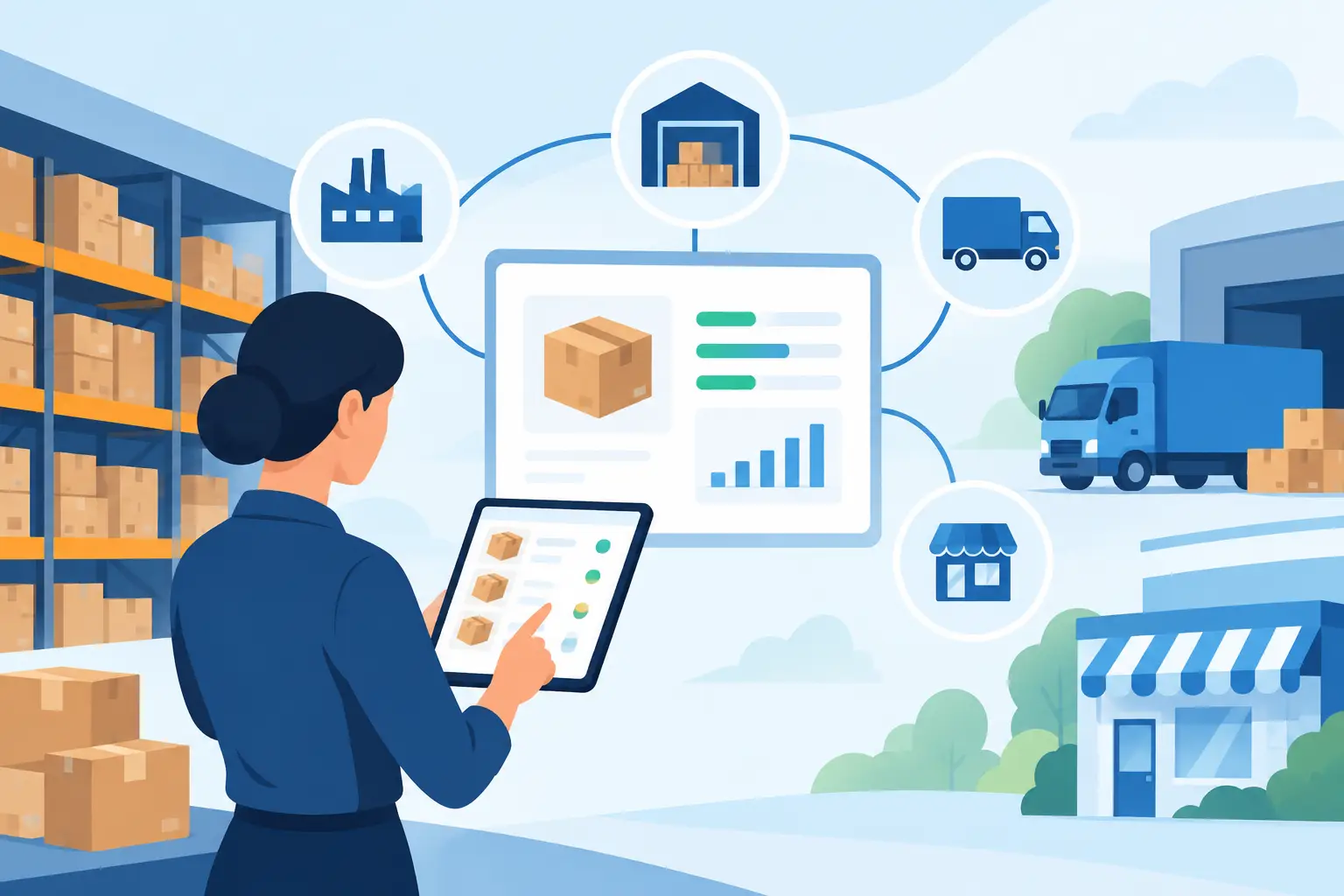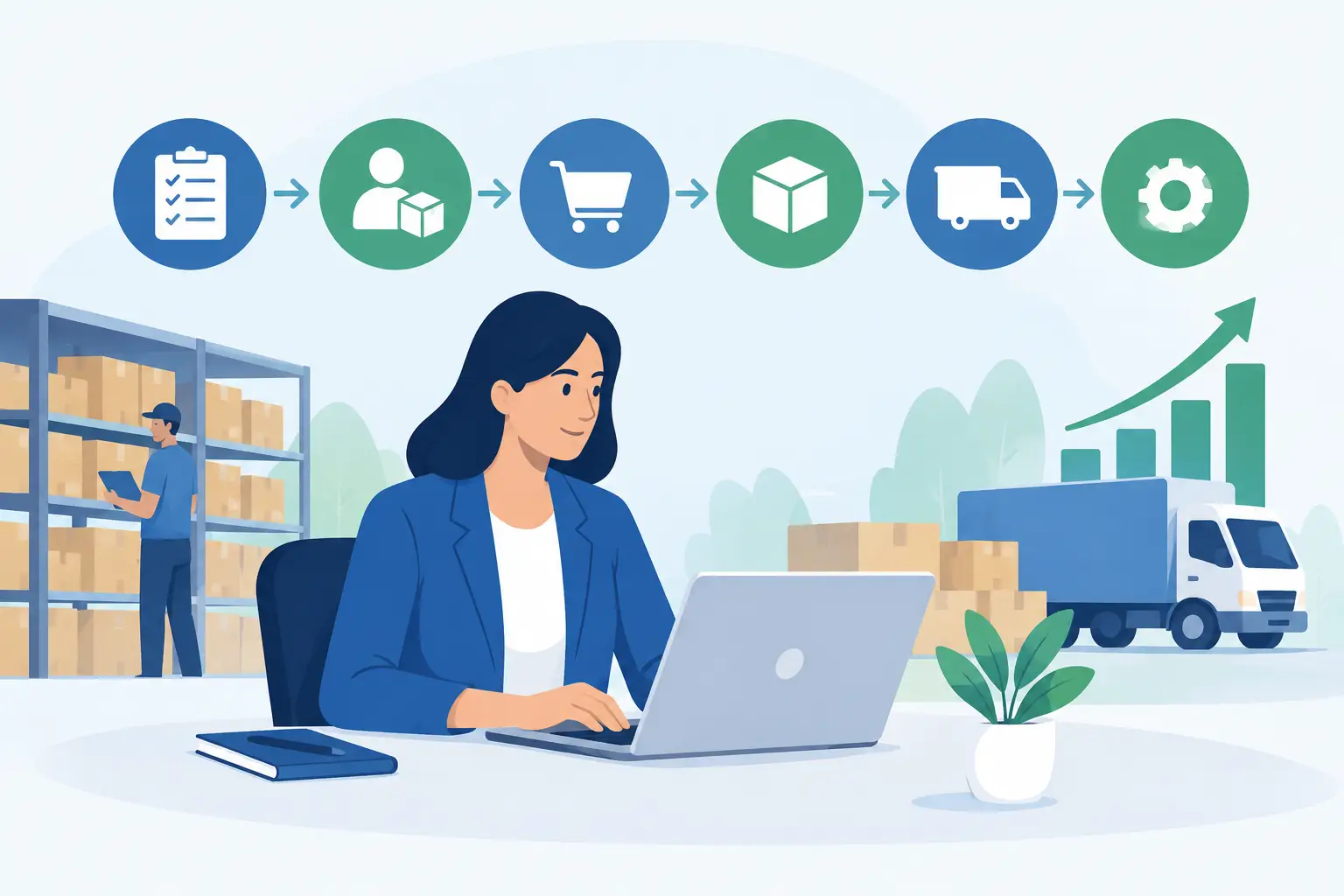
A warehouse supervisor has just found a variance in a fast-moving item. Rather than stop to search spreadsheets, call the office or work through several screens, they ask: “What stock is available across all locations, and which purchase orders are due this week?” That is where AI voice bots for business become operational tools, not just another customer-facing technology.
For businesses managing inventory, production, field teams, projects or multiple sites, the value is not in having a bot that sounds impressive. It is in giving people a quicker, controlled way to retrieve information, record an update and act on the next task. When voice capability is connected to an ERP platform, it can bring everyday business data closer to the people who need it.
What AI voice bots for business actually do
AI voice bots for business can convert spoken language into a request, understand the intent behind it, and return an appropriate response or start a defined workflow. In a business setting, AI voice bots for business can answer questions about stock on hand, create tasks, check invoice status, record production issues, or locate customer orders. This allows employees to interact with business systems using natural voice commands instead of navigating multiple screens manually.
The distinction matters. A general-purpose voice assistant may provide broad information, but AI voice bots for business need permission-aware access to live business records. They should understand the terms your team uses—such as batch, work order, harvest block, labour allocation, dispatch note, or job cost—and respond using the correct source of truth. When integrated with an ERP, these voice bots can connect conversations directly with business workflows and operational data.
For example, a production manager might ask for today’s output against plan. An AI voice bot for business can retrieve the relevant production order, compare reported quantities with the target, and identify whether a delay, machine issue, or material shortage has been recorded. The manager does not need to navigate a dashboard to ask the first question, although the dashboard remains important for detailed analysis.
Where voice creates practical value
Voice is most useful when someone is moving, working with their hands, or needs a quick answer without breaking their workflow. That makes it particularly relevant in warehouses, factory floors, retail locations, hospitality venues, plantations, workshops and labour-hire operations.
Faster access to operational information
Teams often lose time not because data is unavailable, but because it is spread across systems or difficult to find quickly. AI voice bots for business make common questions easier to ask in plain language and provide quick access to operational information. A sales manager can check today’s orders. A warehouse lead can ask about bin-level availability. A project supervisor can ask whether a job is over budget or whether approved labour hours have been entered.
The response should be concise and useful. If the user needs more detail, the bot can direct them to the relevant transaction, report or Power BI view. This balance matters: AI voice bots for business are excellent for immediate answers and simple actions, while screens are still better for reviewing larger data sets, approving exceptions and analysing trends.
Reduced manual entry in the field
Manual updates are often delayed because staff are busy, remote or away from a workstation. AI voice bots for business can make it easier to record basic events at the point they happen. This may include reporting completed quantities, logging a maintenance observation, adding a job note or confirming a delivery arrival. By enabling employees to interact with ERP processes through voice, businesses can reduce repetitive manual entry and keep operational information updated closer to the point of activity.
However, not every transaction should be completed by voice alone. Financial postings, payment changes, payroll amendments and stock adjustments can have material consequences. These workflows may require confirmation prompts, approval rules or a second-user review. Good AI voice bots for business should reduce low-value effort without weakening financial control, authorization and traceability.
Better service at the point of contact
Customer-facing teams can use voice-assisted access to retrieve information while remaining engaged with the customer. In retail or hospitality, a staff member may check availability, order status or booking details without stepping away. In professional services, a consultant may capture a follow-up action immediately after a client conversation.
The outcome is not simply speed. It is more reliable service because the information comes from current operational records rather than memory, handwritten notes or a separate spreadsheet.
The ERP connection is the real advantage
A voice bot is only as helpful as the data and workflows behind it. AI voice bots for business become significantly more effective when they are connected to a centralized ERP platform rather than operating with isolated or fragmented information. If finance uses one system, inventory another, production records sit in spreadsheets and customer information lives elsewhere, the bot may simply repeat the same fragmented view your team already has.
A connected ERP platform changes that. It brings sales, purchasing, inventory, production, projects, accounting and operational workflows into one environment. AI voice bots for business can then work with shared data definitions and current transaction status. When a purchase order is received, stock availability changes. When stock is issued to a job, job costing can reflect it. When production is reported, inventory and planning can update accordingly.
For manufacturers, this can extend further through machine and PLC integration. A machine-generated event may identify downtime or output variance, while a supervisor uses voice to ask what orders are affected or whether the required material is available. The purpose is not to replace operational judgement. It is to make machine data, business data and human action work together more effectively. AI voice bots for business, when integrated into an industry operating platform, can therefore provide context-aware access to operational information while keeping the underlying ERP workflows and controls in place.
OneBusiness approaches AI voice bots for business as part of an industry operating platform, rather than as a separate add-on with limited context. This is particularly relevant where daily operations depend on accurate inventory, production, labour, financial and customer information being connected.
Start with high-value use cases
The most successful voice bot projects begin with a narrow set of repeatable requests. Trying to automate every question from day one usually creates confusion, inconsistent responses and low adoption. Start where there is a clear operational delay or frequent information request.
A practical first phase may focus on questions such as stock availability, order progress, open purchase orders, job status, production output or overdue invoices. These queries are common, measurable and generally lower risk than making financial or inventory changes.
Next, review the language used by your teams. A warehouse worker may say “available pallets”, while the ERP uses a specific unit of measure. A plantation manager may refer to a block, field or section. The bot needs to recognise familiar terms while mapping them correctly to the system. This is where industry configuration matters more than generic AI capability.
Set clear boundaries as well. Define who can ask which questions, what data can be spoken aloud, and which actions require confirmation. A bot used in a shared area should not announce sensitive payroll, margin or customer information. Role-based access, authentication, audit logs and data retention policies should be part of the design from the start.
Measure whether it improves the operation
Adoption alone is not a useful measure. A bot may receive plenty of questions without creating a meaningful improvement. Track the operational results around the selected use case: time taken to find information, number of delayed updates, order response times, stock enquiry volume, data-entry errors or supervisor time spent answering routine questions.
It also helps to monitor unanswered requests. They show where the bot lacks data, misunderstands local terminology or needs another connected workflow. Continuous refinement is expected. Business operations change with new product lines, sites, teams and reporting requirements, so the voice experience should be configurable rather than fixed.
AI voice bots will not solve poor data quality, unclear processes or disconnected ownership. If stock records are inaccurate or work orders are not updated, the bot will surface unreliable answers more quickly. The right foundation is disciplined operational data, defined workflows and a connected system that makes accountability visible.
For organisations ready to reduce screen switching and give frontline teams faster access to reliable information, voice can be a practical next step. Start with the questions your people already ask every day, connect the answers to live ERP data, and build from there with control and confidence.
AI-Powered Voice Bots for ERP Automation
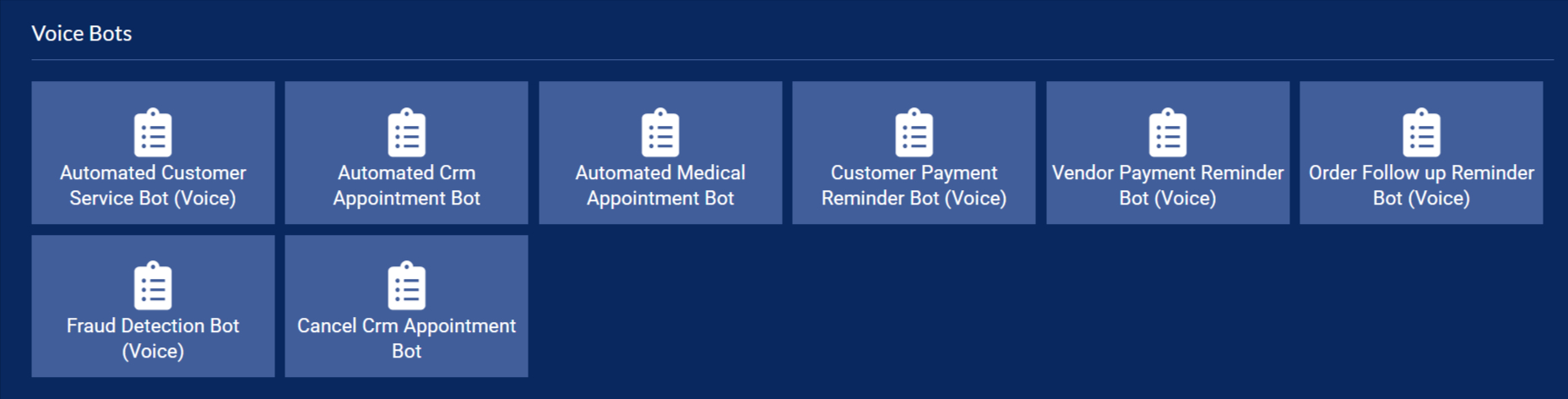
OneBusiness ERP integrates AI-powered voice bots to automate customer and business interactions directly within the ERP environment. These voice bots allow users and customers to interact naturally through voice, reducing the need for manual data entry and repetitive communication. The platform supports multiple specialized voice bots, including Automated Customer Service Bot, Automated CRM Appointment Bot, Automated Medical Appointment Bot, Customer Payment Reminder Bot, Vendor Payment Reminder Bot, Order Follow-up Reminder Bot, Fraud Detection Bot, and CRM Appointment Cancellation Bot. Each bot is designed around a specific business process and can interact with ERP data to provide relevant responses and perform process-related actions.
The voice bots can also maintain a conversation history within the ERP, allowing organizations to review interactions between users and AI agents. For example, in a customer service conversation, a customer can ask about their sales order, provide their customer number, and receive details such as the sales order number, gross price, and total amount directly through the voice interaction. Similar conversational workflows can be applied across appointments, payments, order follow-ups, vendor communication, and other supported processes. By combining AI voice technology with ERP workflows and business data, OneBusiness ERP helps organizations automate routine interactions, improve response times, and provide a more accessible and efficient way to interact with enterprise systems.
Follow OneBusiness for updates on ERP, AI automation and business technology: LinkedIn | YouTube | Facebook