A missed sale rarely begins at the checkout. It often starts days earlier with an inaccurate forecast, stock sitting in the wrong location, a delayed supplier update or a team member working from an outdated spreadsheet. Retail AI adoption trends are gaining momentum because retailers want to prevent these operational gaps, not because they want artificial intelligence for its own sake.
For Australian retailers, the shift is becoming practical. AI is moving beyond customer-facing chatbots and experimental personalisation into the daily work of buying, replenishment, fulfilment, finance and store management. The strongest results come when AI works with clean, connected operational data across point of sale, inventory, suppliers, sales orders and accounting.
Retail AI adoption trends are becoming operational
The early conversation around retail AI focused heavily on product recommendations and digital marketing. Those uses still matter, especially for retailers with large online catalogues and enough customer data to support them. But many small and mid-sized retailers are prioritising a more immediate question: can AI help us make better decisions with the data we already generate every day?
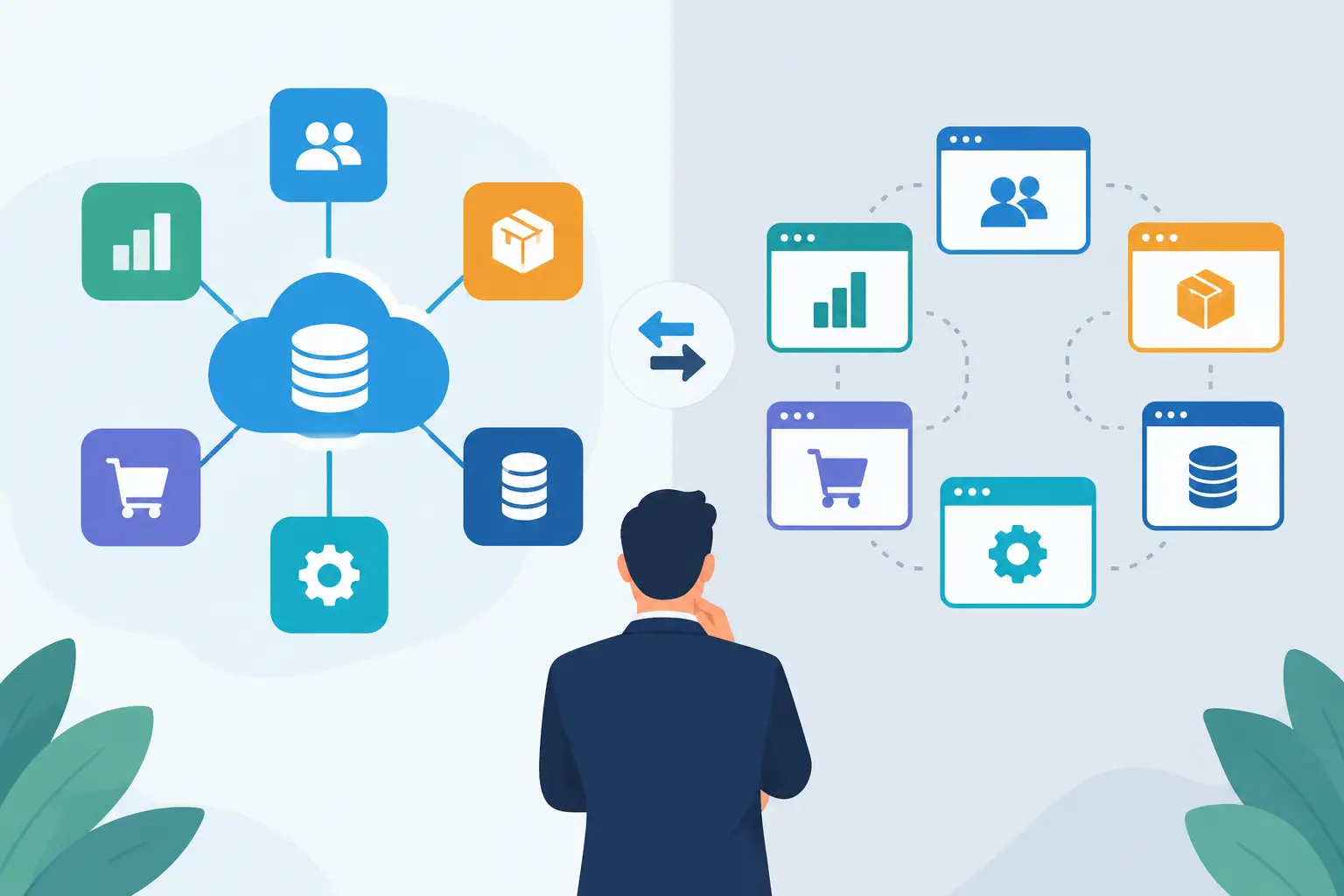
That question changes the implementation approach. Rather than buying another standalone tool, retailers are looking for AI capabilities within the systems that run the business. When sales, stock movements, purchase orders, customer returns and financial results sit in different applications, an AI model has incomplete context. It may identify a pattern, but it cannot reliably turn that pattern into an action.
A connected ERP and point of sale environment gives AI a more useful foundation. It can compare demand with stock availability, supplier lead times, promotions, seasonal activity and margin. It can then help managers decide what to order, where to move stock and which exceptions need attention first.
Demand forecasting is becoming more specific
Basic forecasting often relies on last year’s sales, a manager’s experience and a margin for safety stock. This can work in stable categories, but it struggles when demand changes because of weather, local events, promotions, new ranges or inconsistent supplier delivery.
AI-assisted forecasting can assess more variables and update forecasts more frequently. For a retailer with several branches, it can distinguish between a strong-selling product across the network and a product that only performs in particular locations. That matters when stock is limited. Sending the right quantity to the right store can be more valuable than simply increasing the total order volume.
Forecasting is not a promise of certainty. A new product, a sudden competitor promotion or a supply disruption can still make the best model wrong. The practical benefit is earlier visibility of likely demand changes, so buying teams can review exceptions before shelves are empty or surplus stock starts consuming working capital.
Inventory decisions are moving from reports to recommendations
Retailers have long had inventory reports. The difference now is the ability to prioritise what deserves action. Instead of asking staff to review hundreds of low-stock, overstocked and slow-moving lines, AI can rank issues by likely commercial impact.
For example, a category manager may need to know which products are likely to stock out before the next delivery, which lines have fallen below their expected sell-through rate, and which stores could transfer stock internally rather than place another purchase order. These are not glamorous use cases, but they directly affect revenue, cash flow and markdown exposure.
The quality of these recommendations depends on disciplined inventory processes. Barcode accuracy, timely receipting, correctly maintained units of measure and clear stock-location rules still matter. AI cannot correct a stock file that says goods are available when they are sitting unreceipted on a loading dock.
Where retailers are seeing practical value
The most useful applications tend to support repetitive decisions where staff have data but limited time. In multi-site retail, this often includes replenishment, purchase planning, order allocation, pricing review and management reporting.
AI can also reduce the time spent searching for answers. A manager may ask why gross margin dropped in a category, which suppliers have the most delayed orders, or which stores have unusual return patterns. A generative AI assistant can translate that question into a report or provide a plain-language explanation based on approved business data.
This is especially useful for owners and department heads who do not want to wait for a monthly reporting cycle. However, access controls are essential. A store manager may need sales and inventory insights for their branch, while finance and payroll information should remain restricted. AI should work within existing permissions, not create a shortcut around them.
Customer service is another area where adoption is becoming more measured. AI can help staff locate products, check availability, prepare responses to common enquiries and suggest alternatives when a line is out of stock. It is less suitable for every interaction. Complaints, complex refunds and high-value business customers often need experienced people who can apply judgement and preserve the relationship.
The data and workflow foundation comes first
Retail AI projects often lose momentum when they begin with a demonstration rather than a workflow problem. A useful starting point is to identify a decision that happens frequently, has clear financial or service impact, and currently depends on manual effort.
A retailer might begin with replenishment for its fastest-moving lines, supplier delivery exception alerts or weekly margin analysis. Define the existing process, the source data, the person responsible for action and the measure of improvement. That could be fewer stockouts, lower excess stock, faster report preparation or improved gross margin.
Before automation is expanded, retailers should check whether key records are reliable. Product descriptions, categories, supplier details, lead times, pricing, stock locations and customer records need consistent rules. Historical data should be reviewed for duplicates and major gaps. This work may sound less exciting than AI, but it determines whether the output can be trusted.
OneBusiness supports this connected approach by bringing sales, point of sale, warehouse activity, purchasing, financial accounting and Power BI analytics into one operational platform. For retailers with more complex requirements, the same environment can also be configured around industry workflows, approvals and reporting needs rather than forcing teams to work around disconnected software.
Retail AI adoption needs controls, not blind automation
The right level of automation depends on the decision. It may be sensible to automatically flag a likely stockout or create a draft purchase recommendation. It is usually less sensible to let a system change pricing, place a large supplier order or approve an unusual refund without human review.
Retail leaders should establish clear controls from the start. Teams need to know where AI-generated information comes from, who can change its rules and when an exception must be escalated. A recommendation should be explainable enough for a buyer, store manager or finance leader to challenge it.
Cybersecurity and privacy also deserve attention. Retail systems contain customer contact details, payment-related processes, sales data and commercially sensitive supplier information. Any AI capability should use controlled data access, audit trails and appropriate retention practices. Managed security monitoring and role-based access are operational requirements, not optional extras.
There is also a people consideration. Staff may worry that AI is designed to replace their role, particularly when it is introduced around rostering, service or back-office work. The better approach is to be direct about its purpose. If the goal is to remove repetitive reporting, improve replenishment or surface risks earlier, explain that clearly and involve the users who understand the process best.
What to prioritise over the next 12 months
Retailers do not need a broad AI programme to make progress. A contained use case with a measurable outcome is often the better first move. Start where the business has reliable data, recurring decisions and a genuine cost of delay.
Demand forecasting and stock optimisation are strong candidates for retailers carrying broad ranges or operating multiple locations. Finance teams may gain value from faster variance analysis, cash-flow forecasting and invoice exception review. Store teams may benefit more from product availability answers, task prompts and clearer visibility of transfers and deliveries.
The key is to treat AI as part of operating discipline. A useful system should improve the quality and speed of a decision, then make the outcome visible. If it adds another dashboard, another data export or another process for staff to maintain, it may create more work than value.
Retailers that build on connected data, practical controls and real workflow needs will be better placed to use AI with confidence. The next useful improvement may be as simple as helping the right person see the right stock, margin or supplier issue early enough to act on it.