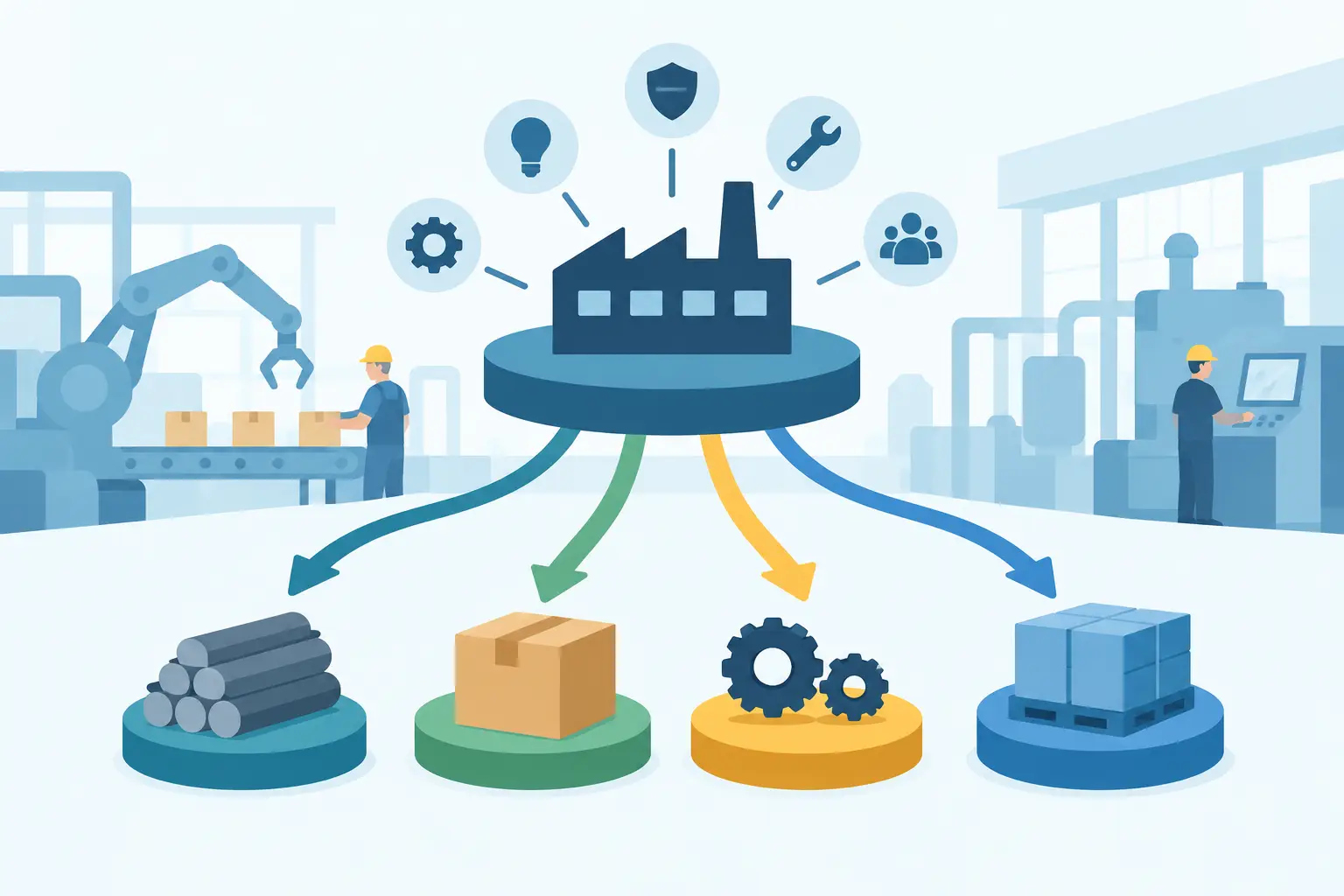

A production supervisor sees a stockout on the factory floor. A buyer sees the same item listed as available in a spreadsheet. Finance sees cash tied up in slow-moving stock. This is the practical problem inventory forecasting is meant to solve: giving every team a reliable view of what will be needed, when it will be needed, and what that demand means for cash, capacity and customer commitments.
For operationally intensive businesses, forecasting cannot sit in a spreadsheet updated once a month. Manufacturers need to account for work orders, component lead times and machine output. Retailers need to respond to promotions and seasonal demand. Plantations and processors must plan around harvest conditions, yields and production capacity. The forecast has to reflect how the business actually runs.
What inventory forecasting should achieve
Inventory forecasting estimates future stock requirements using past demand, open sales orders, production plans, supplier lead times and current inventory positions. Its purpose is not to predict every order perfectly. It is to support better purchasing, replenishment and production decisions before shortages or excess stock become expensive.
A useful forecast gives leaders answers they can act on. Which products are likely to run short? Which items can be purchased later? How much raw material is required to meet planned production? Which slow-moving lines are absorbing warehouse space and working capital? When the data is connected, these questions can be answered without pulling reports from separate accounting, sales, warehouse and production systems.
The commercial impact is significant. Too little stock can delay dispatch, interrupt production and damage customer confidence. Too much stock increases storage, handling, insurance and obsolescence costs. In sectors handling perishable materials, chemicals, fashion lines or specialised components, excess inventory can quickly become a write-down rather than an asset.
Why forecasts fail in otherwise capable businesses
Most forecasting problems are not caused by a lack of effort. They come from disconnected information and assumptions that are no longer valid.
A sales team may hold customer commitments in a CRM or a set of emailed purchase orders. Warehouse staff may record stock movements in another system. Production planners may use separate worksheets for bills of materials and job schedules. Finance may only see the financial effect after invoices and supplier bills are posted. Each team can be working carefully, yet the business still lacks one current version of demand and supply.
Data quality also matters. Duplicate item codes, incorrect units of measure, unrecorded stock adjustments and outdated supplier lead times will weaken even the most sophisticated forecasting model. If a carton is purchased in units of 24 but consumed as individual items, the system needs clear conversion rules. If a supplier now takes eight weeks rather than four, the forecast must reflect that change before purchase orders are late.
Seasonality is another common blind spot. A retailer may sell more ahead of Christmas, while a hospitality business may change purchasing patterns around events and school holidays. Agricultural and processing businesses have their own cycles shaped by weather, harvest timing and yield variation. Last year’s sales are useful, but they are not enough on their own.
Build inventory forecasting from connected operational data
The strongest approach combines historical patterns with live operational signals. Historical sales reveal baseline demand, while current orders, quotations, production schedules and supplier information show what is changing now.
Start with dependable item and stock data
Forecasting starts with a clean item master. Each stocked item needs a consistent code, description, unit of measure, warehouse location and purchasing or production details. For manufactured products, the bill of materials must accurately show the components required at each stage.
Stock records should include quantities on hand, allocated stock, stock in transit, stock under quality review and stock already committed to production. A business that only looks at the headline quantity on hand may assume it has available stock when much of it is already reserved for customer orders or jobs.
Cycle counts are particularly valuable for high-value, fast-moving or operationally critical items. The aim is not to count every bin every day. It is to prioritise the stock lines where an error would disrupt production, dispatch or cash flow.
Account for demand, supply and lead time together
Demand forecasting is only half the job. A buyer also needs to know when replacement stock can realistically arrive. Lead time should include supplier processing, freight, receipting and any quality-control steps before stock becomes available for use.
For a locally sourced standard item, a short reorder point may be appropriate. For imported machinery components or specialised production inputs, the business may need to order months ahead. The correct safety stock level depends on demand variability, supplier reliability, service expectations and the cost of running short. It is not a number that should be copied across every product.
A practical planning system calculates projected inventory over time. It starts with current available stock, then deducts expected demand and adds confirmed purchase orders or planned production receipts. This makes potential shortages visible by date, rather than after the warehouse team discovers an empty location.
Use production plans to drive material requirements
Manufacturers and process-based businesses need inventory forecasts that extend beyond finished goods. A planned increase in finished-product demand can create a shortage of packaging, consumables, ingredients or subassemblies well before the final product is due to ship.
Material requirements planning connects the sales forecast and production plan to bills of materials, inventory balances and supplier lead times. It can identify the components needed for scheduled work orders and recommend when to purchase or produce them. Where PLC or machine data is available, actual consumption and output can further improve planning by showing whether usage is tracking above or below the standard.
This does not remove the need for judgement. Unexpected equipment downtime, lower yields or a priority customer order may require planners to adjust the schedule. It does mean those adjustments can be made with visibility of their inventory and financial consequences.
Select a method that matches the item
Not every stock line deserves the same forecasting treatment. High-volume, stable items benefit from automated demand patterns and reorder rules. Project-specific materials should be driven by confirmed jobs and project schedules. New products may require a sales-led estimate because there is little history to analyse.
ABC analysis helps focus attention where it has the greatest value. A-items are high-value or high-impact products that require close review, accurate lead times and regular exception reporting. B-items need sensible controls with less manual attention. C-items are often lower-value consumables where the cost of detailed forecasting may exceed the benefit.
Forecast accuracy should also be measured by product family, location and planning horizon. A forecast that is acceptable at a monthly category level may be unreliable for a specific item next week. The question is not whether a forecast is perfect. The question is whether it is accurate enough to support the purchasing and service decisions being made.
Turn forecasts into daily operating decisions
A forecast becomes useful when it is built into everyday workflows. Buyers need replenishment suggestions and clear exceptions. Production teams need material availability before releasing work orders. Sales teams need realistic available-to-promise information before confirming delivery dates. Finance needs visibility of expected inventory purchases and their effect on working capital.
A connected ERP platform can bring these decisions into one place. With sales, warehouse movements, purchase orders, bills of materials, production planning and accounting working from the same data, teams spend less time reconciling numbers and more time responding to exceptions. Power BI reporting can highlight demand changes, stock ageing, supplier performance and forecast-versus-actual movement for management review.
OneBusiness supports this connected approach by combining inventory control with purchasing, production, sales, finance and industry-specific workflows. For businesses with complex operations, the value is not simply another stock report. It is the ability to plan from live operational data while retaining traceability across warehouses, jobs, batches and financial records.
Establish a review rhythm that people will use
Forecasting should be reviewed often enough to match the speed of the operation. A fast-moving distributor may need daily exception checks and weekly replenishment reviews. A manufacturer with long lead-time inputs may run a formal monthly planning cycle, supported by weekly updates for significant changes. Seasonal businesses should begin demand and supply planning well ahead of their peak period.
The review should focus on decisions, not report reading. Look at projected shortages, excess stock, delayed supplier orders, changed customer demand and planned production constraints. Assign an owner for each action, whether that is expediting a purchase order, adjusting a production run, transferring stock between locations or revising a customer commitment.
Good inventory forecasting creates control without forcing every team into manual administration. Begin with the stock lines and decisions that cause the most disruption, make the underlying data dependable, and connect the forecast to purchasing and production. From there, each planning cycle gives your business a clearer way to protect service, manage cash and keep operations moving.