
A production manager should not have to wait until month-end to find out that material usage has drifted, a machine has slowed down or a customer order will miss its delivery date. Yet that is still the reality for many growing businesses working across spreadsheets, separate accounting software, paper job sheets and disconnected stock systems.
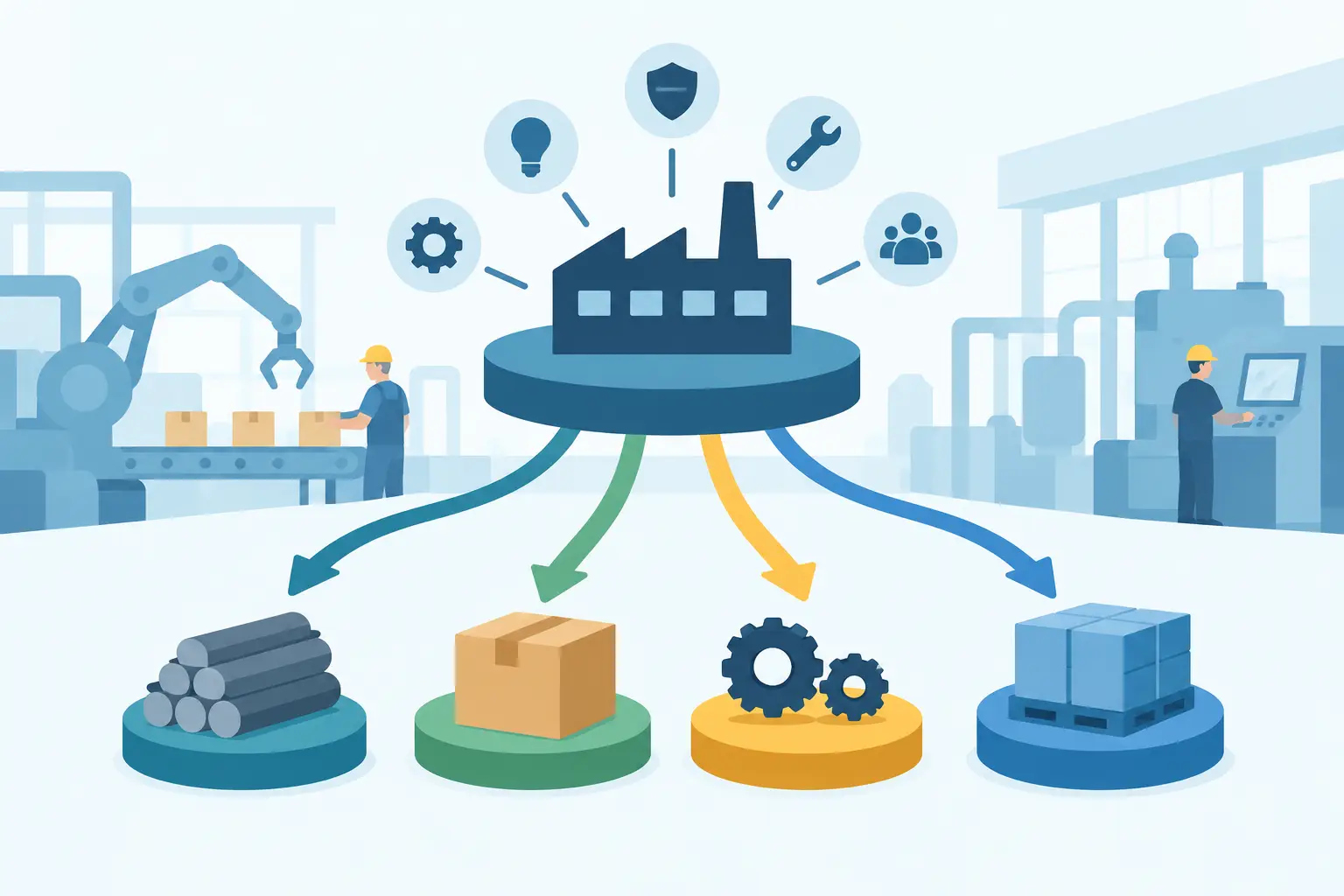
The most useful ERP trends are changing that picture. They are not simply about adding more technology. They are about giving finance, operations, warehouse teams and managers one current version of what is happening: what has been sold, made, consumed, invoiced, scheduled and delivered.
For Australian businesses in manufacturing, processing, plantations, retail, hospitality and labour hire, the value lies in applying these changes to daily work. The right ERP should reduce hand-offs, improve traceability and support faster decisions without forcing every team into a complicated new way of working.
ERP trends moving from promise to practical value
AI is becoming an operational assistant
Artificial intelligence is moving beyond generic chat tools and into controlled business workflows. Within ERP, AI can help teams draft customer responses, summarise job notes, identify unusual purchase patterns, classify documents and answer questions using approved operational data.
Voice-based assistance is particularly relevant for busy operational environments. A supervisor on a factory floor, at a warehouse or in the field may need to check available stock, confirm a work order or log an issue without stopping to navigate several screens. A well-configured AI voice bot can make this faster, provided it works from accurate ERP data and has clear permission controls.
The trade-off is straightforward: AI is only as reliable as the processes and information behind it. If product records are duplicated, stock movements are not posted on time, or job costs are inconsistent, AI will reproduce that confusion at speed. Businesses should start with focused use cases, such as invoice enquiry handling or production variance alerts, then expand once data governance is sound.
Connected machine data is reaching the business system
For process manufacturers and industrial operators, production records are often captured after the fact. Operators may write readings on paper, enter output figures at the end of a shift, or rely on estimates when reconciling material consumption. This delays action and weakens traceability.
A more practical trend is connecting PLCs, sensors and industrial machines to ERP workflows. Machine runtime, throughput, temperature, downtime and production counts can be brought together with work orders, batches, inventory and labour records. That gives managers context rather than isolated machine data.
For example, if a washing line uses more water or chemicals than expected, the business can compare the variance against the production run, operator shift, batch recipe and finished output. In a plantation, harvest volumes can be linked to blocks, labour activity, transport and sales commitments. The goal is not to collect every possible signal. It is to capture the measures that help teams control yield, quality, cost and maintenance.
Finance is being connected to operations earlier
Finance teams have long used ERP for general ledger, payables, receivables and reporting. The stronger shift is towards bringing financial control closer to the operational event.
When purchasing, goods receipt, job progress, production consumption, timesheets and invoicing sit in the same platform, finance does not have to spend days reconciling files from different systems. Cost movements can be reviewed while a job or production order is still active. Project managers can see committed costs before approving more work. Owners can assess margin by customer, site, product line or contract with greater confidence.
This does not mean every operational employee needs access to sensitive financial detail. Role-based access remains essential. It means the underlying records are connected, so the business can trace a number on a profit and loss report back to the purchase order, stock issue, job, batch or labour entry that created it.
Analytics is shifting from reporting to intervention
Many businesses have reports, but fewer have a clear way to act on them. A monthly sales report may show declining margin, while the actual causes sit elsewhere: purchase price changes, excess overtime, stock write-offs, rework or discounting.
Modern ERP programs are increasingly paired with tools such as Power BI to present financial and operational measures in a usable format. The useful dashboards are not the ones with the most charts. They answer specific management questions: Which orders are at risk? Where is stock tied up? Which jobs are exceeding budget? What products are generating rework? Which sites are falling behind plan?
Good analytics also needs agreed definitions. If sales, finance and operations each calculate margin differently, a dashboard only makes the disagreement more visible. Establish common measures first, then give each team views that match its responsibilities.
Forecasting is becoming more grounded
Demand forecasting and replenishment planning are improving as ERP systems combine sales history, stock positions, supplier lead times, production capacity and seasonal patterns. For retailers, this can reduce stock-outs and over-ordering. For manufacturers, it can help plan material purchases and production runs earlier.
Forecasts should still be treated as decision support, not certainty. A sudden customer contract, weather event, shipping delay or commodity movement can make a historical pattern less useful. The best approach combines system-generated forecasts with input from people who understand customers, capacity constraints and local conditions.
Carbon accounting is entering mainstream management reporting
Carbon reporting is becoming a practical business requirement, particularly for organisations supplying larger customers, operating energy-intensive sites or preparing for changing disclosure expectations. The challenge is that emissions data is rarely stored in one place.
ERP can provide a useful foundation by connecting purchasing, fuel use, freight, production, energy records and inventory movements. This creates a more auditable starting point for carbon accounting than manually assembled spreadsheets. A manufacturer may track emissions by batch or product family, while a labour hire business may need a clearer view of travel, equipment and site-related activity.
Accuracy matters more than appearance. Businesses should be clear about the source of each measure, the assumptions used and the level of detail they can support. Carbon reporting will mature over time, but establishing disciplined data capture now reduces future compliance pressure and can reveal cost-saving opportunities in energy, waste and transport.
Security and resilience are now ERP selection criteria
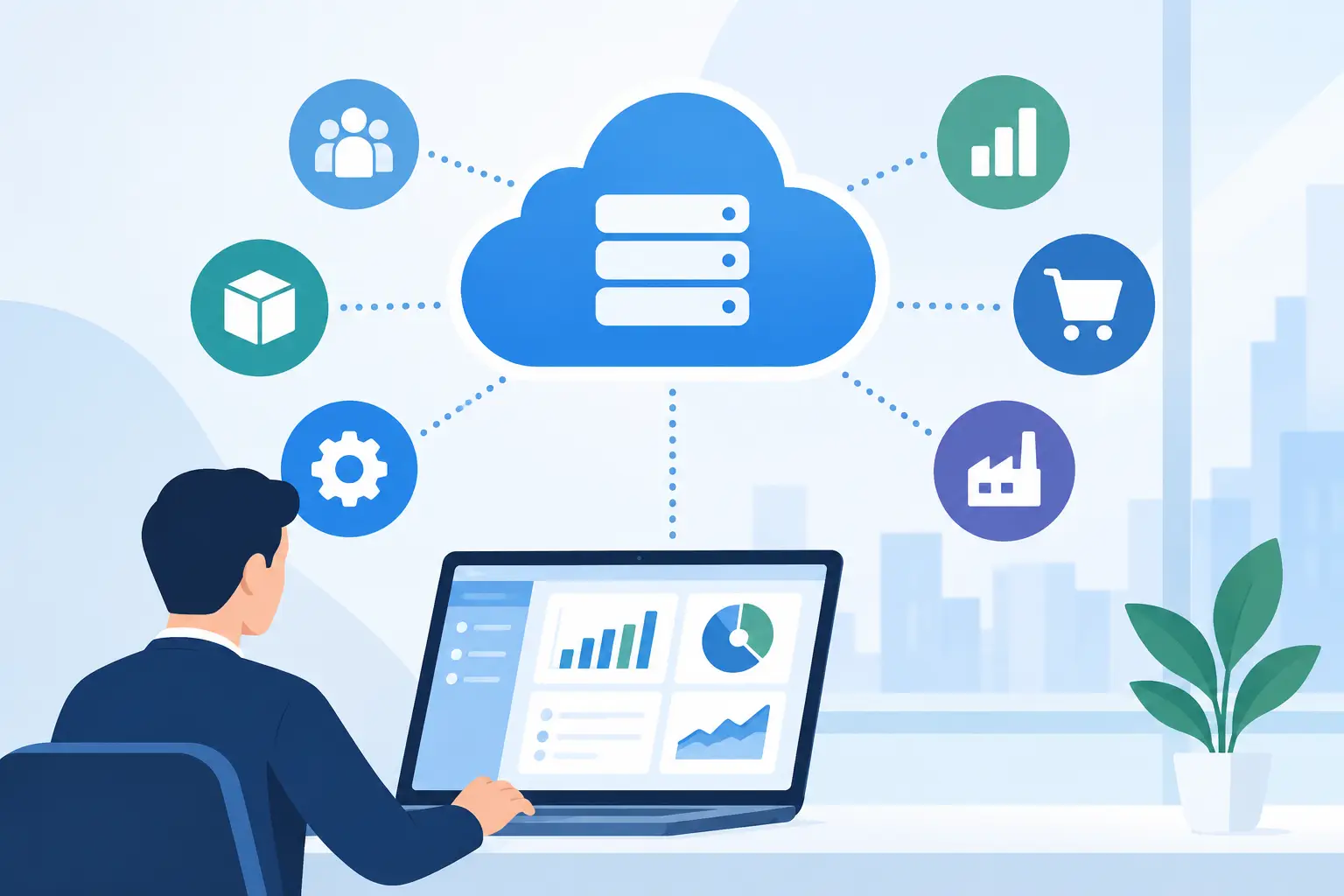
Cloud ERP has made enterprise capability more accessible to small and mid-sized businesses, but it has also raised the stakes for identity management, backups, access control and cyber response. A system that holds customer details, payroll information, supplier payments, stock records and production data is a valuable target.
Security should be assessed as an operating discipline, not a checkbox during implementation. Multi-factor authentication, role-based permissions, audit trails, monitored integrations and regular review of user access all matter. So does knowing who is responsible when an incident occurs and how quickly critical operations can be restored.
The right level of security depends on the business. A small professional practice has different risks from a multi-site manufacturer with connected machines. However, both need a clear answer to basic questions: who can approve payments, alter bank details, export customer data or change stock adjustments?
Configurable industry workflows are replacing one-size-fits-all deployments
The old choice between rigid standard software and expensive bespoke development is becoming less helpful. Growing organisations need core ERP controls, but they also need workflows that reflect how work actually moves through their industry.
A tannery may require batch traceability, chemical usage, grading and production yield controls. A garment washing operation may need recipe management, machine readings and rework tracking. A labour hire business may focus on employee compliance, timesheets, client billing and placement administration. Trying to force these requirements into generic fields creates workarounds that eventually undermine reporting.
Configuration is usually the better first option because it is easier to support and upgrade. Customisation can be justified where it creates a real operational advantage or addresses a sector-specific requirement that standard functions cannot meet. The key is to avoid customising a system simply to preserve an inefficient legacy process.
OneBusiness applies this approach by bringing financial, operational and industry workflows together in one cloud platform, with room for machine connectivity, AI assistance, analytics and managed security where they add value.
How to prioritise ERP trends without chasing hype
The most successful ERP programs begin with a business constraint, not a feature list. If stock accuracy is poor, address item records, barcode processes, receiving and warehouse movements before investing heavily in predictive analytics. If job profitability is unclear, connect timesheets, purchasing, project milestones and invoicing before building executive dashboards.
A practical sequence is to identify the process causing the most rework or delayed decisions, define the data needed to control it, then choose the ERP capability that removes the gap. Measure the outcome in operational terms: fewer stock adjustments, faster invoicing, reduced downtime, improved yield, lower overtime or more reliable project margins.
ERP trends will continue to evolve, but the enduring advantage is simpler: a connected system that helps people see what is happening early enough to do something useful about it.