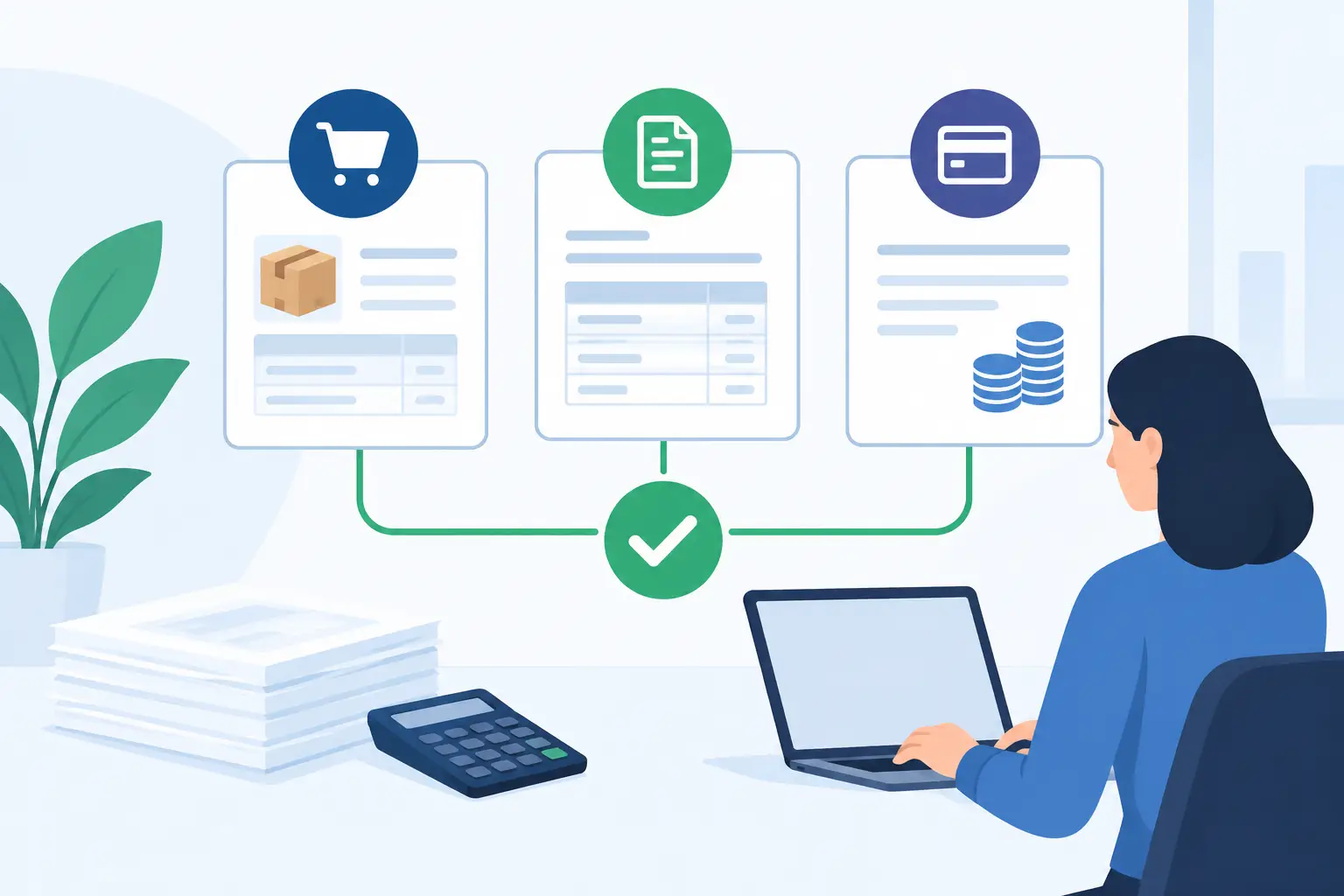

A profitable business can still run short of cash on Friday. The usual cause is not a lack of sales. It is money tied up in stock, unbilled work, disputed invoices, slow approvals or production decisions made without a clear view of demand. So, can ERP improve cashflow? Yes, when it connects the operational events that create a cash requirement with the financial processes that record it.
An ERP system will not create cash by itself. It will, however, give finance and operations teams the information and workflow control needed to collect sooner, buy smarter, hold less unnecessary stock and forecast with greater confidence. For businesses that have outgrown spreadsheets and disconnected systems, that difference can be material.
Why cashflow problems often start outside finance
Cashflow is often treated as an accounts receivable issue: send invoices faster and chase overdue customers. Those actions matter, but they address only part of the cycle. In operationally intensive businesses, the pressure often begins much earlier.
A manufacturer may purchase materials for an order that has not been properly scheduled. A labour-hire business may have approved timesheets waiting for a customer purchase order. A wholesaler may be carrying stock because sales, purchasing and warehouse teams are relying on different reports. A hospitality operator may not see margin pressure until supplier invoices have already landed.
When data is split between accounting software, stock spreadsheets, production records and email approvals, people make decisions from partial information. Finance sees the bank balance and aged debtors. Operations sees jobs, machines, rosters or dispatches. Neither team has the full position in one place.
A connected ERP brings those records together. It links a sales order to stock allocation, purchasing, production, delivery, invoicing and payment. That chain is where cash is committed, delayed and recovered.
How ERP can improve cashflow in practice
Invoice as soon as the work is complete
Late invoicing is one of the most preventable cashflow leaks. It can happen when delivery confirmation sits in a warehouse system, completed job details remain with a supervisor, or approved hours are held in a separate labour system.
ERP workflows can trigger billing from operational milestones. Goods dispatched can become ready for invoicing. A project stage can be billed once approved. Timesheets can flow through the required checks before being added to a customer invoice. Rather than asking staff to rekey information, the system uses the transaction already created by the work.
This improves invoice speed, but accuracy is equally valuable. When quantities, rates, purchase order references and delivery details are drawn from the same record, there are fewer disputes that give customers a reason to delay payment.
Make receivables visible before they become overdue
Aged receivables reports are useful, but they are backward-looking if reviewed only at month end. Finance teams need a current view of invoices due this week, disputed invoices, credit holds and customer payment patterns.
With ERP, collection activity can be organised around clear priorities. A team can identify a large invoice nearing its due date, check whether proof of delivery is attached, see the sales contact and record follow-up actions. Credit limits can also be applied at order entry, helping prevent further exposure when an account is already overdue.
The objective is not to make every customer interaction rigid. Strategic customers may have agreed trading terms or temporary arrangements. The value is that these exceptions are visible and deliberate, not hidden in someone’s inbox.
Reduce cash tied up in stock and work in progress
Stock is cash on a shelf, in a bin location or moving through production. Enough stock protects service levels. Too much stock restricts working capital, increases handling costs and raises the risk of write-offs.
An ERP system supports more disciplined replenishment by combining sales history, open orders, supplier lead times, minimum stock levels and available inventory. Warehouse teams can see what is on hand, committed, in transit or allocated to a job. Purchasing teams can avoid buying materials that are already available elsewhere in the business.
For manufacturers and process-based operations, work in progress requires similar attention. Machine or PLC connectivity can capture production quantities, downtime and consumption closer to the source. That makes it easier to compare planned versus actual material usage and identify where a job is absorbing more cash than expected. The result is not simply lower inventory. It is inventory held for a known operational reason.
Control purchasing commitments
Cashflow forecasts fail when they include customer receipts but overlook approved purchases, recurring costs and production requirements. A purchase order process gives leaders visibility before the supplier invoice arrives.
With approval rules, managers can assess whether a purchase is necessary, within budget and aligned to current demand. The system can show committed spend alongside stock levels and sales orders, reducing last-minute buying and duplicated orders. This is especially useful where multiple sites, warehouses or department heads can raise purchases.
Control should not become a bottleneck. Low-value, routine purchases may need a fast approval path, while capital equipment, large material orders or non-standard spending deserve closer review. ERP configuration should reflect how the business actually operates.
Plan cash using live operational data
The most useful cashflow forecast is not a spreadsheet updated after the month closes. It is a working view that changes as orders are won, deliveries occur, supplier dates move and payroll commitments are confirmed.
ERP can bring together expected customer receipts, payable due dates, payroll, tax obligations, open purchase orders, inventory needs and project billing milestones. Power BI analytics can then present trends by business unit, customer, product line or site. Leaders can test practical questions: What happens if a key customer pays 14 days late? Can production be scheduled around available materials? Which projects will need cash before their next billing milestone?
Forecasts remain estimates. Customer behaviour, freight disruptions and supplier changes can still affect timing. The benefit is earlier warning and a stronger basis for decisions, rather than false certainty.
Can ERP improve cashflow for every business?
ERP delivers the strongest cashflow benefit where information moves through several teams before a customer can be billed or stock can be replenished. Manufacturing, warehousing, trading, plantations, hospitality, labour hire and project-based services are common examples because financial outcomes depend on daily operational activity.
A small business with straightforward invoicing and limited inventory may achieve gains with simpler accounting automation. A full ERP implementation is not automatically the right first step. But once teams are relying on manual reconciliations, maintaining multiple versions of stock data or struggling to explain why cash differs from profit, the cost of disconnected systems rises quickly.
Implementation quality also matters. Poor master data, unclear payment terms and inconsistent warehouse practices will not be fixed simply by installing software. Businesses need to define approval rules, item records, billing triggers and ownership of exceptions. The technology creates a shared process, but leaders must decide what that process should be.
Building a cash-focused ERP rollout
The most effective approach is to start with the parts of the cash cycle causing the greatest friction. For one business, that may be dispatch-to-invoice delays. For another, it may be slow stock counts, uncontrolled purchasing or unprofitable work in progress.
Begin by measuring the current position: days to invoice after delivery, debtor days, inventory turns, purchase order compliance, stock adjustments and forecast accuracy. These measures establish a baseline and help teams see whether new workflows are working.
Next, connect the essential transactions. Sales orders, inventory, purchasing, delivery, invoicing and bank reconciliation should not require duplicate entry. Add production planning, labour tracking, project management or point of sale workflows where they directly affect the cash cycle. OneBusiness can be configured around these industry-specific processes, while keeping financial and operational data in one cloud platform.
Finally, make the information useful to the people taking action. Finance may need overdue debt alerts and weekly cash projections. Operations may need shortages, slow-moving stock and jobs awaiting completion. Owners may need a clear view of expected receipts, commitments and cash headroom. Role-based dashboards and alerts are more effective than a large report that no one has time to interpret.
The practical value of ERP is not that it replaces financial discipline. It gives that discipline a reliable operating system. When the warehouse confirms a dispatch, a supervisor approves time, a machine records output or a buyer raises an order, the cash consequence should be visible early enough for someone to act on it.