
A production line can report thousands of signals in a shift, yet the finance team may still be waiting for someone to enter completed quantities, scrap and downtime into a spreadsheet. PLC integration for manufacturing ERP closes that gap by turning relevant machine activity into operational and financial records that people can act on.
For manufacturers, PLC integration for manufacturing ERP is not simply collecting more data. It is connecting the right machine events to production orders, stock movements, labour, quality checks and costing. When this is designed well, supervisors see what is happening on the floor, planners can respond before a delay becomes a missed delivery, and management has a clearer view of margin and capacity.
What PLC integration for manufacturing ERP actually does
A programmable logic controller, or PLC, operates industrial equipment such as conveyors, filling lines, presses, kilns, mixers and packaging machines. It reads inputs from sensors, applies control logic and instructs equipment to start, stop, dose, heat, count or sort.
An ERP system manages the business side of production: sales demand, bills of materials, work orders, inventory, purchasing, payroll inputs, financial accounting and reporting. PLC integration creates a controlled data path between these two environments.
The ERP does not need every signal generated by a machine. It needs meaningful production events. Depending on the process, this may include a batch starting or finishing, actual output quantity, rejected units, machine status, material consumed, cycle time, temperature exceptions or utility use. The integration translates those events into records that match the manufacturer’s workflows and master data.
For example, when a packaging line completes a planned run, the PLC can provide a verified production count. The ERP can use that count to update the work order, receive finished goods into the warehouse and reduce the expected consumption of packaging materials. If actual output is below target, the variance is visible immediately rather than at the end of the week.
Start with decisions, not machine data
The common mistake is treating PLC connectivity as an engineering project only. A plant can capture hundreds of tags from a machine, but a long list of data points does not automatically improve planning or profitability.
Start with the business questions that currently take too long to answer. Which work orders are behind schedule? How much material was actually used for a batch? Which line is creating the most reject stock? What is the true cost of production by product, customer or shift? Which machines are idle during scheduled hours?
Those questions determine which events should enter the ERP and at what level of detail. A food processor may prioritise batch traceability, yield and temperature records. A garment washing operation may need cycle completion, recipe use, water consumption and rework counts. A discrete manufacturer may focus on part counts, downtime reasons and completed routing steps.
This approach also keeps the cloud ERP responsive. Raw high-frequency telemetry is often better retained in an industrial historian, edge gateway or specialist analytics store. The ERP should receive validated, business-relevant transactions and KPIs rather than every sensor reading from the shop floor.
Where machine data delivers commercial value
Production reporting without delayed entries
Manual reporting often looks harmless until it affects inventory accuracy, customer commitments and payroll. Operators may record quantities after a shift, estimate scrap or forget to close a work order. By then, the warehouse may be working with the wrong available stock figure.
PLC integration for manufacturing ERP helps automate production reporting by transferring verified machine data into ERP transactions with less manual data entry.
PLC-driven production confirmation can update output as runs complete or at agreed intervals. Teams still need practical controls for adjustments, rework and exceptions, but the baseline data arrives faster and with less rekeying. This is particularly useful in high-volume operations where small errors compound quickly.
Accurate material consumption and yield
Manufacturers using standard bills of materials need to understand when actual consumption differs from plan. Weight scales, flow metres, counters and batch controllers can provide the evidence needed to record actual usage or compare it with expected usage.
The benefit is stronger inventory control and more credible product costing. It also helps purchasing teams identify recurring over-consumption before stock shortages become urgent. In process manufacturing, yield analysis can reveal whether losses relate to material quality, machine settings, operator practices or a specific production stage.
With PLC integration for manufacturing ERP, manufacturers can compare planned material consumption with actual machine and production data to improve inventory accuracy and product costing.
Better downtime and maintenance decisions
A PLC can identify whether a machine is running, stopped, starved, blocked or in fault. However, automatic status data cannot always explain why the machine stopped. A sensor may show that a line was idle, but it cannot reliably distinguish a planned changeover from a missing component without additional context.
The best design combines machine events with simple operator inputs. The system can automatically create a downtime event, prompt the supervisor to select a reason code and send the final record to ERP and reporting tools. Over time, Power BI dashboards can show repeat causes by asset, product, shift or site, helping maintenance and operations teams prioritise action.
Traceability that stands up to scrutiny
For regulated, export-focused or quality-sensitive operations, traceability is not an optional report. Manufacturers need to connect raw material lots, production batches, quality results and finished goods dispatches.
PLC integration can supply the timing and execution evidence around each production step. The ERP provides the transaction structure: which lot was issued, which batch was produced, who approved the quality hold and where finished goods were stored. Together, they create a more complete chain of custody without forcing staff to duplicate records across systems.
The architecture needs a buffer between plant and ERP
Directly connecting every PLC to a cloud ERP is rarely the right approach. PLC integration for manufacturing ERP should account for the different availability, security, and timing requirements of production equipment and business software. A production line must continue operating safely even if an internet connection is unavailable or the ERP is undergoing maintenance. A well-designed manufacturing ERP with PLC integration therefore uses an architecture that separates critical machine operations from cloud-based business processes.
An edge gateway or integration layer normally sits between the PLC network and the ERP. It reads approved PLC tags through industrial protocols, applies basic validation, and queues transactions when connectivity is interrupted. Once the connection is restored, it sends the records in the correct order and flags exceptions for review. This approach makes PLC integration for manufacturing ERP more reliable while maintaining continuity between machine operations and ERP transactions.
This integration layer is also where manufacturers can map machine identifiers to ERP work centres, products, units of measure, and production orders. That mapping deserves careful attention. A machine may count units while the ERP stocks cartons, kilograms, or square metres. If conversions and rounding rules are unclear, automated records can create more reconciliation work rather than less. With effective PLC and ERP integration, these mappings and business rules can be standardized to ensure that machine data is correctly interpreted within the manufacturing system.
Cybersecurity must be part of the design from the beginning. Operational technology networks should be segmented from corporate networks, access should be controlled by role, and remote support should be monitored. Managed security services, patch governance, and audit logs matter because a poorly protected connection can create risk well beyond inaccurate reporting. A secure approach to PLC integration for manufacturing ERP helps manufacturers connect shop-floor automation with ERP processes while protecting both operational technology and business data.
A practical implementation path
The most effective projects begin with one production area and a defined operational outcome. Choose a line where data is currently manual, production volumes are meaningful and the team has a genuine reason to use the information.
First, document the current process from released work order to finished-goods receipt. Include the people, paper forms, machine states, stock transactions and approval points. This shows where automation will help and where a human check remains necessary.
Next, define the event model. For each event, agree the trigger, source, ERP destination, responsible role and exception process. A completed batch may automatically post output, while a quality failure may create a hold for supervisor approval. This is where operational rules become more valuable than the technical connection itself.
Then test against real conditions, including network dropouts, partial batches, machine resets, operator overrides and duplicate messages. Production systems need idempotency rules so that a repeated message does not accidentally post the same output twice. Reconciliation reports should compare PLC totals, ERP transactions and physical stock during the initial rollout.
Finally, train supervisors and operators on what they will see, what they need to confirm and how to manage exceptions. Automation should reduce admin, not remove operational accountability. If staff do not trust the figures or do not know how to correct a genuine exception, they will return to spreadsheets.
Choose the right level of automation
Not every production step should post automatically. High-volume, repeatable packaging lines may suit near real-time confirmations. Complex, low-volume fabrication may benefit more from machine status visibility combined with supervisor approval of completed work orders.
The right choice depends on product complexity, quality requirements, network reliability, existing machine capability and the cost of an incorrect transaction. Older equipment can often be connected through retrofitted sensors or gateway devices, but the business case should account for installation, validation and ongoing support.
A connected platform such as OneBusiness can bring ERP workflows, industrial machine connectivity, Power BI analytics and configurable production processes into one operating environment. The goal is not to make the factory more complicated. It is to give production, warehouse and finance teams a shared record of what actually happened.
The most useful first step is usually modest: identify one manual production record that causes recurring delays or disagreements, then connect it to a clear ERP transaction. When the data is trusted on one line, expanding it across the operation becomes a practical improvement programme rather than another technology promise.
To learn more about OneBusiness ERP and its manufacturing technology solutions, follow KSA Tech Consulting on Facebook and LinkedIn.
PLC Integration for Smart Manufacturing
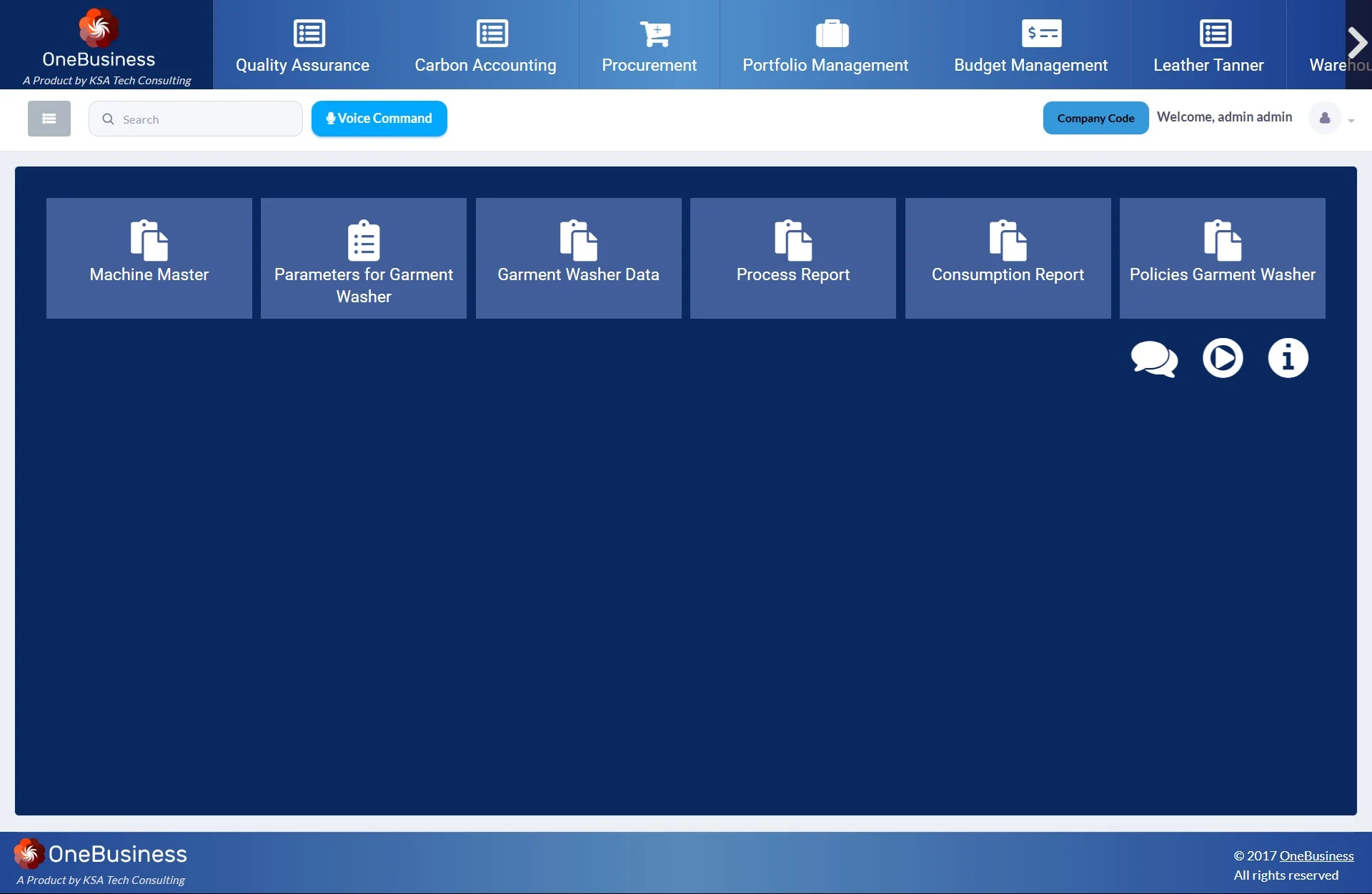
PLC integration for manufacturing ERP creates a direct connection between machine automation on the shop floor and the ERP system, helping manufacturers connect machine operations with production planning, monitoring, and reporting. OneBusiness ERP integrates PLC-based machine automation across specialized manufacturing operations such as Leather Tanning and Garment Washing, where process parameters need to be accurately configured, monitored, and controlled. In the Leather Tanner module, the input is raw leather, while the Garment Washer module manages garments as the production input. Through PLC integration for manufacturing ERP, users can configure the Machine Master, define process parameters and recipes, and maintain required water, chemical, dosage, temperature, duration, and other process-specific information directly within the ERP.
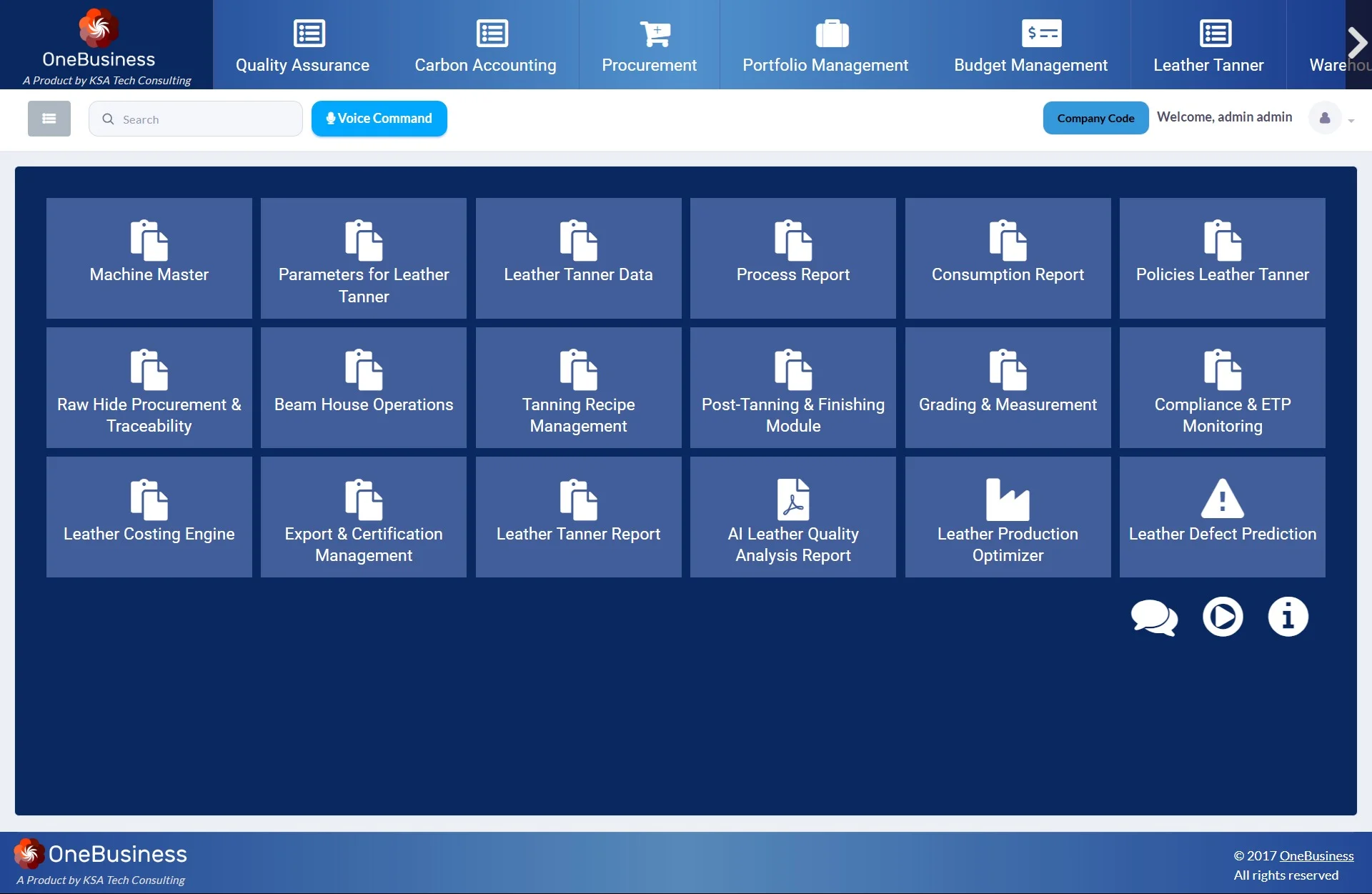
Once the required parameters are configured and validated, approved process instructions can be pushed from the ERP to the PLC, allowing machine operators to execute the process through the HMI. During machine operation, the PLC records actual process information such as start and pause times, cycle duration, water consumption, chemical dosing, power usage, and other machine-specific parameters. This data is transmitted back to OneBusiness ERP through the MQTT communication layer, creating a manufacturing ERP with PLC integration that can compare planned or configured values with actual machine performance. The system can then generate Process Reports and Consumption Reports, providing visibility into production execution, resource consumption, machine performance, and process deviations. This end-to-end PLC integration for manufacturing ERP connects recipe and process configuration → approval → PLC execution → machine data collection → ERP reporting, helping manufacturers improve automation, traceability, process consistency, and operational control.