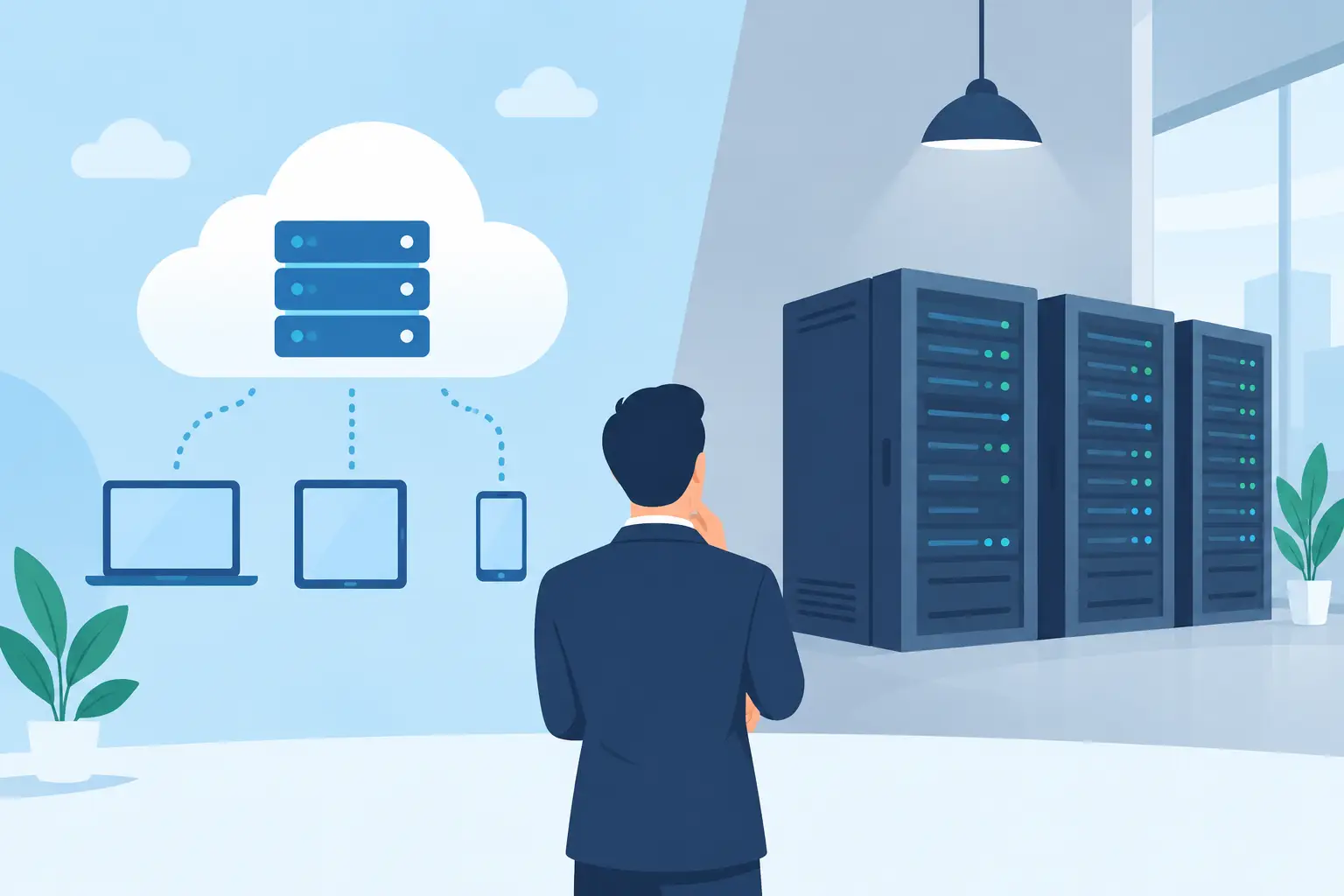

When the warehouse team is counting stock in one system, finance is reconciling invoices in another, and production is tracking work on a spreadsheet, the business is already paying for fragmented operations. Cloud ERP software Australia businesses choose should bring those daily activities into one practical operating environment, without forcing teams to work around technology.
For manufacturers, processors, traders, labour-hire firms, retailers and hospitality operators, an ERP decision is not simply an accounting software upgrade. It affects how reliably you can fulfil orders, control margins, plan labour, trace materials, report to management and respond when conditions change.
What cloud ERP software in Australia must handle
A cloud ERP should create a shared record of what is happening across the business. Finance needs current receivables, payables and cash position. Operations needs dependable stock levels, work orders, job costs and schedules. Owners need to see whether revenue is translating into profitable, controllable growth.
That shared view matters most in businesses with moving parts. A manufacturer may need to connect bills of materials, purchasing, production planning, quality checks, finished goods and invoicing. A labour-hire business may need timesheets, award-aware billing, client approvals and worker records aligned. A plantation or processing operation may need harvest, batch, yield and traceability data alongside financial reporting.
The core modules should cover the fundamentals, but they should also work as one system:
- financial accounting, budgeting and cash-flow visibility
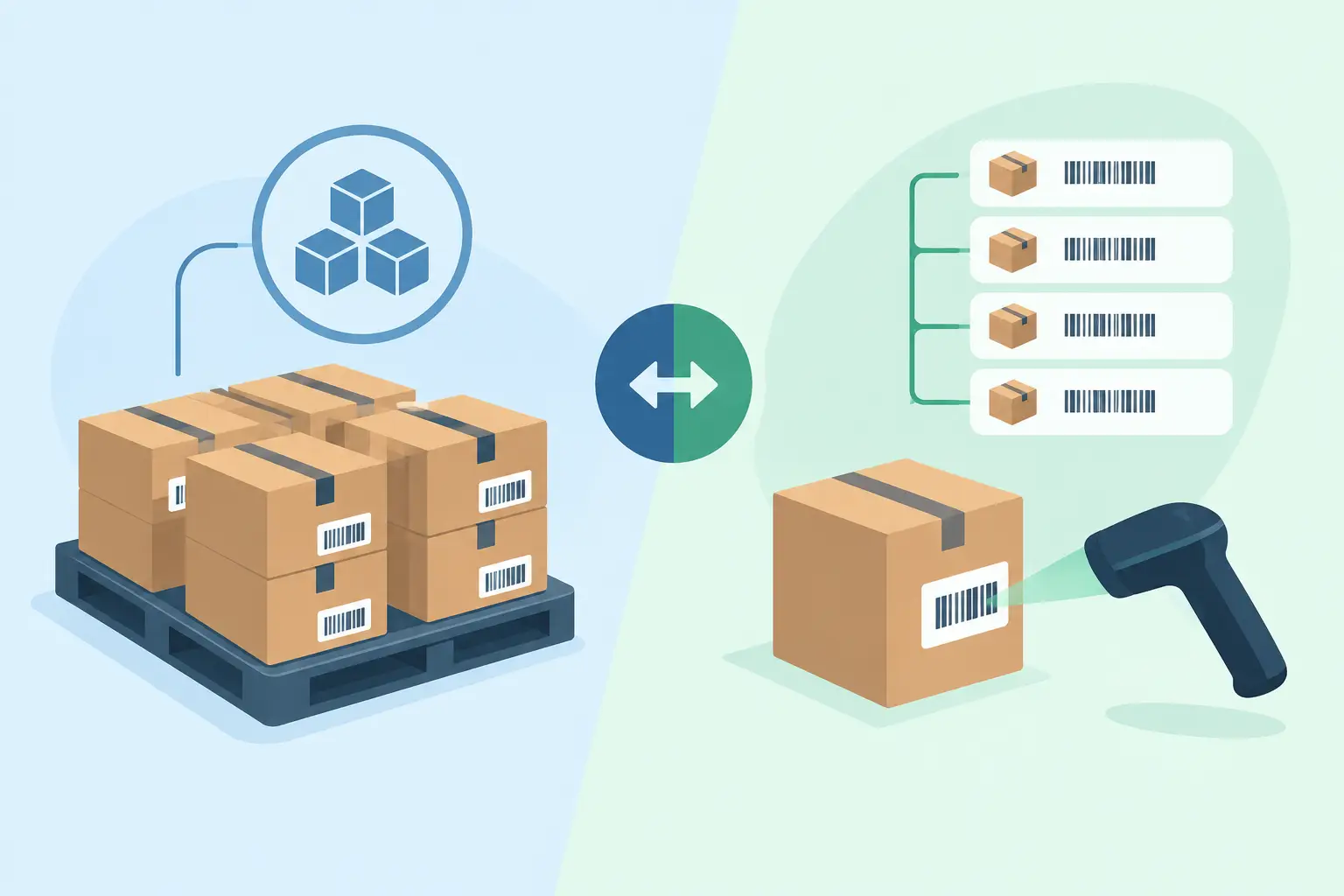
- purchasing, warehouse management and inventory control
- sales, CRM, quotations, billing and customer service
- production, job costing, project management and maintenance planning
- payroll-adjacent labour, rostering or sector-specific workflow controls
The test is not whether a vendor can show each module on a feature list. It is whether a stock receipt updates availability, cost and accounts correctly; whether a completed job flows into billing; and whether management can trust the reporting without waiting for someone to repair a spreadsheet.
Start with operational bottlenecks, not a software wish list
Many ERP projects become harder than necessary because the selection process starts with a long list of generic functions. A better starting point is to identify the moments where work slows down, errors appear or decisions are made with incomplete information.
For example, a distributor may be losing margin because landed costs are not visible until weeks after goods arrive. A production business may be buying too much raw material because planners cannot see current demand and work in progress. A professional practice may struggle to invoice promptly because time, expenses and project milestones sit in separate tools.
Map these workflows from the trigger to the final financial result. Include the people who do the work, not only managers and IT staff. Warehouse supervisors, accounts teams, production planners and sales administrators will often identify exceptions that are invisible in a high-level process map. Those exceptions are where an out-of-the-box system can fall short, and where configuration may be worth the investment.
Choose the right level of configuration
Cloud ERP is often presented as a choice between standard software and heavily customised software. In practice, the strongest approach is usually a controlled mix of both. Use proven standard processes where they fit, then configure the workflows, screens, approvals and reports that genuinely differentiate your operation.
Customisation is valuable when it reflects a real operational requirement. This could include batch tracking for a processor, production recipes for a manufacturer, specialised job cards, customer pricing rules, or labour-hire compliance steps. It becomes a liability when it recreates every legacy habit without asking whether that habit still serves the business.
Ask vendors to demonstrate your actual workflow using realistic examples. A polished sales demonstration can make any platform look suitable. A meaningful demonstration should show how the system handles a partial delivery, a returned item, a production delay, a pricing exception or a change in job scope. These are the conditions that define daily usability.
Plan implementation as an operational change
A cloud deployment does not remove the need for disciplined implementation. It removes much of the on-premises infrastructure burden, but the work of cleaning data, agreeing processes, assigning ownership and training staff remains.
The most reliable projects establish a clear scope for the first release. Finance, customer records, products, opening balances and essential operational workflows may need to be live from day one. Other capabilities, such as advanced forecasting, machine connectivity or expanded analytics, can be staged once users are confident with the core platform.
Before go-live, make sure the project has answers to five practical questions:
- Who owns the quality of customer, supplier, item and inventory data?
- Which reports will leaders use to run the business in the first month?
- What approvals, permissions and audit controls are required?
- How will staff be trained for their own daily tasks?
- What support process applies when an issue affects operations?
Data migration deserves particular attention. Importing years of inconsistent records can delay the project and create confusion after launch. Often, clean opening balances, active customers and suppliers, current inventory, open orders and agreed historical reporting are more useful than moving every old transaction.
Use AI, analytics and machine data where they solve a real problem
AI capability is becoming part of the conversation around cloud ERP software Australia providers offer, but it should be assessed with the same commercial discipline as every other feature. A generative-AI voice bot may help users find information, raise requests or complete routine tasks faster. Machine learning can assist with forecasting, anomaly detection and demand patterns. These tools are useful when the underlying data and process controls are sound.
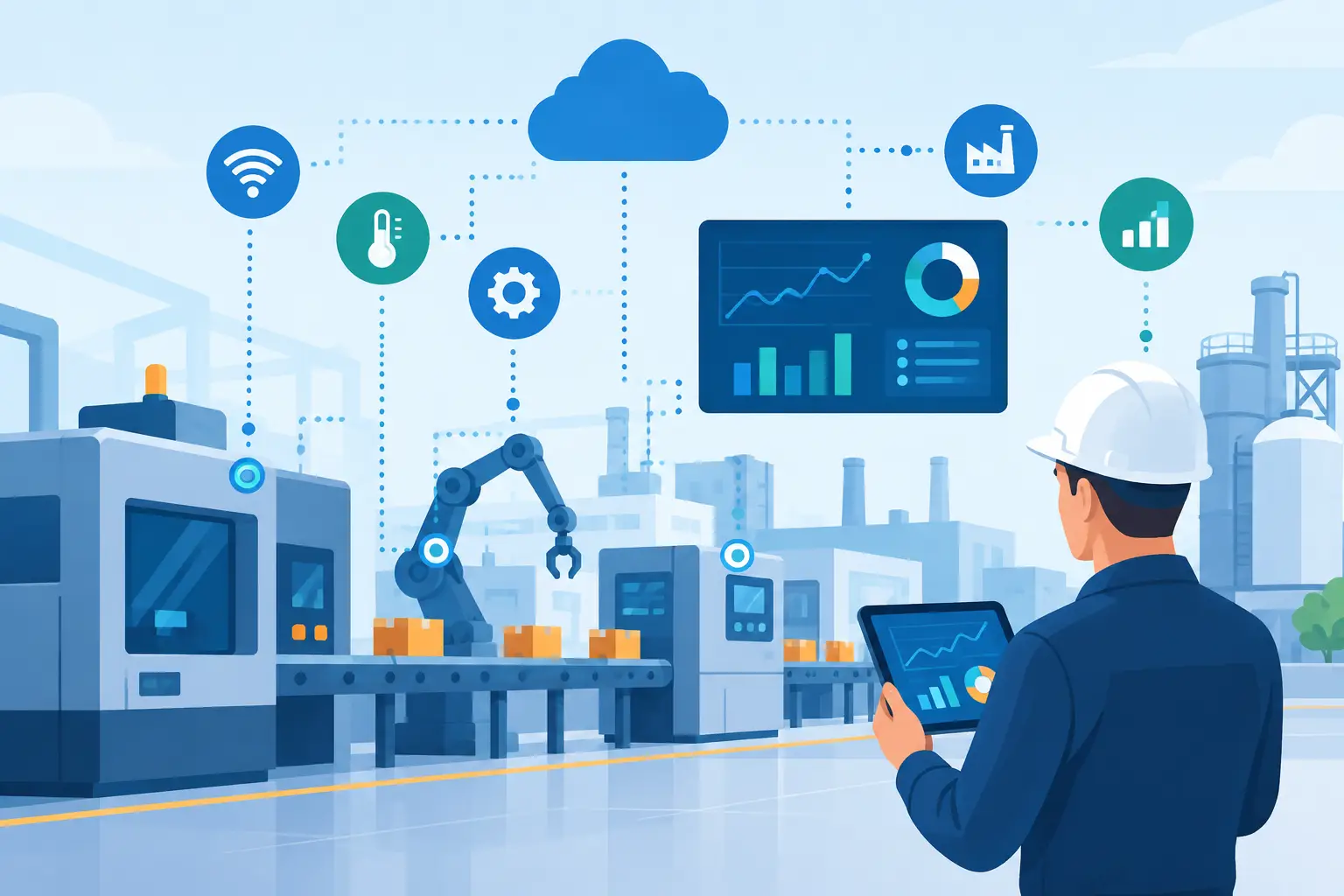
For industrial operations, the opportunity can go further. PLC and machine integration can feed production counts, run time, downtime or quality readings into the operating system. That reduces manual entry and gives planners a more current view of capacity and output. However, integration should be designed around a clear business case. Capturing every available machine signal creates noise if nobody can act on it.
Power BI or equivalent analytics can turn ERP data into accessible dashboards for owners, department heads and site managers. The right dashboards focus attention on decisions: stock ageing, gross margin, overdue receivables, production variance, labour utilisation, order fulfilment and forecast demand. More charts do not automatically produce better control.
Security, carbon reporting and local operating confidence
Cloud ERP places valuable financial and operational information in a connected environment, so security cannot be treated as an afterthought. Look for role-based access, multi-factor authentication, audit trails, backups, monitoring and a clear process for managing security incidents. The provider should be able to explain responsibilities plainly, including what they manage and what your team must manage.
For businesses supplying larger customers or working towards sustainability targets, carbon accounting is also becoming more relevant. ERP can provide a useful foundation by organising purchasing, production, energy-related and logistics data. It will not make emissions data perfect on its own, but it can make reporting more consistent and less reliant on manual collection.
OneBusiness brings these requirements together through a managed, configurable platform that combines accounting, operational modules, industry workflows, analytics, AI capability and industrial connectivity. For a growing business, the value lies in having one accountable system that can evolve as processes become more sophisticated.
The best ERP choice is the one your people can use confidently at 4 pm on a busy Friday, not merely the one that looks impressive in a boardroom demonstration. Choose a platform and implementation partner that understand your operational pressure points, begin with the controls that matter most, and leave room for the business to grow without returning to disconnected tools.