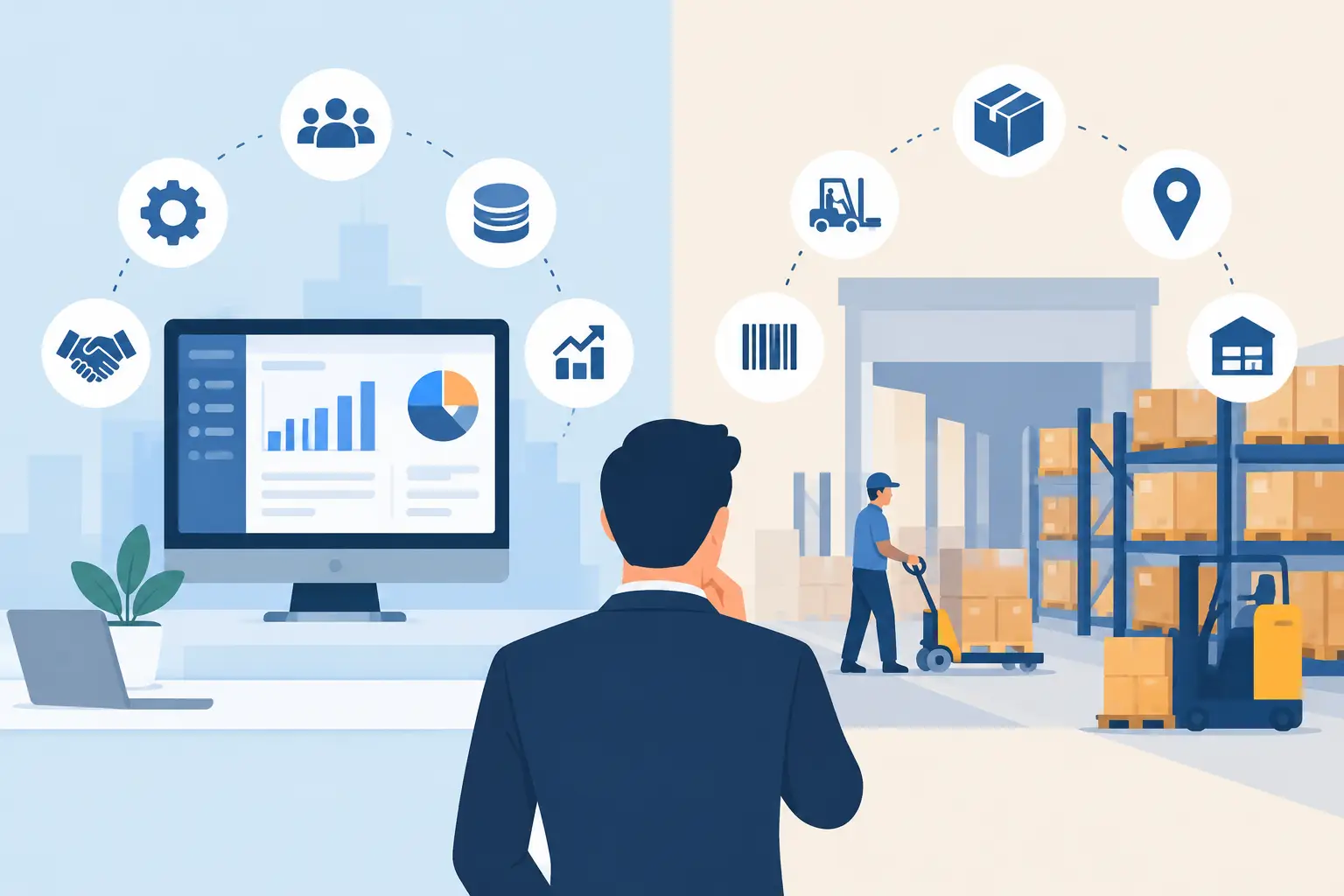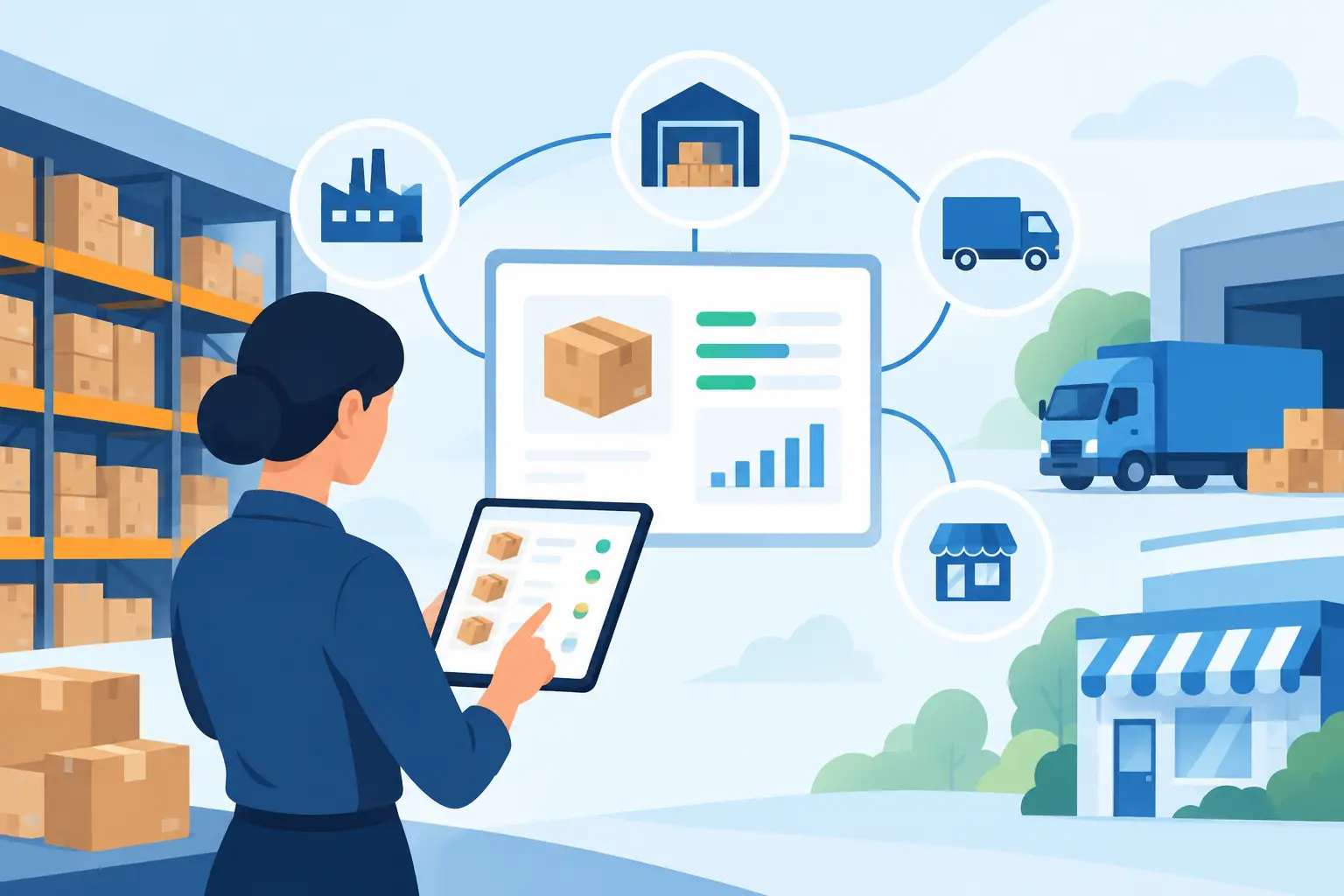
A production supervisor should not need to wait until month end to learn that material waste has risen, labour costs have drifted, or a machine stoppage is threatening delivery dates. Yet for many growing businesses, those answers still sit across spreadsheets, accounting software, warehouse records, machine logs and separate reporting tools.
Future ERP integration trends are changing that picture. The focus is moving beyond connecting systems simply to move data from A to B. The next phase is about connecting operational events, financial outcomes, people and physical assets so leaders can act while there is still time to improve the result.
For Australian manufacturers, processors, retailers, hospitality operators and labour-hire businesses, this matters because margins are shaped on the floor, in the warehouse, at the worksite and at the point of sale. An ERP that brings those activities together can provide much stronger control than a finance system that only explains what happened after the fact.
Future ERP integration trends that affect daily operations
The most useful integrations will be judged by a simple question: do they reduce manual effort and improve a business decision? A connection that creates another dashboard but does not help the warehouse team receive stock accurately or help finance close the books faster has limited value.
The following trends are likely to have the greatest practical effect over the next few years.
Event-driven data will replace scheduled updates
Traditional integrations often run in batches. Stock movements may sync overnight, sales may arrive every few hours and production information may be uploaded at the end of a shift. This approach can work for low-volume operations, but it creates blind spots when demand changes quickly or supply is tight.
Event-driven integration sends important updates as they occur. When a purchase order is receipted, a pallet is scanned, a job is completed or an invoice is approved, the ERP can update the relevant stock, cost, customer and reporting records immediately. This gives planners a current position rather than a delayed estimate.
Real-time does not mean every piece of data needs to move instantly. Sending high-frequency sensor readings directly into core financial records would add cost and noise. A better design filters machine data at the edge, records exceptions and totals, then passes the business-relevant result into the ERP. The right timing depends on the decision being made.
Machine and PLC connectivity will become operational standard practice
In process manufacturing, industrial garment washing, tanneries and production environments, machines produce information that is often underused. PLCs, scales, temperature controls, meters and counters can show actual output, run time, consumption, downtime and quality conditions.
Integrating this data with ERP production orders creates a more reliable record of what occurred. Actual material consumption can be compared with the bill of materials. Machine hours can support maintenance planning. Energy or water usage can be assigned to a batch, product line or customer contract. Where traceability is required, the connection between raw material, process conditions and finished goods becomes much clearer.
This is not a case for replacing experienced operators with automation. Machine data needs business context, and supervisors still need a practical way to record scrap reasons, quality checks, rework and production changes. The value comes from combining shop-floor knowledge with measured data, not treating either source as complete on its own.
AI will move from assistance to controlled action
Generative AI is already making it easier to search records, draft communications and ask questions in plain language. The next step is AI working through connected ERP data to identify exceptions and recommend the next action.
A finance manager may ask why gross margin changed for a product group. An AI assistant could bring together sales prices, discounts, purchase costs, freight, production variance and returns to explain the likely drivers. A warehouse manager could ask which orders are at risk because of an inbound delay. A labour-hire coordinator could check whether planned shifts are covered by available, compliant workers.
Voice interfaces are also becoming more practical for mobile or hands-busy roles. A supervisor may record a production update, request stock availability or log an issue without returning to a desk. For this to work well, the ERP needs defined workflows, clear approval rules and high-quality master data.
AI should not be given unrestricted authority over payments, pricing, payroll or inventory adjustments. Good implementation uses role-based access, approval thresholds and a clear audit trail. Start with tasks that are repetitive, low-risk and easy to verify, then expand automation as the team builds confidence.
Analytics will be embedded in the workflow
Many businesses have reporting, but reporting is commonly separate from the action it should support. A manager sees a Power BI chart showing declining fulfilment performance, then has to chase data across other systems to identify the cause.
Future integrations will place analytics closer to the workflow. A late-order alert can show the relevant supplier, available substitute stock, production capacity and customer commitment in the same operational view. A project manager can see labour, materials, variations and billing status together before a job moves beyond budget.
This requires consistent definitions. If sales, operations and finance each calculate margin differently, a polished dashboard will only make disagreement faster. Integrations need a shared data model for products, customers, jobs, locations, cost centres and units of measure. Establishing that structure is less glamorous than adding AI, but it is usually where long-term reporting confidence is won.
Carbon and compliance data will enter the core record
Environmental reporting is becoming a commercial requirement as well as a regulatory consideration. Larger customers increasingly ask suppliers for emissions information, and operational businesses need a credible view of energy, fuel, freight, waste and material consumption.
Carbon accounting works best when it is connected to the transactions already occurring in the ERP. Purchase data, utility usage, vehicle activity, production volumes and waste records can support emissions calculations with less manual collection. It also helps leaders identify where cost and environmental improvement point in the same direction, such as reduced energy use per unit produced or lower spoilage.
The same principle applies to compliance. Integrating licences, training records, work eligibility, quality documents and maintenance schedules with operational workflows reduces the risk of relying on disconnected folders and reminders. Labour-hire businesses, for example, need worker compliance visible when assigning shifts, not discovered after a placement has been made.
Security will become part of integration design
Every new integration creates another path to valuable business data. Cloud ERP, e-commerce, bank feeds, mobile devices, machine gateways and customer portals all need to be managed as part of one security approach.
The trend is towards tighter identity management, multi-factor authentication, role-based permissions, monitored integrations and retained audit logs. Businesses should also assess what data an external application can read, change or export. A useful integration does not need broad access by default.
For operational technology, segmentation is particularly important. Production equipment should not have open access to financial systems simply because both need to share a small amount of data. Secure gateways, carefully scoped interfaces and monitoring help protect the business without preventing useful machine connectivity.
A connected platform will often beat a patchwork of add-ons
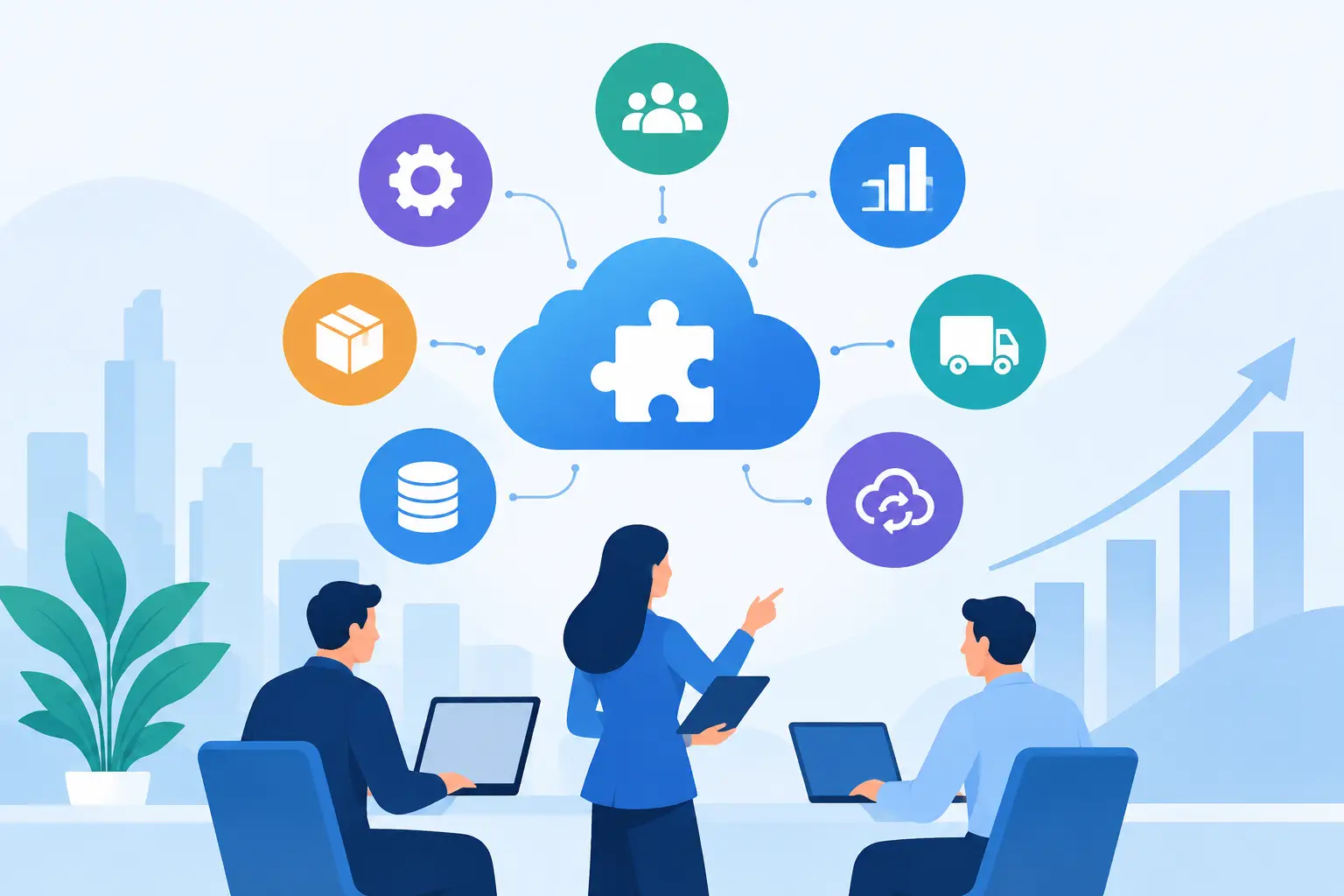
Specialist applications will continue to have a place. A retailer may need a particular marketplace connector, while a manufacturer may rely on equipment-specific software. The question is not whether every function must sit in one application. It is whether the business has one reliable operational record and clearly managed integrations around it.
A patchwork approach can be appropriate when a specialised tool delivers a genuine advantage and has a well-supported integration. It becomes expensive when staff repeatedly re-key data, reconcile conflicting stock figures or build critical processes around spreadsheets. The hidden cost is not only software subscriptions. It is delays, errors, training burden and the time senior people spend resolving disputes about the numbers.
For many mid-sized businesses, a full-featured cloud ERP with configurable industry workflows provides a stronger foundation. OneBusiness can bring accounting, inventory, production, projects, POS, labour administration, machine data and analytics into an all-in-one operating platform while retaining the ability to connect approved specialist systems where needed.
How to prepare without overengineering
The best preparation is usually practical rather than dramatic. Start by mapping the processes that cross departments: order to cash, purchase to pay, stock to production, worker onboarding to timesheets, or harvest to sale. Identify where data is entered more than once, where teams wait for information and where errors create financial or customer impact.
Then define the decisions each integration should improve. A warehouse scan may need to update stock availability. A production completion may need to create a finished-goods receipt and record consumption. A time entry may need to flow into project costs, payroll preparation and client billing. Clear outcomes make it easier to prioritise investment and test whether an integration is working.
Finally, treat data ownership as an operational responsibility. Someone needs to own product records, customer terms, supplier details, employee information and chart-of-account structures. Technology can automate movement and validation, but it cannot correct unclear accountability.
The businesses that gain most from ERP integration will not necessarily adopt every new tool first. They will build connected processes around the work their people perform each day, protect the information that matters and use timely insight to make the next decision with confidence.