A production manager sees a material shortage on the shop floor. Finance sees a healthy stock value in the accounting system. Sales has promised a delivery date based on a spreadsheet that nobody has updated since Friday. The question of ERP versus separate business applications is not really about software preference. It is about whether your teams can act on the same operational facts before a small issue becomes an expensive delay.
For a growing Australian business, separate applications can feel practical at first. A good accounting package handles the books, a point-of-sale system processes transactions, warehouse staff use a stock app, and operations maintain their own production or labour records. The problem appears when work moves between those systems. Every handover creates a chance for duplicate entry, delayed updates and reports that disagree.
Why disconnected systems create operational friction
Separate applications are usually bought to solve an immediate department need. That is not a poor decision in itself. A retailer may need POS quickly, a manufacturer may need better job scheduling, or a labour-hire business may need timesheets that match its award conditions. Each tool may perform well in isolation.
The friction starts when one process crosses several functions. A customer order should affect available stock, purchasing requirements, production planning, billing, cash-flow forecasts and margin reporting. When those records sit in separate applications, staff must export, import, reconcile or simply ask someone else for an answer. By the time the figures are checked, the decision window may have passed.
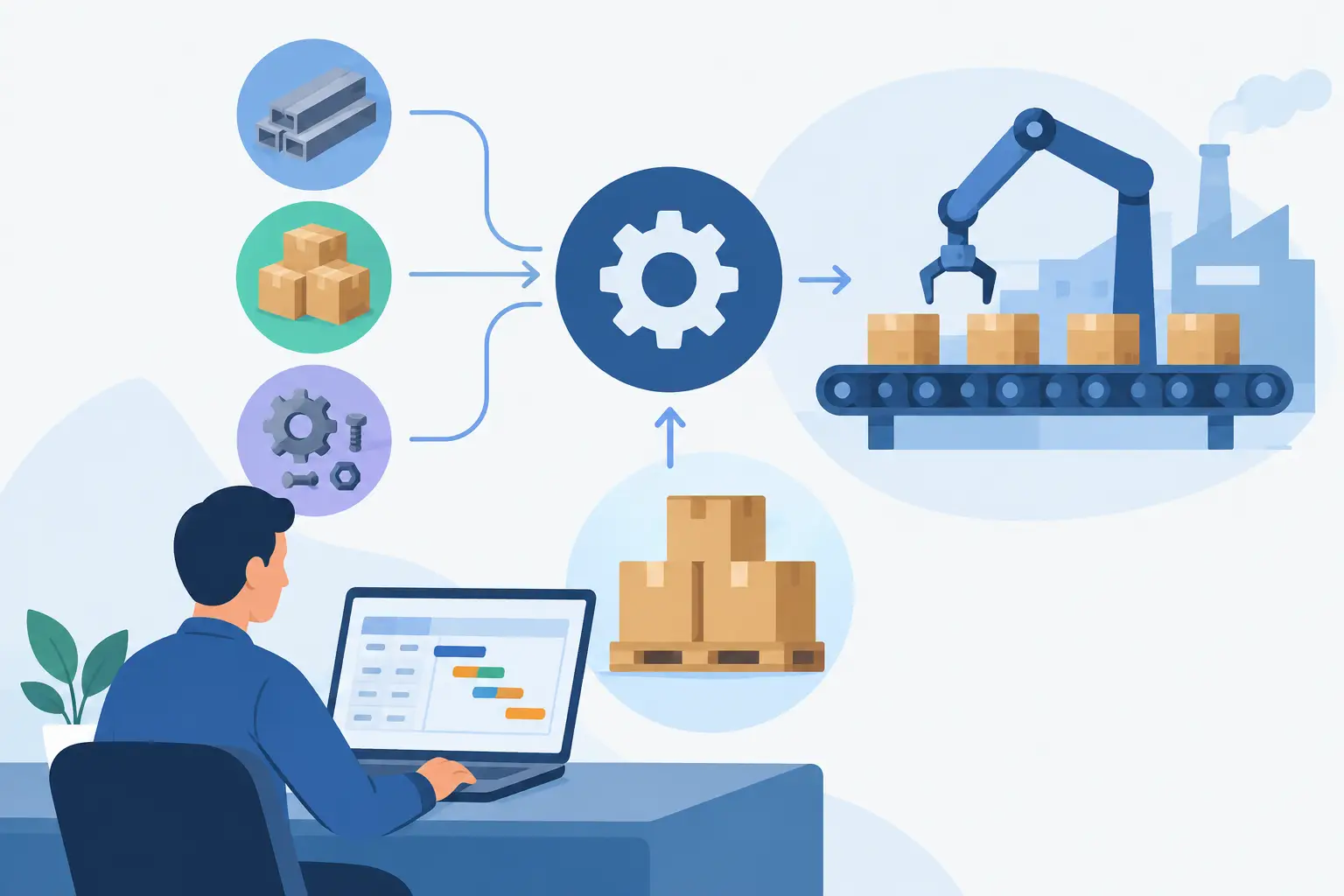
This becomes more pronounced in operationally complex businesses. A processor may need batch traceability and yield information. A plantation operator may need harvest, labour and input costs against a block or season. A manufacturer may need machine readings, work orders, material consumption and finished-goods movements to align. If the data is fragmented, leaders receive a retrospective view rather than a working view of operations.
There is also a control issue. When spreadsheets become the bridge between systems, the business depends on individual knowledge. Formula changes, version confusion and manual adjustments are difficult to audit. The business can keep operating, but confidence in its numbers declines as transaction volume rises.
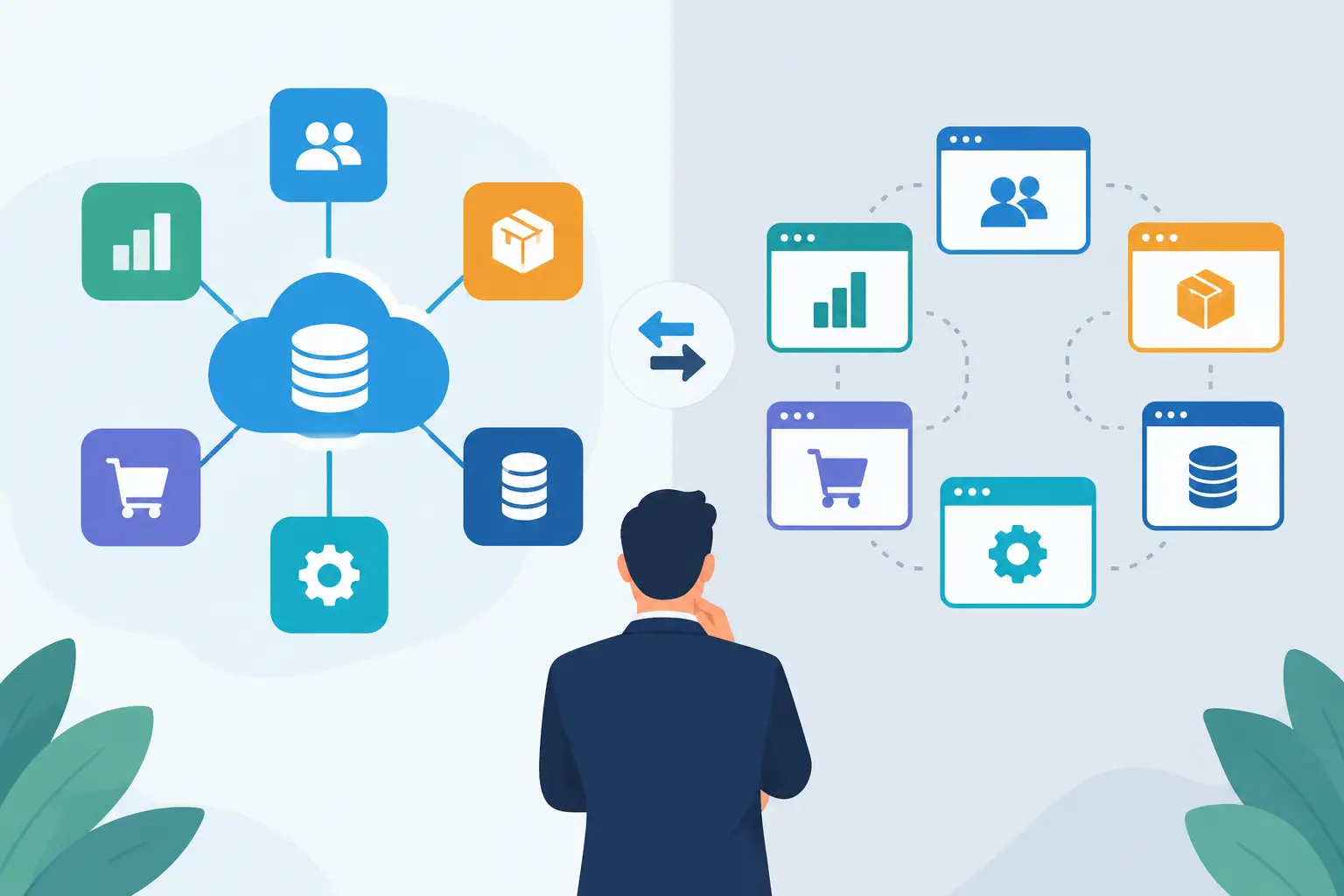
ERP versus separate business applications: the practical difference
An ERP brings core processes into one connected operating platform. Financial accounting, sales, purchasing, inventory, projects, production, payroll-related labour administration and reporting use shared records and defined workflows. A sale does not need to be re-entered across multiple tools for its operational and financial effects to be understood.
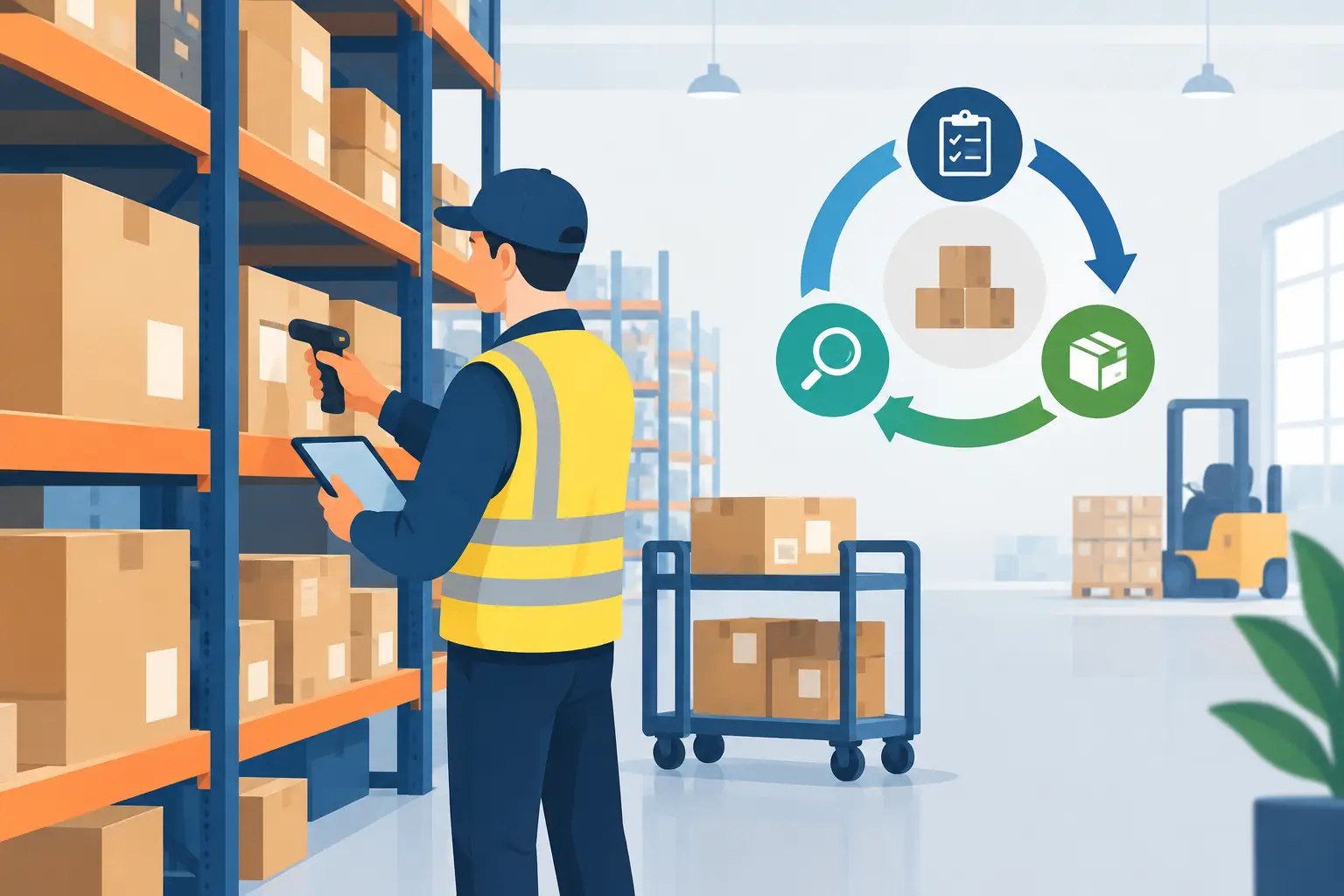
That connection changes day-to-day work in practical ways. Warehouse teams can see which orders have been allocated and which stock is genuinely available. Finance can trace cost movements back to the source transaction. Production planners can review demand, component availability and capacity with less reliance on manual consolidation. Owners and department heads can compare revenue, margin, stock exposure and operational performance from a more consistent data set.
A connected ERP does not mean every business must force every specialist activity into a generic screen. The stronger approach is to use a platform that can be configured for the industry workflow while maintaining a single source of truth. For example, machine or PLC data can inform production records, mobile transactions can update field activity, and Power BI reporting can turn operational data into clear management views.
The value is not that every process becomes identical. It is that the hand-offs are controlled. Each team can work in the part of the system relevant to its role while contributing to the same live picture of the business.
When separate applications can still make sense
A collection of separate applications can be appropriate for a very small business with simple transactions, a limited product range and no need for formal stock or production control. It can also suit a business that has a genuinely specialised tool which must remain in place, such as a niche machine-control system or industry marketplace.
The key question is whether the separate tools are connected reliably enough for the decisions that matter. If data moves automatically, is validated, and reconciles back to finance without manual workarounds, a best-of-breed environment can work. However, integrations require ownership, monitoring and maintenance. A connection that fails quietly can be worse than an obvious manual process because decisions are made from data assumed to be current.
Separate applications also look cheaper when assessed one subscription at a time. That comparison can miss the cost of double handling, integration support, reporting delays, stock discrepancies, training across several interfaces and the time senior staff spend resolving conflicting numbers. The right comparison is total operating cost, not just licence cost.
Better visibility is only useful when it supports action
ERP projects are often discussed in terms of visibility. Visibility matters, but it should lead to a better action. Knowing that inventory is high is useful only if purchasing, sales and production can identify the cause and respond. Seeing a project margin is useful only if labour, materials and variation costs arrive in time to protect it.
This is where a well-configured ERP can improve planning. Reorder rules can use actual demand and committed orders. Production plans can take material availability into account. Sales teams can work from more reliable delivery information. Finance can assess the cash and margin effect of operational decisions without waiting for month-end.
AI-enabled features can add another layer when the underlying data is trusted. Voice-based assistance can help users retrieve information or complete routine tasks. Machine learning can support forecasting and exception identification. These tools are useful when they reduce the effort needed to find a problem, but they cannot compensate for incomplete source data or poorly defined processes.
The same principle applies to carbon accounting and cybersecurity. Carbon measures are more credible when purchase, production, energy and transport data can be connected to the right products or activities. Security monitoring is more manageable when access, workflows and data governance are controlled across one business platform rather than scattered through unmanaged tools.
Choosing an ERP without losing operational fit
Moving to ERP should not mean buying a large system and hoping the business adapts around it. Start with the workflows that cause the most friction: delayed invoicing, stock adjustments, manual production records, unprofitable jobs, unplanned overtime or slow month-end reporting. These are the processes that should shape the implementation scope.
Then look closely at how the platform handles your sector. A garment washing operation, hospitality group, professional practice and labour-hire provider may all need finance, sales and reporting, yet their operational records are very different. Industry-specific configuration matters because it reduces the number of workarounds users need to create after go-live.
Implementation should be staged where appropriate. Many businesses begin with finance, sales, purchasing and inventory, then add production, projects, POS, workforce functions or specialised integrations. A staged approach can reduce disruption, provided the data model and process design support the future operating model from the beginning.
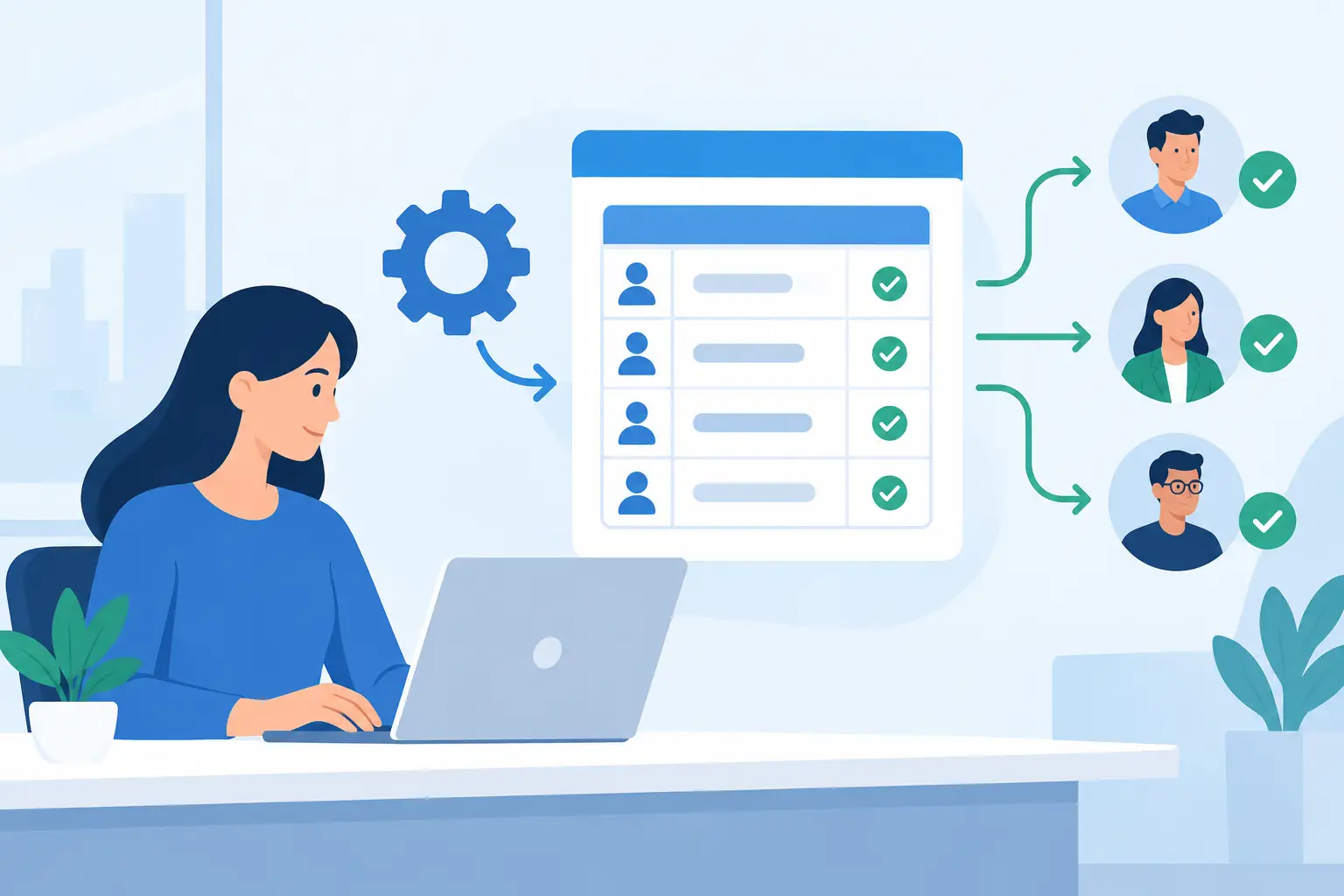
It is equally important to plan data ownership and user adoption. Decide who maintains item records, customer information, cost structures and approvals. Give each team practical training based on its daily transactions, not generic software demonstrations. The best system design still fails if users return to offline spreadsheets because the process feels harder than the old method.
OneBusiness is designed for businesses that need this balance: broad cloud ERP capability, configurable industry workflows and support for operational data from the shop floor through to management reporting. The aim is not simply to replace applications. It is to give finance and operations a connected basis for running the business with more control.
The decision does not have to be framed as a dramatic all-or-nothing technology change. Start with the operational moments where people currently wait, re-enter data or debate whose report is correct. Those moments reveal whether your applications are supporting growth, or quietly making growth harder to manage.