A production supervisor should not need three spreadsheets, a phone call to the warehouse, and a month-end report to answer a basic question about a job’s profitability. Yet that is still the daily reality for many operational businesses. An AI enabled industry operating platform brings financial, operational and machine-level information into one connected system, so decisions can be made from current data rather than assumptions.
For manufacturers, processors, plantations, retailers, labour-hire operators and service businesses, this is more than a technology upgrade. It changes how the business controls stock, plans work, manages people, bills customers and responds when conditions shift.
Why standard business software often falls short
Most growing businesses begin with sensible tools: accounting software, spreadsheets, separate stock systems, manual job cards and perhaps a point of sale or rostering application. Each tool may work well on its own. The problem appears when a transaction in one system does not automatically update the others.
A sales team may confirm an order without seeing the actual available stock. Production may consume materials that finance has not yet recognised. A labour-hire manager may approve timesheets while invoicing waits for manual reconciliation. By the time reports are prepared, the numbers are already historical.
Standard ERP can improve this picture by bringing core finance, purchasing, inventory, sales and billing together. However, operationally complex industries often need more than a generic implementation. They need workflows that reflect batch processing, production stages, quality checks, harvest activity, machine readings, labour allocation, customer-specific pricing and regulatory requirements.
That is where an industry operating platform has a different role. It is designed not only to record what has happened, but to support how work actually moves through the business.
What an AI enabled industry operating platform connects
The value of a connected platform comes from the relationship between modules. Financial accounting is no longer isolated from the warehouse. Sales orders can flow into production planning. Completed work can trigger invoicing. Labour activity can be allocated to the relevant project, work order or customer contract.
For a manufacturing business, this may mean bills of materials, production orders, raw-material consumption, finished goods and job costs are handled in the same environment. For a plantation, it may mean tracking harvest records, labour, field activity, inputs, yield and sales outcomes together. For hospitality or retail, stock, point of sale, purchasing, promotions and financial reporting can be viewed in one place.
An effective platform commonly combines finance, warehouse and inventory control, CRM, sales, billing, project management, purchasing, production planning and sector-specific workflows. The purpose is practical: reduce rekeying, make status visible and create a reliable record of operational activity.
It also creates a clearer chain of accountability. When a margin drops, managers can investigate whether the cause is material cost, wastage, discounting, labour time, freight, machine downtime or an incorrect production standard. That level of traceability is difficult when information is spread across disconnected applications.
AI should improve decisions, not add another dashboard
AI is useful when it removes friction from real work. It is less useful when it becomes another screen for staff to monitor or a feature with no connection to operational outcomes.
Within an industry operating platform, AI and machine learning can help identify unusual patterns, forecast demand, support stock replenishment and highlight transactions that need attention. Generative-AI voice bots can make it easier for employees to ask questions, locate information or complete routine tasks without navigating complex menus.
For example, an operations manager might ask for orders at risk of missing their promised date, stock below its reorder level, or the current cost position of a production run. The platform should draw on live business data and present an answer that can be checked, rather than relying on a static report created days earlier.
AI recommendations still require operational judgement. Demand forecasting can be affected by a large customer order, a seasonal change, supply disruption or a new product launch. A flag for unusual labour cost may be correct, or it may reflect a legitimate urgent shift. The role of AI is to surface useful signals quickly so experienced people can act with better context.
Machine and PLC data turn activity into evidence
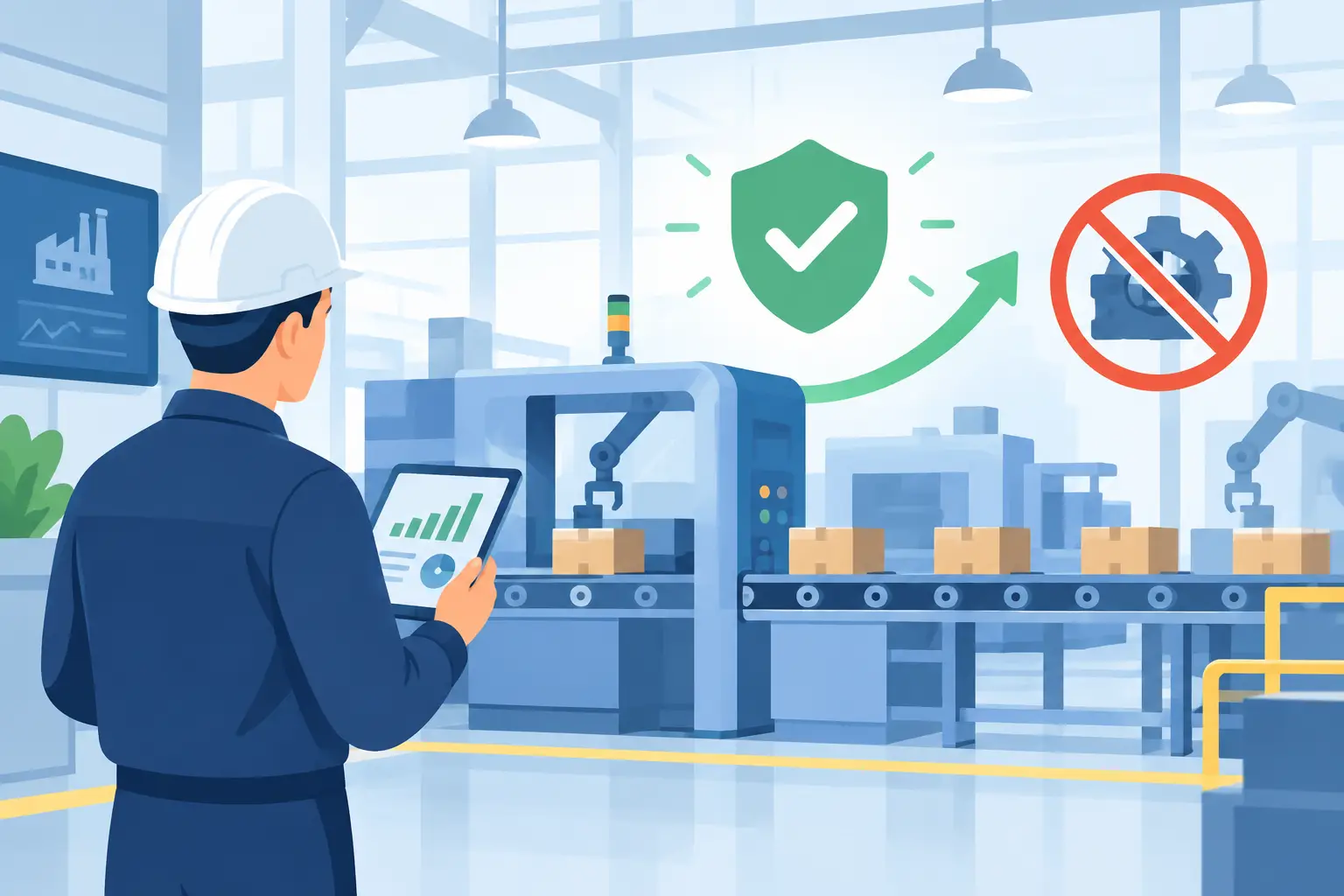
For industrial operations, the gap between the factory floor and the finance office is often where visibility is lost. Production teams may know a machine is slowing down or using more energy, but that information may never reach planning, maintenance or costing processes in a timely way.
Machine and PLC integration helps close that gap. A connected system can capture production counts, operating time, downtime, temperature, pressure or other relevant readings, depending on the equipment and process. Those signals can support more accurate production records, maintenance planning, quality controls and resource analysis.
The benefit is not simply more data. It is data tied to a work order, batch, product line or shift. If output falls, managers can investigate the operational reason and its financial impact together. If a process-based manufacturer needs batch traceability, machine data can strengthen the audit trail alongside material and quality records.
Not every business needs deep industrial integration. A professional practice may gain more value from project controls, time capture and billing automation. A retailer may prioritise point of sale and stock visibility. The right platform should be configurable around the operation, rather than forcing every business into the same workflow.
Reporting becomes a management tool
Many businesses have reports but lack decision-ready insight. Finance may have a profit and loss statement, operations may have a production report, and sales may maintain a pipeline view. The issue is that these reports often tell different versions of the same business.
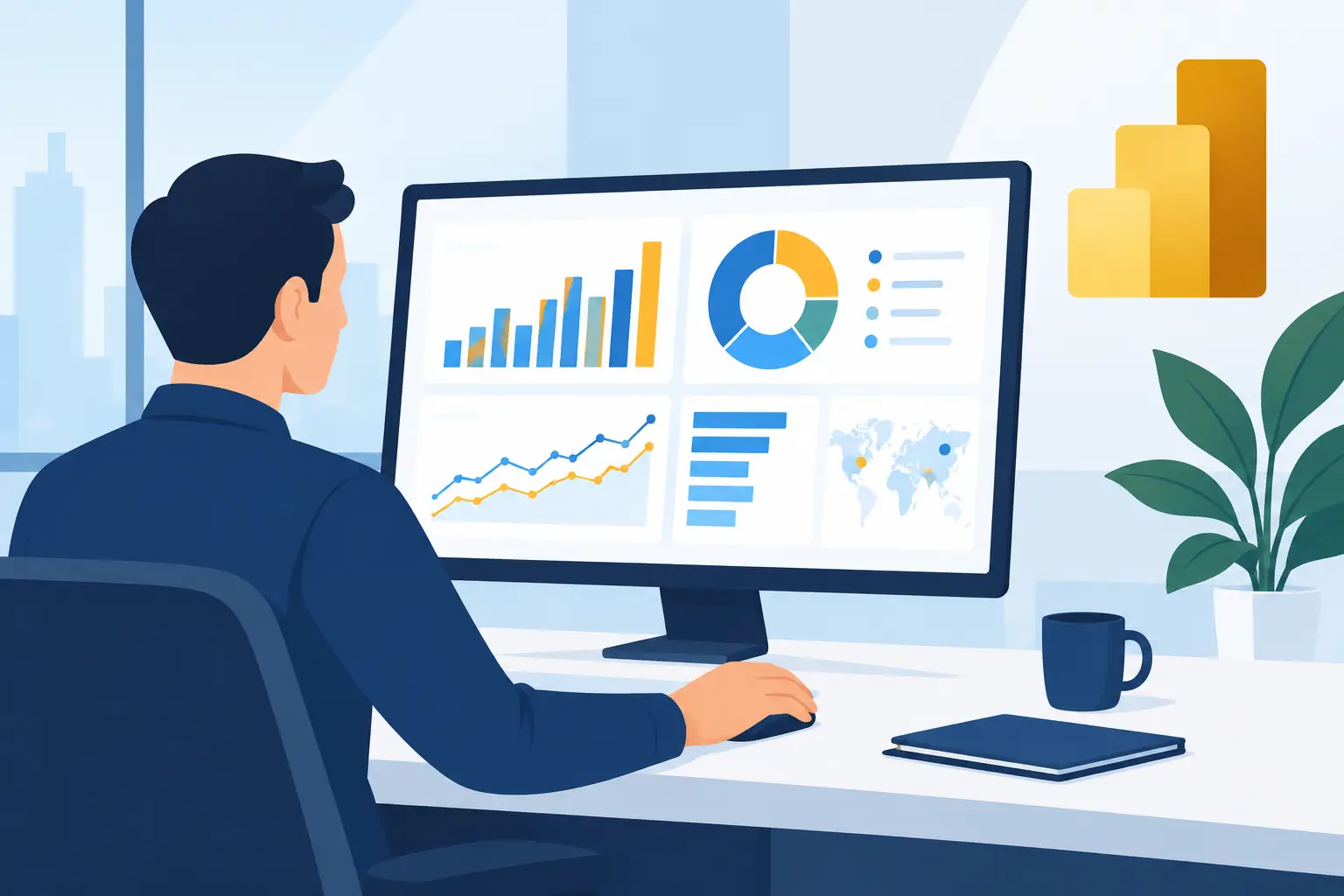
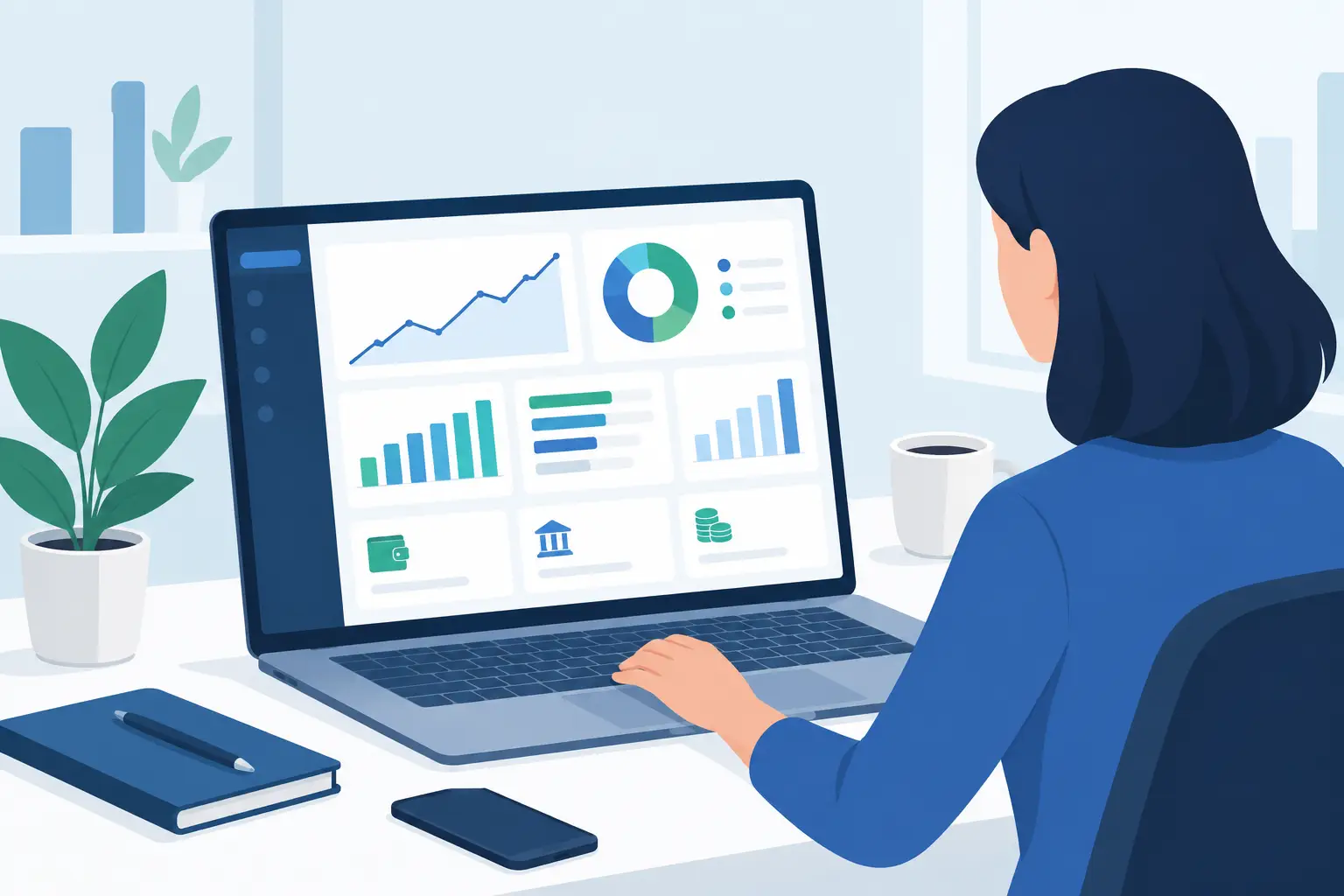
When operational and financial data are connected, Power BI analytics can provide a shared view of performance. Leaders can examine revenue, gross margin, stock movement, production efficiency, labour utilisation, project profitability and customer trends without waiting for a manual reporting cycle.
The most valuable dashboards are not necessarily the most detailed. A warehouse manager needs exceptions such as delayed receipts, picking bottlenecks and ageing stock. A finance manager needs cash flow exposure, overdue debtors and margin movement. An owner needs a concise view of what is performing, what is at risk and where attention is required.
Good reporting also needs sound data governance. If product codes, units of measure, labour categories or customer records are inconsistent, even the best visualisation will be misleading. Implementation should therefore include clear data ownership, sensible approval rules and training for the people entering information each day.
Carbon accounting and security are operational requirements
Carbon accounting is becoming increasingly relevant for organisations responding to customer requirements, supply-chain expectations and internal sustainability targets. For businesses that consume energy, process raw materials, operate vehicles or manage waste, environmental reporting is more credible when it is based on connected operational records rather than estimates assembled at year end.
An industry platform can help bring activity data, purchasing records and production information into a more structured carbon-accounting process. The exact approach depends on the industry, the data available and the reporting framework being used. It should be treated as an ongoing operational discipline, not a one-off compliance exercise.
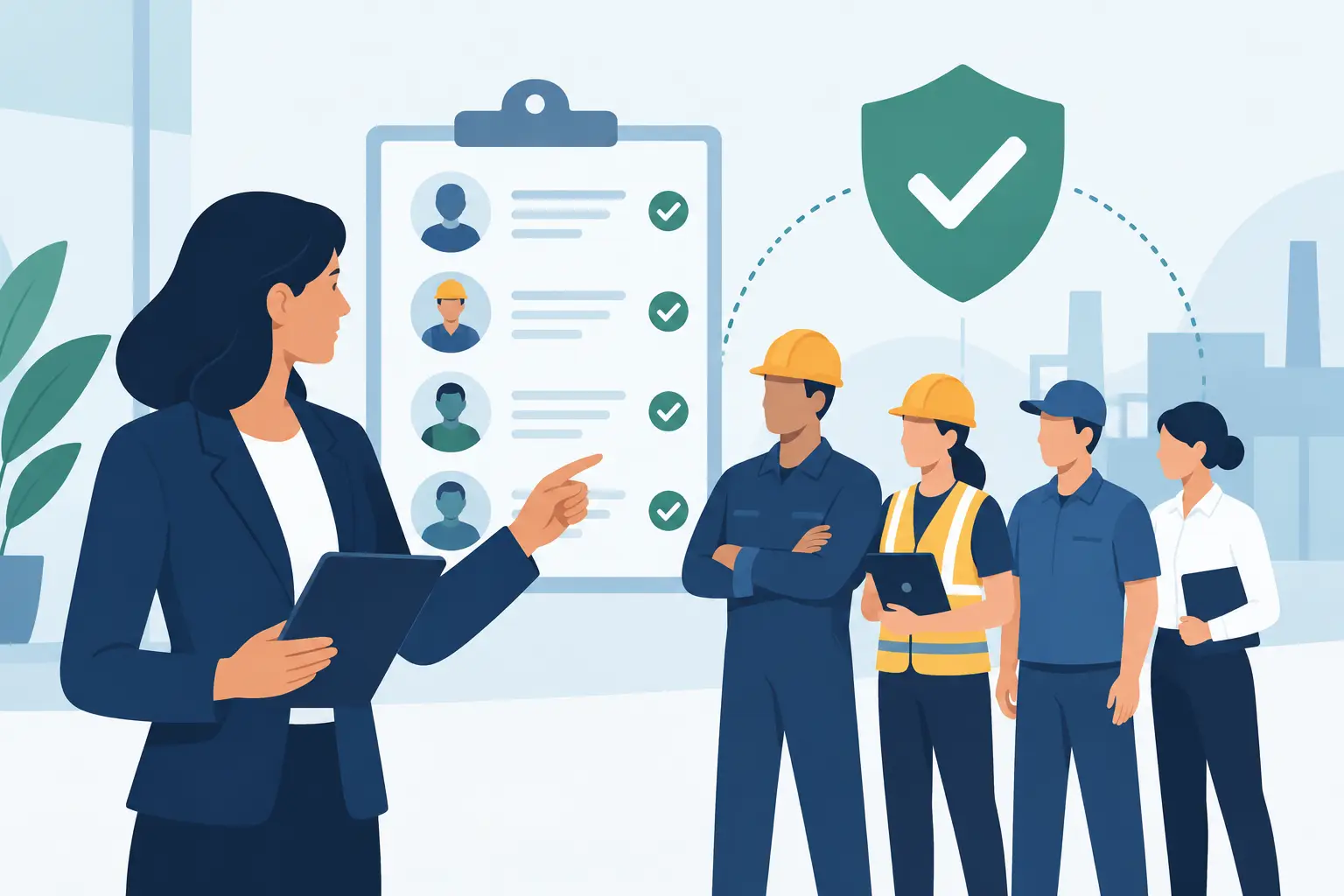
Security deserves the same practical focus. A cloud platform holds financial records, customer data, employee information and operational details that cannot be treated casually. Managed cybersecurity services, access controls, user permissions, monitoring and backup arrangements should sit alongside the ERP implementation, not be considered after go-live.
The trade-off is that stronger controls can add steps for users. The answer is not to weaken security, but to design permissions around real job roles. A store manager, production planner and external accountant each need different access. Clear controls protect the business while keeping daily tasks straightforward.
Making the platform work in the real business
Technology alone does not fix fragmented operations. A successful implementation starts by mapping the flow of work: from enquiry and quotation through purchasing, stock movement, production or service delivery, invoicing and reporting. This identifies where information is delayed, duplicated or lost.
The best rollout is often staged. Start with the workflows that create the largest operational pain or financial risk, then extend the platform as staff become confident. A business with unreliable inventory may begin with stock control, purchasing and sales. A labour-hire company may begin with placement records, timesheets, payroll-related data and customer invoicing.
Configuration matters because industry language and processes matter. Teams adopt systems more readily when screens, approvals and reports match the way they work. OneBusiness supports this approach through configurable industry workflows, managed implementation and connected capabilities across ERP, AI, analytics, machine data, carbon accounting and security.
The practical test is simple: can the platform help people complete their work accurately with less chasing, less rekeying and better visibility? When it can, the business gains more than a new system. It gains a dependable operating foundation for growth, control and faster decisions.
AI-Enabled Industry Operating Platform
OneBusiness ERP is evolving from a traditional enterprise resource planning system into an AI-enabled industry operating platform, embedding artificial intelligence directly into everyday business processes. Instead of simply recording transactions, the platform uses AI to analyze enterprise data, generate insights, automate repetitive activities, and support better decision-making. AI capabilities span financial analysis, accounts payable and receivable, cash flow analysis, customer intelligence, sales forecasting, inventory forecasting, project cost and resource forecasting, and automatic purchase order generation, helping organizations move from reactive operations to more proactive and data-driven management.
The platform also brings AI into sales, project management, manufacturing, and customer operations. AI-powered 360° Customer Intelligence, Opportunity Scoring, and Quote Generation help sales teams identify valuable opportunities and respond faster to customers. Project teams can use AI for monthly report generation, cost forecasting, and resource forecasting, while specialized manufacturing capabilities such as AI Leather Production Optimization and AI Leather Defect Prediction help improve production efficiency and quality. These capabilities work alongside existing ERP transactions, production processes, PLC integrations, inventory data, and financial information, allowing AI to understand the operational context behind the data and provide more meaningful recommendations.
At the foundation of this ecosystem is an AWS Bedrock and Claude Sonnet integration framework, together with a RAG-based enterprise training chatbot that uses organizational knowledge stored in a secure knowledge base. Additional capabilities such as AI Meeting Notes help automate everyday administrative activities and convert business information into useful outputs. By combining ERP transactions, automation, predictive analytics, generative AI, industry-specific intelligence, and enterprise knowledge within one platform, OneBusiness aims to create an operating environment where AI does more than provide information—it helps organizations analyze, predict, recommend, automate, and act, enabling smarter and more efficient business operations