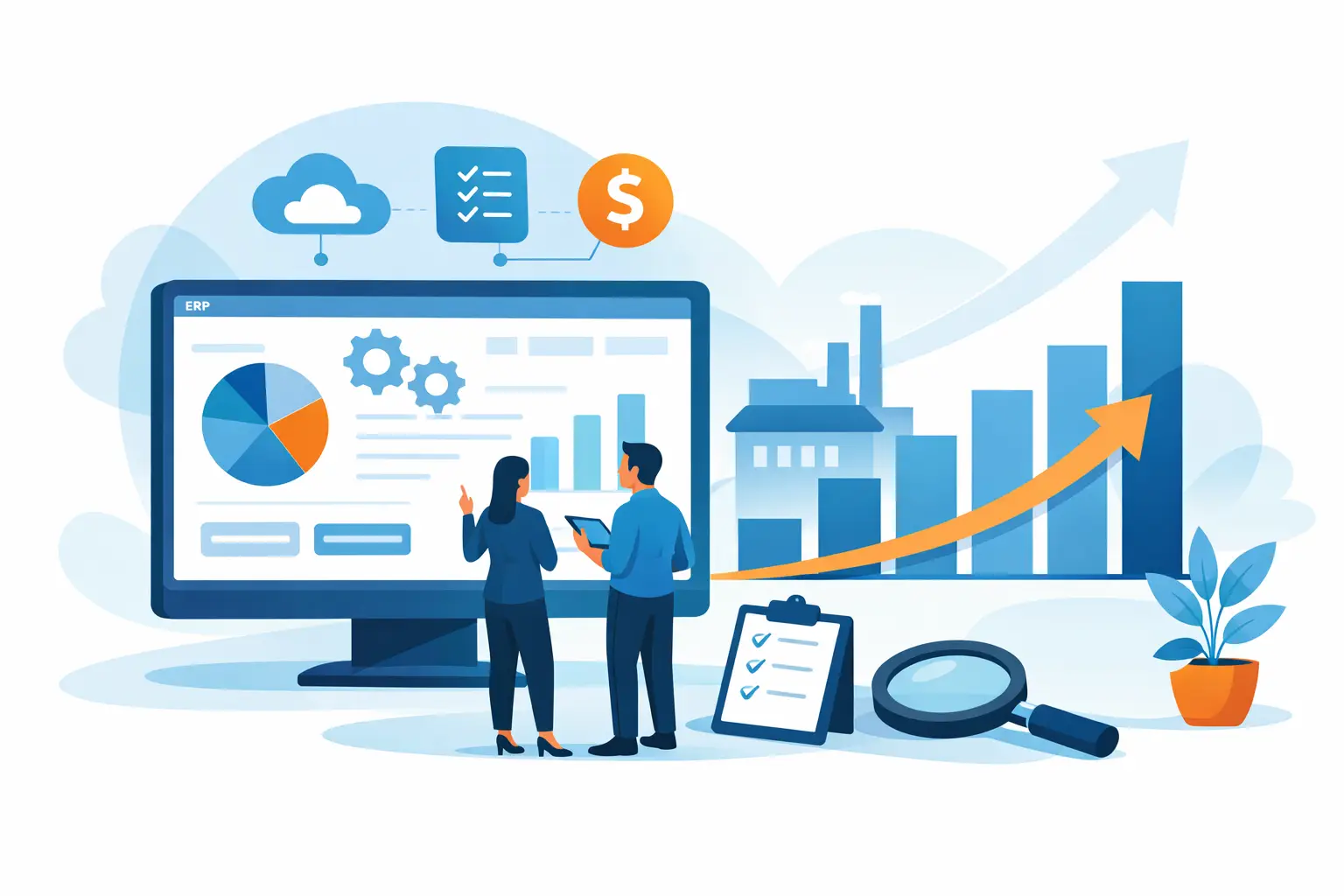
A stock figure that looks right in the accounting system but wrong on the warehouse floor is not a minor admin issue. It can mean an urgent customer order cannot ship, production stops while materials are found, or a buyer orders stock that is already sitting in another location. ERP software for small business is designed to prevent these gaps by giving finance, operations and management one reliable view of the business.
For growing Australian businesses, the question is rarely whether more control is needed. The real question is how to gain that control without introducing a system that is too costly, too rigid or too difficult for busy teams to use. The right ERP should make daily work simpler while providing the operational detail leaders need to plan with confidence.
When disconnected tools start costing the business
Many small businesses begin with a sensible collection of tools: accounting software, spreadsheets for stock, email approvals, a separate point-of-sale platform and perhaps paper or mobile records on the production floor. Each tool may work well on its own. The problem emerges when information must be re-entered, checked and reconciled across them.
A manufacturer may raise purchase orders in one system, record material usage manually and invoice customers from another. A labour-hire company may collect timesheets separately from payroll and client billing. A retailer may see sales in real time but wait until the end of the day to understand whether stock movement and margin figures agree. These are not simply technology problems. They create delayed decisions, avoidable labour and a higher risk of errors.
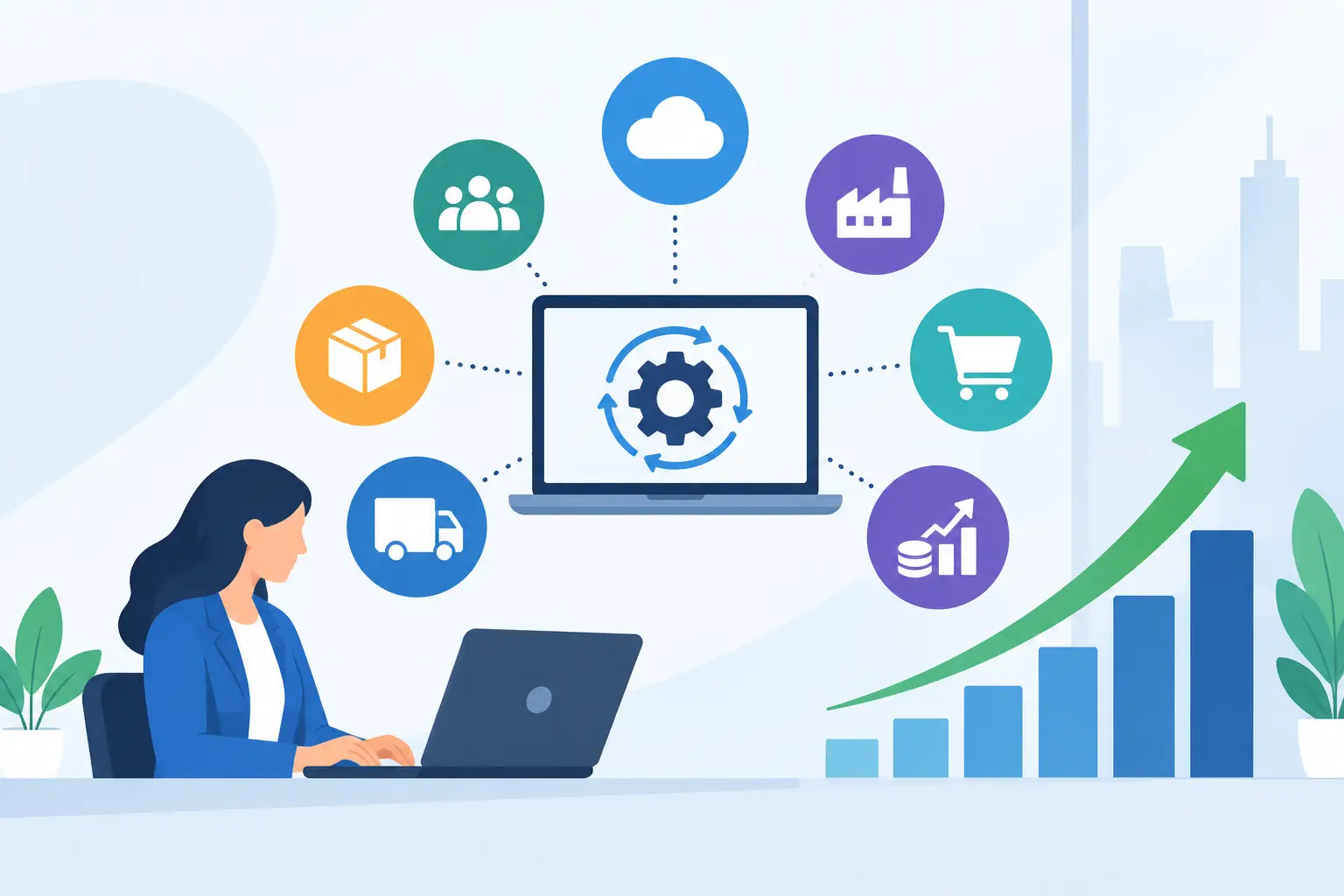
An ERP brings core processes into one operating platform. Sales can update inventory, inventory movements can inform purchasing, approved timesheets can flow into billing, and financial records can reflect operational activity without repeated manual handling. That connection is what turns software from a record-keeping tool into a practical management system.
What ERP software for small business should do
ERP is sometimes mistaken for software built only for large enterprises. In practice, a well-configured cloud ERP can be especially valuable for smaller organisations because it reduces the need to maintain multiple systems and helps teams establish disciplined processes early.
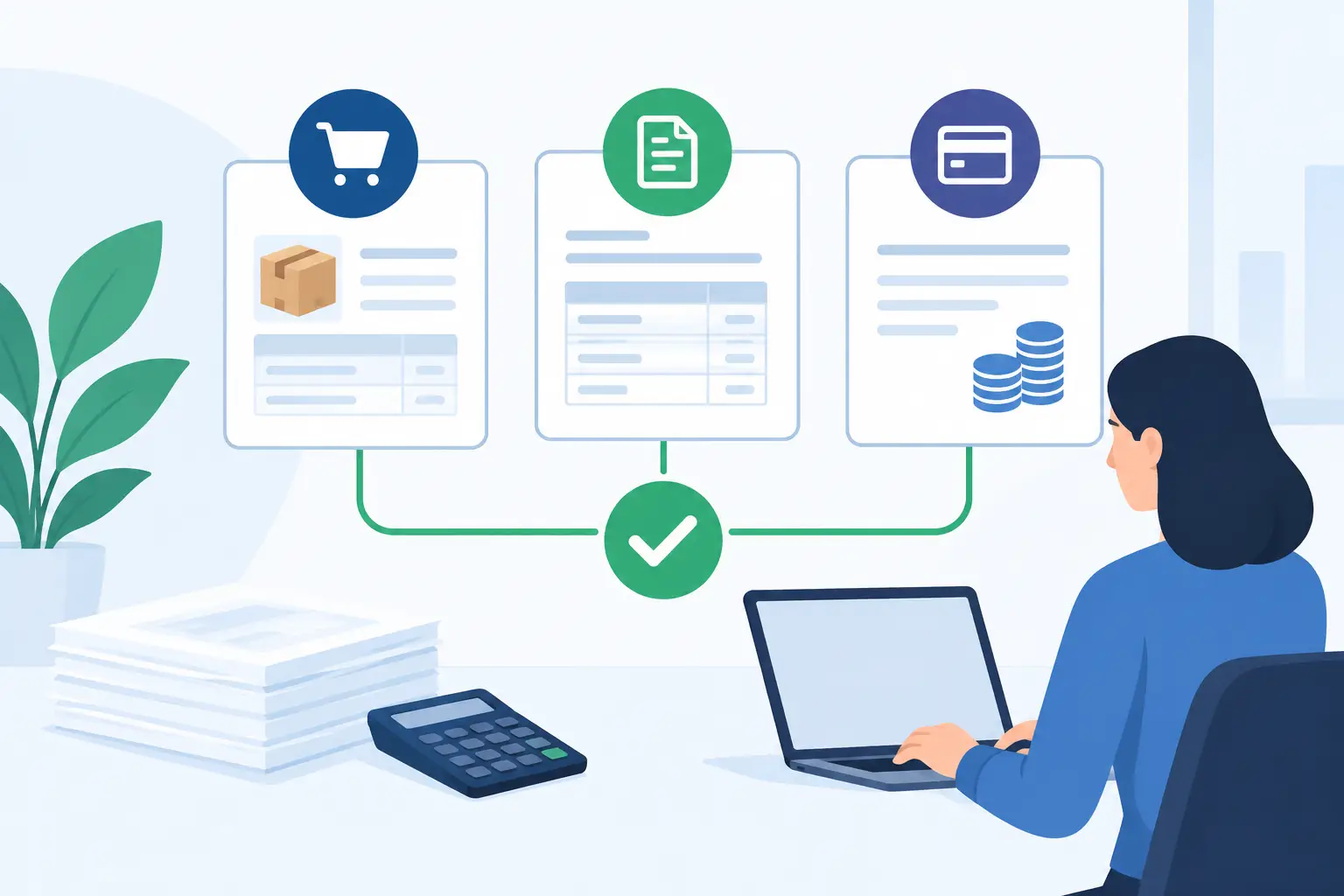
The foundation is usually financial accounting. This includes general ledger, accounts payable, accounts receivable, bank reconciliation, budgeting and reporting. However, finance should not sit apart from the rest of the operation. When invoices, purchase orders, stock receipts, job costs and payroll-related data are connected, finance teams spend less time chasing information and more time interpreting results.
Inventory and warehouse control are equally important where physical goods are involved. The system should support stock by location, reorder levels, serial or batch traceability where required, transfers, stocktakes and accurate valuation. For trading, wholesale and retail businesses, this improves fulfilment and purchasing decisions. For production businesses, it creates a dependable starting point for material planning and costing.
Project management, customer relationship management, sales quoting and billing may also belong in the same system. Professional practices can track time, expenses, budgets and client invoices against a job. Hospitality groups can connect purchasing, point of sale and stock consumption. Labour-hire businesses can manage workers, placements, timesheets, rates and customer billing with clearer controls.
The required modules depend on the operating model. A consultancy does not need the same production planning depth as a food processor, while a plantation needs different monitoring and traceability from a fashion retailer. A good ERP implementation starts with those practical differences rather than forcing every business into a generic workflow.
Start with operational pressure points, not a feature checklist
Buying decisions often go off track when teams compare long feature lists before agreeing on the processes that need attention. Most ERP platforms can produce invoices and purchase orders. The better question is where your team loses time, visibility or margin today.
Look at the moments where work changes hands. For example, when sales confirms an order, can operations immediately see what needs to be picked, made or booked? When goods are received, does the finance team know what can be matched and paid? When a machine records output, can production and management see actual performance against plan? These hand-offs expose the true cost of disconnected systems.
It helps to map a small number of high-value workflows before selecting a provider. Choose processes that affect cash flow, customer delivery, stock accuracy, labour cost or compliance. This might be quote-to-cash, procure-to-pay, plan-to-produce or timesheet-to-invoice. The aim is not to document every exception on day one. It is to identify the workflows where a connected system will make a measurable difference.
Choose fit, configuration and support over unnecessary complexity
Small businesses need room to grow, but they do not need to buy every possible capability upfront. A phased implementation often provides a stronger result than a broad rollout that overwhelms users. Start with the modules and integrations that solve the most pressing operational issues, then add planning, advanced analytics or sector-specific workflows as the business is ready.
Configuration matters because businesses operate differently even within the same industry. A production business may need approval rules, quality checks, batch tracking and bills of materials that reflect its actual floor processes. A warehouse may require scanning, location controls and customer-specific dispatch rules. The platform should adapt to necessary workflows without turning every small change into a costly custom development project.
There is also a trade-off between flexibility and simplicity. Highly customised software can fit every current process, including inefficient ones. Standard workflows are easier to maintain and train but may require teams to change familiar habits. The most practical approach usually keeps the platform close to proven industry processes while configuring the controls, fields, reports and approvals that genuinely differentiate the business.
Implementation support is part of the product decision. Data migration, chart-of-accounts setup, opening stock, user permissions, training and testing all affect whether the system becomes trusted. A provider should be prepared to understand operations, not merely install software. Teams need a clear plan for who owns decisions, how data will be cleaned and which reports must be correct from the first day of use.
Use real-time data without creating more reporting work
ERP data is useful only when people can understand and act on it. Operational leaders may need a view of overdue orders, available capacity, material shortages and work in progress. Finance teams may focus on cash position, aged debtors, margin and budget variance. Owners need the ability to move from a headline figure to the transaction or operational event behind it.
Cloud ERP platforms can combine embedded reports with tools such as Power BI for richer dashboards and analysis. This is valuable when the business wants to compare sales, labour, production output, stock turns and profitability across sites, customers or product lines. The goal is not to build a dashboard for every metric. It is to give each team a small set of timely measures that support better decisions.
AI can also be useful when applied to specific work. Voice-enabled assistants can help users retrieve information or complete routine actions, while AI and machine learning can identify patterns in demand, stock movement or production performance. These capabilities should support experienced people rather than hide the underlying records. If staff cannot trace a number back to its source, confidence in the system will fall quickly.
For industrial operations, machine and PLC connectivity can provide another level of accuracy. Capturing production counts, run time or machine status directly from equipment reduces manual reporting and gives planners a more current view of output. It is most valuable where machine data will change a decision, such as scheduling maintenance, investigating yield loss or improving production planning.
Build security and sustainability into the operating model
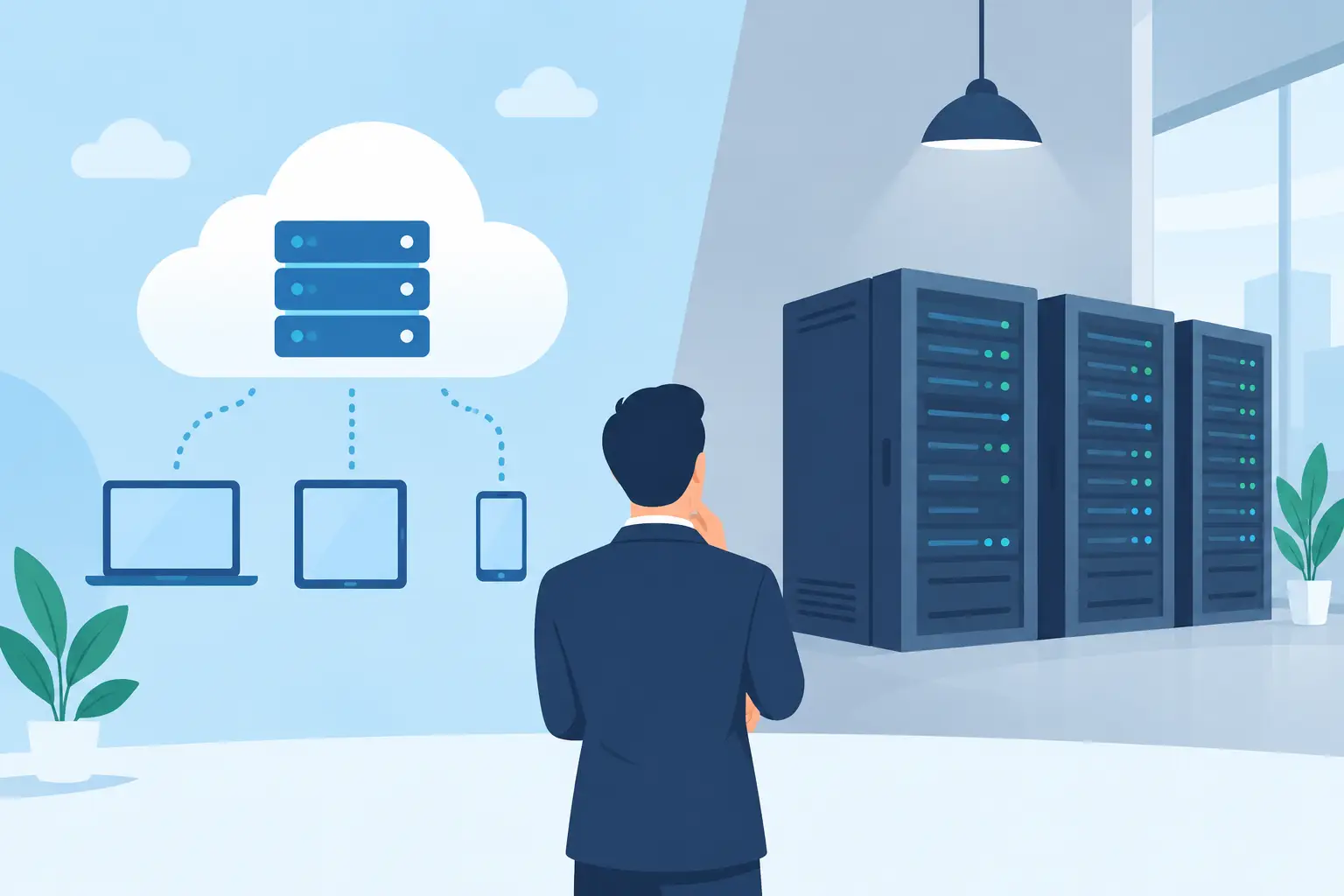
As more business activity moves into one cloud platform, access control becomes central. Users should see and change only the information needed for their role. Strong authentication, audit trails, monitored security operations, backup processes and tested recovery procedures are practical safeguards, not optional extras. They protect financial records, employee information, customer data and operational know-how.
Businesses with customer, supplier or regulatory reporting requirements may also benefit from carbon accounting built into their broader operational data. Energy use, transport, material consumption and production activity can be difficult to report accurately when they are scattered across separate spreadsheets. Connected data will not remove the work of measuring emissions, but it makes the reporting process more credible and easier to improve over time.
Make adoption a daily operational priority
A successful ERP rollout is not measured by the go-live date. It is measured by whether the warehouse team trusts the stock figures, whether managers use live information in planning meetings and whether finance can close the month with less manual reconciliation.
Training should be role-based and practical. A storeperson needs a different experience from an accounts officer or production planner. Use real scenarios, clear ownership and early feedback to address friction before it becomes workarounds. Retiring old spreadsheets is often difficult, but leaving them running as unofficial systems of record can quickly undo the benefits of ERP.
For businesses with complex operations, a platform such as OneBusiness can combine finance, inventory, production, projects, labour administration, analytics and industry-specific workflows in one managed cloud environment. The value is not in having more technology. It is in giving every team a connected system that reflects how the business actually operates.
The right next step is to choose one costly operational gap and examine it closely. When a business can see exactly where data is delayed, duplicated or disputed, it can select ERP capability that delivers control where it matters most.