A harvest can look profitable at the weighbridge and still lose money by the time it reaches the customer. If field tickets are handwritten, chemical records sit in separate files, and processed stock is adjusted after the fact, managers cannot confidently answer a basic question: which block, crew, inputs and production run created this sale? This plantation traceability case study shows how a connected operating system turns that question into a practical daily workflow.
The example is an illustrative composite based on the operating issues common to plantation and process-based businesses. It follows a mid-sized Australian grower and processor with multiple growing blocks, seasonal labour, an on-site packing or processing operation, and sales to wholesale customers. The business had capable people and plenty of data, but very little of it connected.
The operational problem was not just traceability
The business used spreadsheets for block plans and harvest estimates, paper field sheets for labour and crop activity, a standalone accounting package for invoices, and stock records maintained separately by the warehouse team. Each system did a job. Together, they created delays, duplicate entry and gaps that became costly during peak season.
A pallet could be identified once it reached the warehouse, but linking it back to the source block was inconsistent. A supervisor might know which crew harvested a batch, yet that information would not always flow through to receiving, grading, processing or despatch. If a customer queried quality, the team could spend hours calling supervisors, checking paper records and reconciling dates.
The finance team faced a different version of the same problem. Labour, fertiliser, fuel, irrigation and contractor costs could be recorded, but allocating them accurately to a block, crop cycle or production lot took time. Margins were therefore viewed at a high level, often after the period had closed. That is too late to change harvesting priorities, investigate yield variance or improve processing output.
The leadership team set three practical objectives: establish lot-level traceability from field to customer, reduce manual reconciliation, and give operations and finance one agreed view of cost and inventory.
Plantation traceability case study: designing the chain of custody
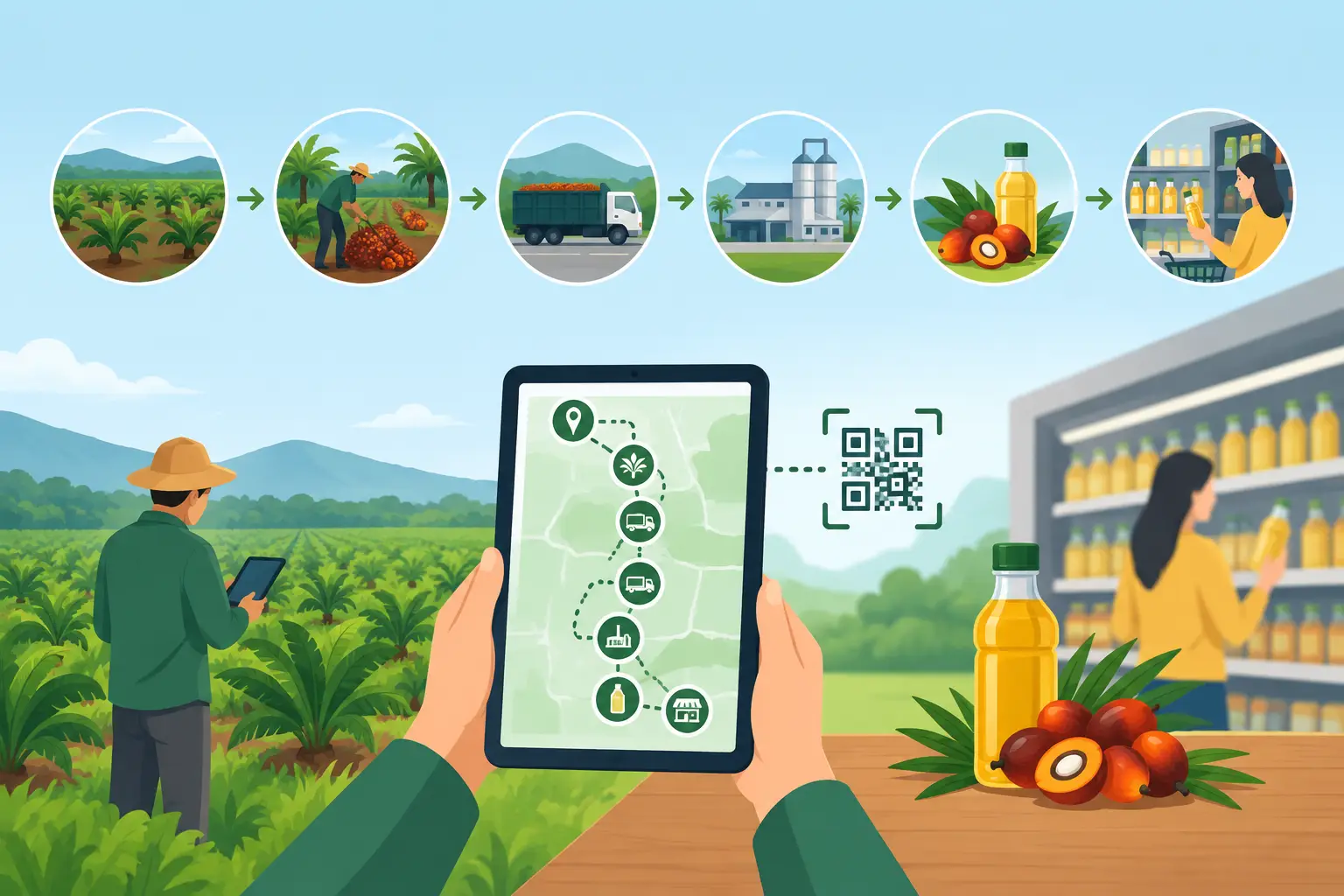
The project began with process design, not software screens. The team mapped the physical movement of product: block, harvest, collection point, receival, quality assessment, processing or packing, warehouse location, despatch and customer invoice. At each stage, they defined the minimum information needed to preserve the product’s history.
The key decision was to assign a harvest lot at the point of collection. The lot was associated with the growing block, crop or variety, harvest date, crew, supervisor and quantity. Mobile entry meant supervisors could capture the record in the field rather than re-key it at the end of a long shift. Where internet coverage was unreliable, the process needed an offline-capable option or a simple controlled paper fallback for later entry.
At receival, staff weighed and inspected each lot. The system recorded accepted quantity, quality grade, moisture or other relevant measures, and any rejection or waste. This mattered because a harvested quantity is not the same as saleable inventory. The difference between the two became visible immediately rather than appearing later as an unexplained stock adjustment.
Processing created the next important link. A production order consumed one or more harvest lots and generated finished lots, by-products and waste. For example, several field lots could be packed into a customer-ready product batch, while the system retained the relationship between the finished batch and its source material. This is where traceability becomes more than a label on a carton. It becomes a record of transformation.
The warehouse team then received finished goods into defined locations and used lot information during picking and despatch. Sales invoices carried the lot details associated with the order. If a customer raised a query, the business could search from the invoice backwards to the processing batch and field block, or from a field lot forwards to every affected customer shipment.
The data that made the difference
Traceability only works if master data is disciplined. The business standardised block codes, crop varieties, units of measure, grades, warehouse locations and customer product specifications. It also made responsibility clear: operations owned field and production events, warehouse staff owned stock movements, and finance governed costing and period controls.
This sounds administrative, but it removed many of the errors that create mistrust in reports. A block described as “North 2”, “N2” and “North Block 2” in different spreadsheets is not three data points. It is one operating asset that has been made difficult to analyse.
The ERP also captured input use against blocks and activities. Fertiliser, crop protection products, fuel, equipment time, contractor charges and labour could be attributed to the relevant work order or field activity. Depending on the operation, irrigation readings, machine data or PLC-connected processing equipment could add production measures automatically. The right level of detail depends on the value at risk. A small operation may start with block, date and labour hours; a highly regulated or export-focused operation may require more granular batch and compliance records.
What changed for the field, warehouse and finance teams
For field supervisors, the change was not more reporting for its own sake. A structured mobile workflow replaced end-of-day reconstruction. Supervisors could see assigned work, record crew time and confirm harvested quantities while the activity was fresh. Management gained a clearer picture of which blocks were completed, what was awaiting collection, and whether actual volumes were tracking against harvest plans.
For warehouse and processing teams, lot-controlled inventory reduced guesswork. Stock on hand was separated by grade, location and status, including product held for quality review. Production records showed expected versus actual yield, helping managers identify where losses were occurring. If a finished batch underperformed, the team could investigate source lots, shift conditions, handling or machine settings rather than accepting a broad variance at month end.
For finance, the benefit was earlier and more credible cost visibility. Labour and input transactions flowed into the same platform as inventory and production activity. The finance team could review work-in-progress, inventory value and cost movements without waiting for several departments to submit spreadsheets. Power BI reporting then gave owners and department heads views by block, crop, grade, production run, customer and period.
The business also found that traceability supported better commercial conversations. A customer requesting a particular grade, source area or harvest window could be answered with evidence. Sales staff could check available lots before promising stock. Where quality issues arose, the business could isolate only the affected product instead of placing unnecessary holds on a wider inventory pool.
The trade-offs that determine whether a project succeeds
More detail is not automatically better. Capturing every field observation can slow a crew down and reduce adoption. The useful question is: what information is needed to meet compliance, quality, cost and customer requirements, and who can realistically record it at the point of work?
Labelling is another practical trade-off. Basic printed lot labels may be enough for some businesses. Barcode scanning provides speed and fewer keying errors as volumes increase. RFID can suit high-throughput environments, but its cost and process design need to be justified. A good implementation starts with the simplest method that can be used consistently through dust, rain, cold rooms and busy despatch periods.
Historical data also needs restraint. Migrating every old spreadsheet often delays the project without improving daily operations. This business brought across current blocks, active products, opening inventory, relevant customer details and agreed cost baselines. Older records were retained for reference, while the new system became the operational source of truth from a defined cutover date.
Change management was equally important. The project used pilot blocks and a limited set of users during a quieter period, then refined screens, labels and approval rules before the main harvest. Training was role-based: supervisors learned activity and labour capture; warehouse staff learned scanning and lot movement; finance learned controls, costing and reporting. That approach was more effective than a generic software demonstration.
A connected platform makes traceability useful
Plantation traceability has value when it supports action, not when it creates another compliance register. A cloud ERP such as OneBusiness can bring field activities, labour hire, inventory, production, sales, financial accounting and analytics into one operating environment. Configurable workflows allow the system to reflect how a specific plantation collects, grades, processes and sells product, rather than forcing teams into disconnected workarounds.
The same connected data can also support carbon accounting. When fuel, fertiliser, energy and production activity are recorded against known blocks and batches, an organisation has a stronger base for measuring operational emissions and responding to customer or reporting requirements. The figures still require appropriate methodology and governance, but the raw operational evidence is no longer scattered across departments.
The most useful outcome is confidence at the point of decision. When a manager can see the available grade, source lot, processing yield, labour cost and customer commitment in one place, they can make a call before the opportunity or issue has passed. Start with one chain of custody, make it reliable, and let the discipline of connected records improve the rest of the operation.