A dry block rarely announces itself in a spreadsheet. It shows up first in uneven growth, stressed leaves, slower fruit development or a pump running longer than expected. By the time those signals reach the office, the irrigation decision that caused them may be days old. Plantation irrigation monitoring gives managers a clearer view of what is happening across fields, pump stations and water storage while there is still time to act.
For plantation businesses, irrigation is not simply a farm activity. It affects yield quality, labour scheduling, electricity use, maintenance planning, compliance and the cost of every tonne harvested. The challenge is turning data from the field into a decision that operations, finance and management can trust.
Why plantation irrigation monitoring matters
Plantations often manage large areas with different soil types, crop ages, slopes, irrigation zones and water requirements. A schedule that is suitable for one block may be excessive or insufficient for the next. Manual checks remain valuable, but they cannot provide a continuous picture across every valve, tank and pump.
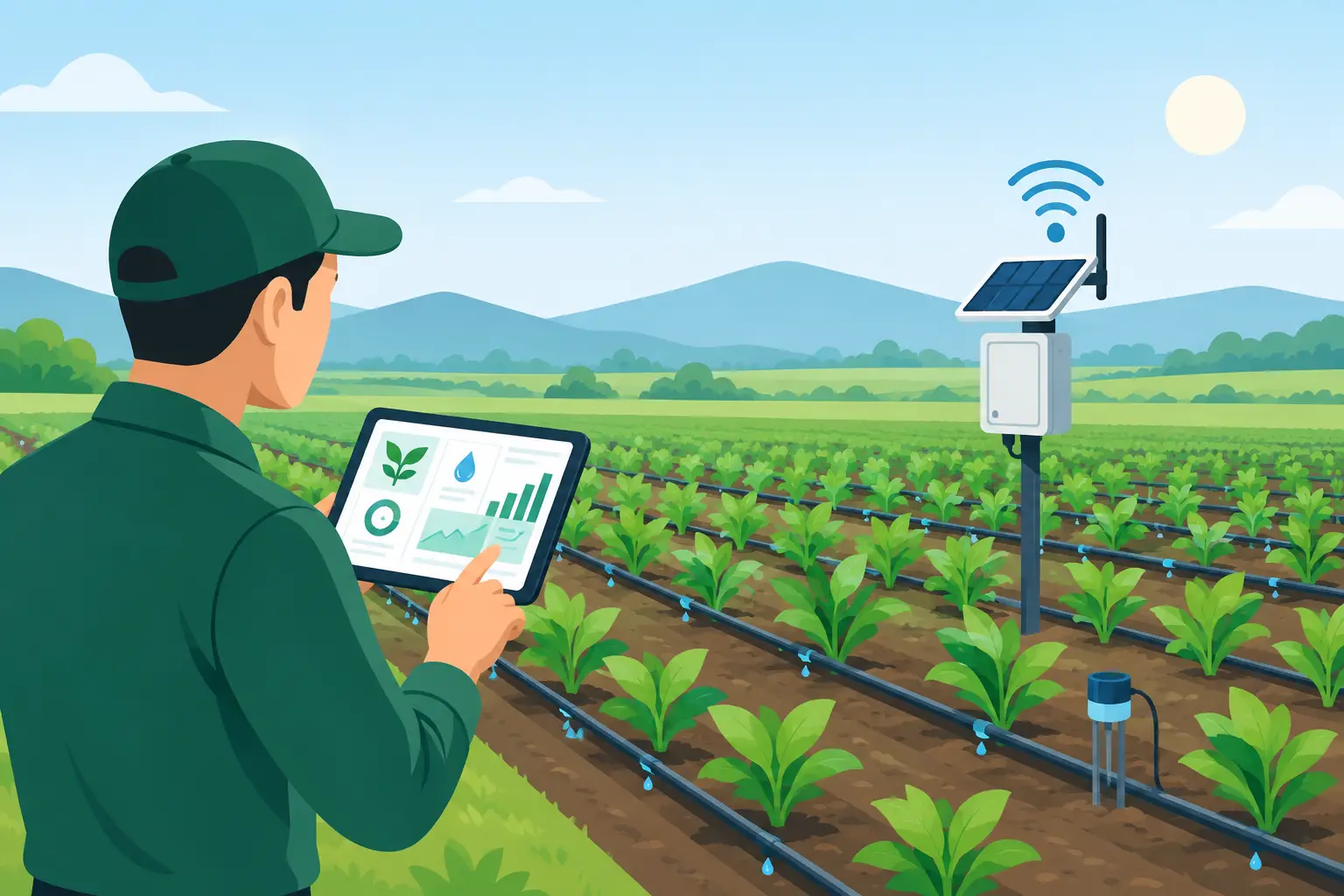
Monitoring creates that picture by bringing together readings such as soil moisture, rainfall, flow, line pressure, pump run time and reservoir level. When those readings are compared with irrigation plans and crop stages, managers can identify whether water is reaching the intended area and whether the result matches expectations.
The commercial value comes from avoiding small losses that compound over a season. A blocked filter, leaking lateral line or incorrectly timed cycle can waste water and power before anyone sees a visible issue. It can also create avoidable labour, maintenance and yield costs. Reliable monitoring helps teams find exceptions early rather than relying on end-of-month reports or field complaints.
Start with the operating decisions, not the sensors
A common mistake is installing sensors first and deciding later what the data should achieve. This can leave a business with colourful dashboards but no agreed response when a reading falls outside the expected range.
Begin with the decisions that need better information. For example, a plantation manager may need to know which blocks require irrigation today, whether a pump is running outside schedule, or whether water use per hectare is rising. A maintenance team may need early warning of pressure changes that suggest a leak, blockage or pump issue. Finance may need an accurate view of water, energy and labour cost against a crop, block or harvest cycle.
These questions define the data required and the level of monitoring that is worthwhile. A smaller operation may gain immediate value from flow meters, pump status and a daily irrigation record. A larger estate with multiple water sources may justify soil probes, automated valves, telemetry, weather data and machine integration. The right design depends on crop type, water availability, infrastructure age and the consequences of missed irrigation.
Establish a useful baseline
Before automation changes the process, record how irrigation currently operates. Capture the intended schedule, actual run times, water source, pump capacity, pressure ranges, labour involved and known problem areas. This baseline makes it possible to assess whether monitoring is improving the operation rather than merely producing more data.
It also exposes process gaps. If the team cannot consistently confirm which block was irrigated, for how long and by whom, advanced analytics will not fix the underlying record-keeping issue. Standardised block names, irrigation zones, asset IDs and crop records are essential foundations.
Connect field readings to the wider plantation operation
Irrigation data has limited value when it sits in a separate mobile app or a controller portal that only one person can access. The real benefit comes when field events are connected to operational records.
For example, an irrigation cycle can be linked to a specific block, crop variety, growth stage and water source. Pump run time can be associated with electricity consumption and maintenance history. Labour used for inspections and repairs can be recorded against the relevant asset or work order. When harvest results are later entered, managers have a stronger basis for analysing the relationship between irrigation activity, input costs and production outcomes.
This does not mean every reading needs to become an accounting transaction. High-frequency sensor data should be stored and summarised intelligently. The key is to retain the events and exceptions that matter operationally, then make them available for reporting alongside inventory, labour, production and financial data.
An integrated platform such as OneBusiness can support this approach by bringing operational workflows, machine or PLC data, maintenance activity and financial reporting into one cloud environment. Instead of reconciling separate records at month-end, teams can work from a shared view of the plantation.
Use alerts that lead to action
An alert is useful only when someone understands what it means and has authority to respond. Too many notifications condition staff to ignore them. Too few allow costly issues to continue unnoticed.
Set thresholds around practical exceptions: unusually low pressure during an active cycle, flow that is higher than expected for a zone, a pump operating beyond its planned run time, low storage levels, or soil moisture remaining below target after irrigation. Each alert should have an owner, a response time and a simple process for recording the outcome.
Not every exception indicates a fault. Heavy rain may make a planned cycle unnecessary. A seasonal change may justify a different soil moisture target. This is where experienced growers and field staff remain central. Monitoring should support their judgement, not replace it with a rigid rule.
Balance automation with field verification
Automatic irrigation can improve consistency and reduce routine manual work, particularly where labour is stretched across wide plantation areas. However, automation is only as dependable as its inputs, communications and maintenance.
Field verification still matters. Sensors can drift, batteries can fail, valves can stick and network coverage can be inconsistent in remote areas. Regular checks should confirm that dashboard readings reflect real conditions. Teams should also maintain a fallback process for operating critical irrigation assets during outages.
The best operating model combines automated measurement and control with accountable field inspection. It gives supervisors better priorities for their daily rounds instead of asking them to inspect every area with equal urgency.
Turn monitoring into better planning and cost control
Once irrigation records are consistent, reporting can move beyond daily troubleshooting. Managers can compare water applied against plan by block, identify assets with rising energy use, review downtime patterns and assess irrigation costs against crop output.
Power BI reporting can make these patterns visible to operational leaders without forcing them to work through raw sensor files. A dashboard might show water consumption by plantation area, open maintenance issues, pump efficiency trends and irrigation activity against forecast weather. Finance teams can then assess the cost implications alongside payroll, fertiliser, fuel and harvest revenue.
Carbon accounting is also becoming more relevant for businesses seeking better environmental reporting. Pump electricity, diesel use and water-related energy consumption can be measured more accurately when operational data is connected to asset and cost records. The aim is not to create another compliance exercise. It is to give the business a credible baseline from which it can reduce waste and report with confidence.
Build the implementation around adoption
A monitoring project succeeds when supervisors, irrigators, maintenance staff and managers use the information as part of normal work. That requires straightforward screens, clear responsibilities and training that relates to real decisions in the field.
Roll out in stages where possible. Start with a high-value area such as the blocks with the highest water use, the most unreliable infrastructure or the greatest yield risk. Test data quality, alert thresholds and response procedures through one irrigation cycle before expanding across the estate.
Cybersecurity should also be considered from the start. Connected pumps, controllers and remote access points are operational assets, not just IT devices. Access controls, secure configuration, monitored connectivity and clear user permissions help reduce the risk of unauthorised changes or lost data.
Plantation irrigation monitoring works best when it becomes part of the operating rhythm: check exceptions, verify conditions, act quickly, record the outcome and use the result to plan the next cycle. That discipline gives plantation leaders something more valuable than another dashboard – control over one of their most critical inputs.