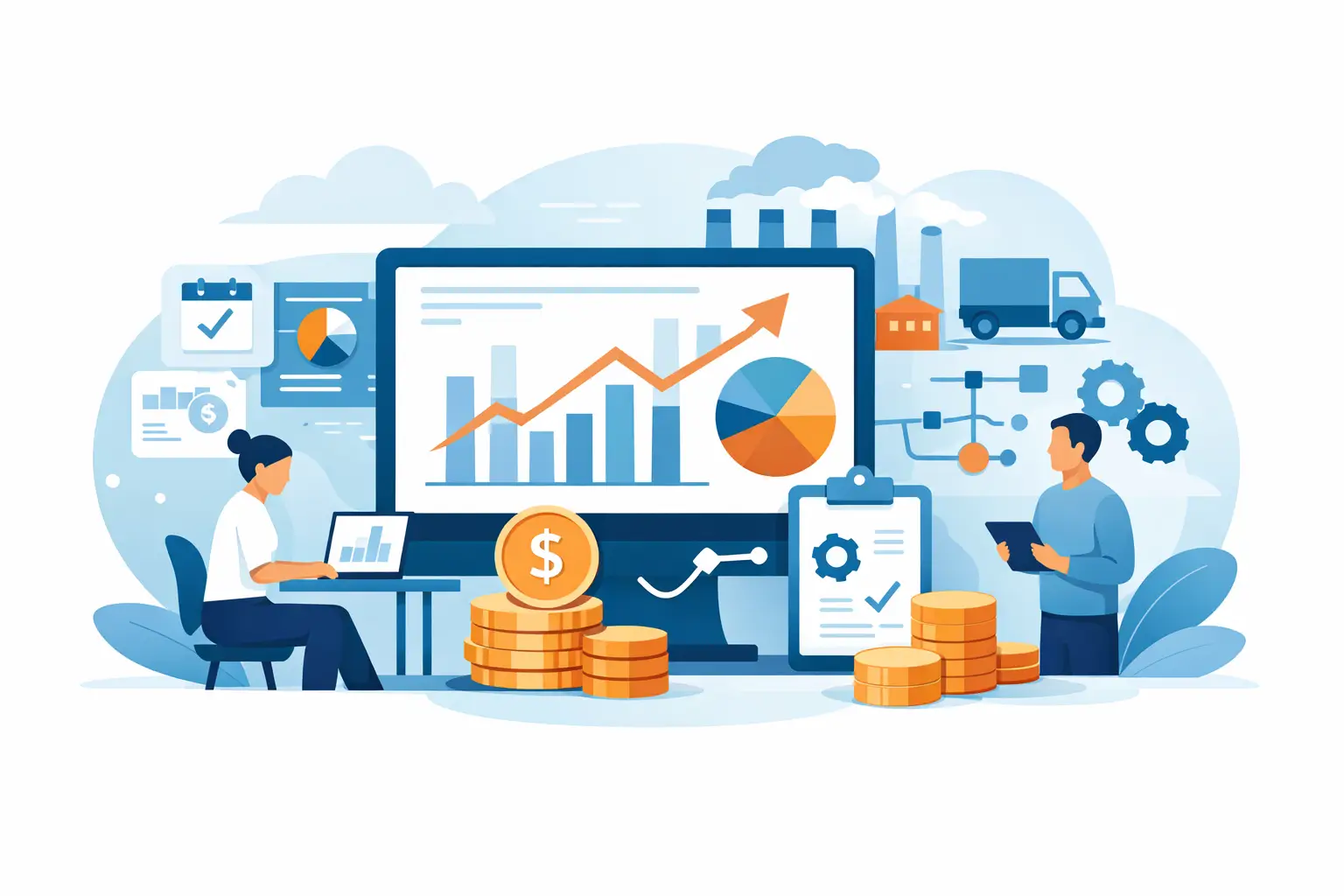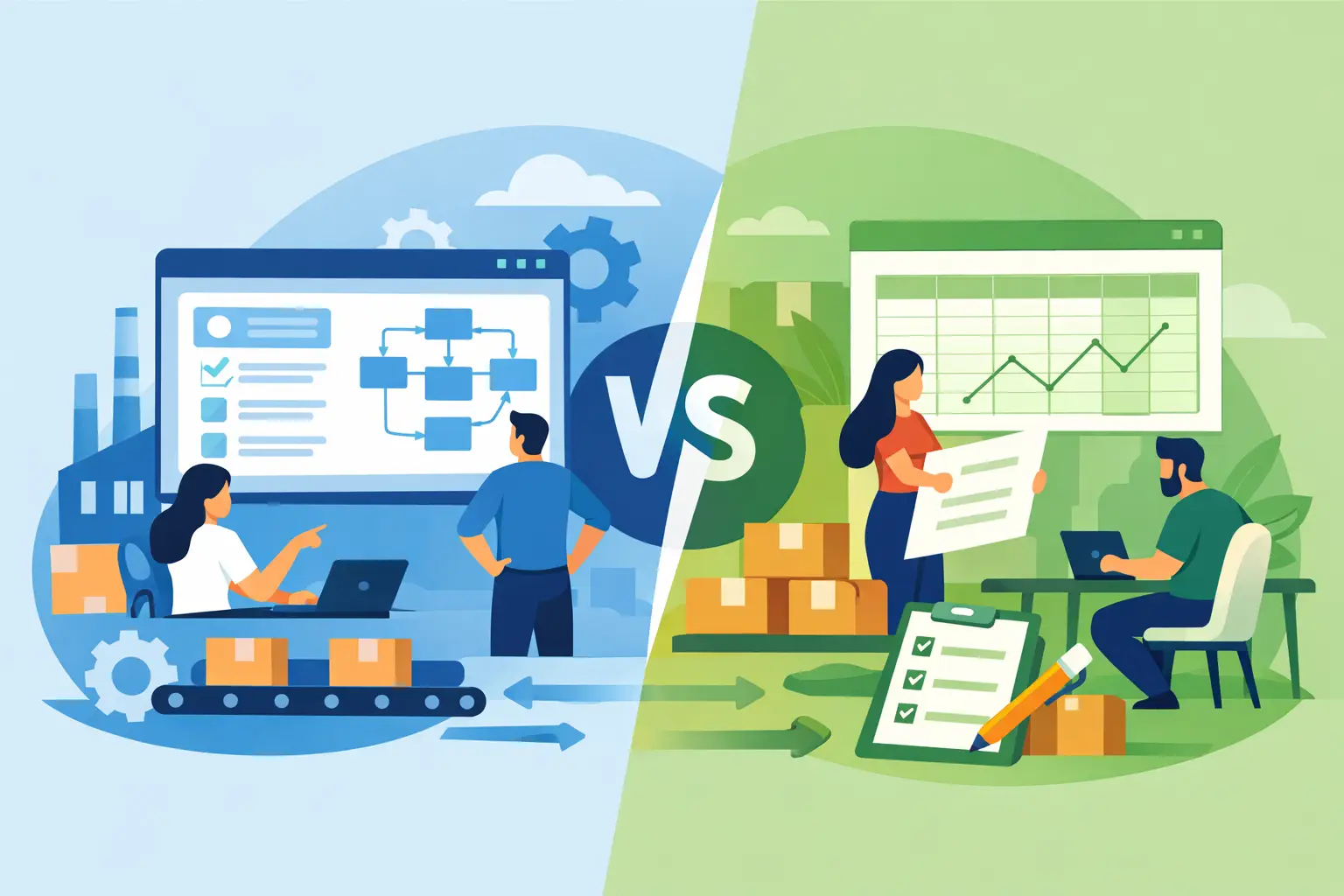
When a stock count does not match the accounting system, production is tracked on paper, and sales staff keep customer updates in another app, the ERP vs point solutions decision stops being an IT discussion. It becomes an operational control issue. For growing Australian businesses, the right choice affects how quickly teams can invoice, replenish stock, schedule labour, trace production and make decisions with confidence.
Point solutions can solve a real problem quickly. A standalone accounting package, rostering tool, warehouse app or point-of-sale system may be affordable and familiar. But as operations become more complex, each additional system introduces another hand-off, another integration and another version of the truth to reconcile.
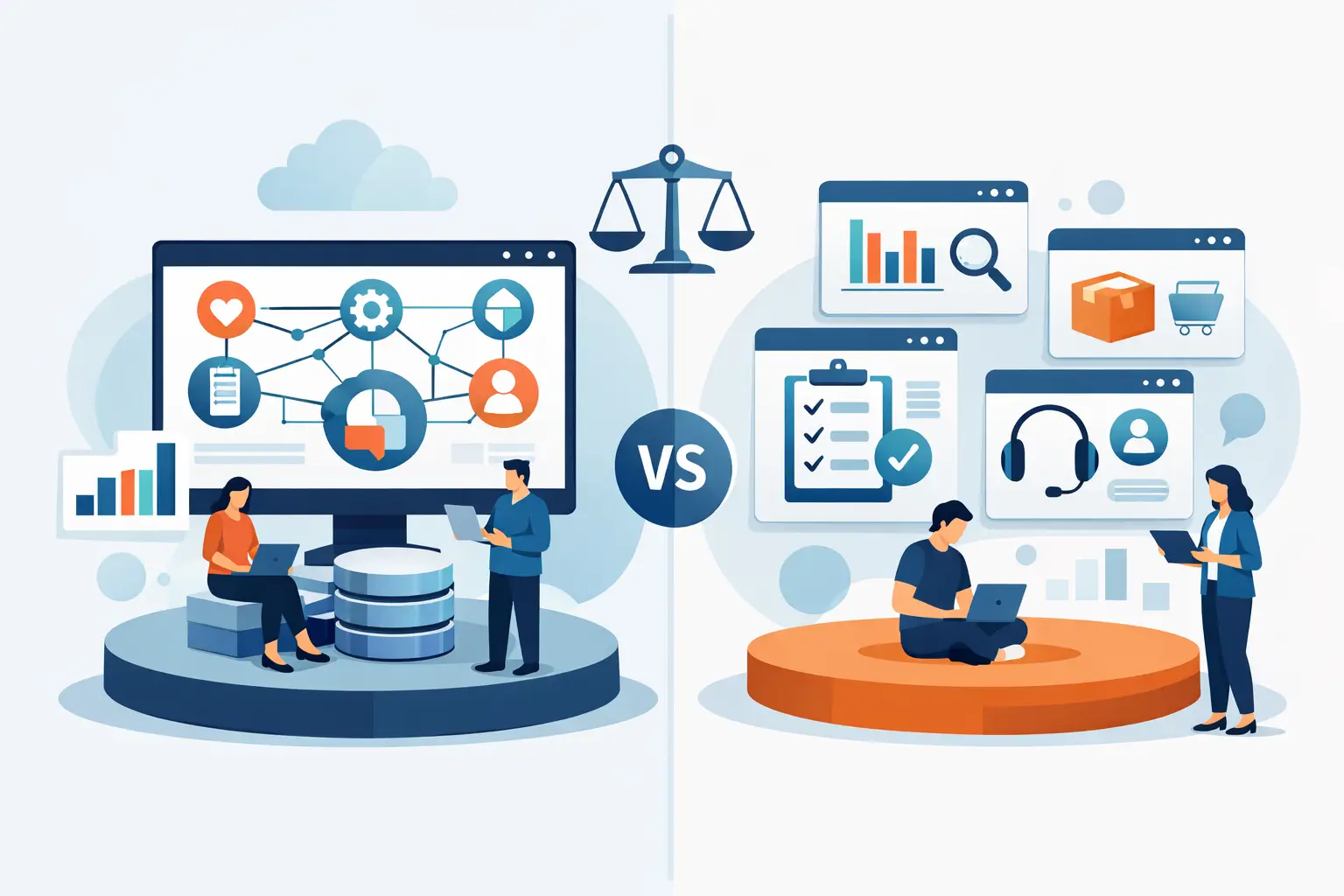
ERP vs point solutions: the practical difference
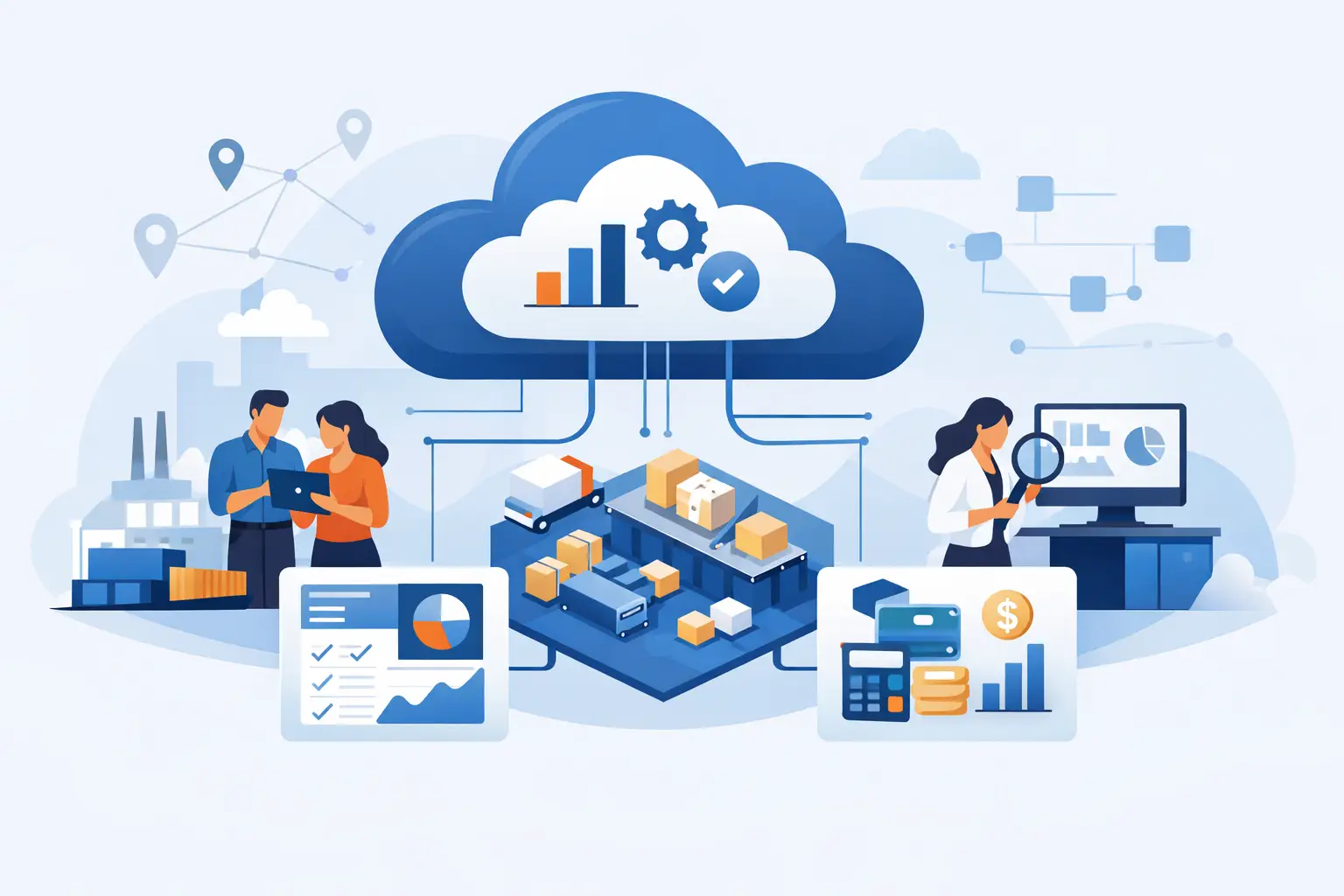
An ERP brings core business processes into one connected platform. Finance, purchasing, inventory, sales, production, projects, payroll-related labour data and reporting draw from shared records. When a goods receipt is entered, stock levels, purchase costs and financial data can update together. When production consumes raw materials, the business can see the impact on inventory and margins without waiting for a spreadsheet refresh.
Point solutions focus on a specific function. They are often strong at that function: a retail POS may handle counter transactions well, a specialised scheduling tool may suit a labour-hire team, and a machine-monitoring product may collect factory data effectively. The issue is not that point systems are inherently poor. The issue is whether they can work together reliably as the business scales.
For a small business with simple workflows, separate tools may be entirely reasonable. For a manufacturer managing bills of materials, work orders, quality checks and multiple warehouses, the same setup can create delays and blind spots. The more frequently information must move between departments, the stronger the case for a connected ERP.
Where point solutions make sense
A point solution is often the sensible choice when the requirement is narrow, stable and unlikely to affect other parts of the business. A professional practice that only needs appointment reminders, for example, may not need to replace its whole business system. Likewise, a specialist application may be necessary where it provides technical capability that a broader platform does not.
They can also offer a fast route to improvement. If a team is relying on a shared spreadsheet for a simple task, a focused cloud app can reduce manual work within days. The upfront cost can be lower, implementation is usually lighter, and staff may find the interface easy to learn.
The trade-off appears when the data matters outside that one team. A sales app needs customer credit status from finance. A warehouse tool needs confirmed orders and purchase receipts. A production system needs current material costs and completed quantities. If those updates rely on exports, rekeying or overnight synchronisation, people are left making decisions from incomplete information.
The hidden cost of disconnected software
Subscription fees are only part of the cost of a software stack. Businesses should also account for the time people spend checking data, correcting errors and chasing updates across systems. These tasks are rarely visible as a single line item, but they affect cash flow, customer service and management confidence.
Consider a trading business with separate sales, inventory and accounting tools. An order may be marked as available in the sales system even though stock has been allocated elsewhere. The warehouse team then has to investigate, the customer receives a delayed update, and finance may not see the true cost position until the next reconciliation. None of these failures is dramatic on its own. Repeated across hundreds of orders, they become expensive.
Disconnected systems also make reporting harder. Finance may report revenue one way, operations may report output another way, and managers may spend meetings debating which figure is correct. A connected ERP does not remove the need for good process discipline, but it gives teams a common data foundation. With Power BI analytics or built-in dashboards, leaders can move from static reports to current views of stock, production, sales and margins.
Why integration matters in operational industries
Integration becomes more valuable where physical activity drives financial outcomes. In manufacturing, it may mean linking production orders to material consumption, machine readings, labour time and finished-goods inventory. In plantations and processing operations, it can mean tracking harvests, batches, yields, dispatches and associated costs. In hospitality and retail, it can mean connecting POS transactions, stock movement, purchasing and financial reporting.
For industrial businesses, integration may extend beyond software. PLC and machine connectivity can bring production data into the operating platform, reducing reliance on manual records and helping supervisors compare planned output with actual performance. This supports traceability, maintenance planning and more accurate costing, provided the source data and workflows are properly configured.
The same principle applies to labour-hire businesses. Timesheets, placements, award conditions, billing and payroll preparation need consistent information. If hours are approved in one system and invoiced in another, exceptions can slip through. A single operating view helps teams identify missing approvals, unbilled shifts and margin issues earlier.
ERP is not automatically the better choice
An ERP can create real value, but it is not a cure for unclear processes. Replacing several familiar applications with one large system without reviewing workflows can simply centralise existing problems. A rushed implementation may lead to poor data, reluctant users and costly customisation.
Businesses should also avoid buying far more capability than they need. A company with straightforward invoicing, one stock location and no production requirements may not need complex manufacturing or project modules on day one. The better approach is to select a platform that fits current priorities and can expand as requirements change.
Configuration matters here. Operational industries have different terminology, approvals, units of measure and compliance needs. A tannery, garment washing facility and wholesale distributor may all require inventory and finance, but their batch tracking, production stages and costing rules are not identical. A configurable ERP can provide common controls without forcing every business into the same workflow.
How to make the decision
Start with the work that currently breaks down between systems, not with a feature checklist. Ask where teams re-enter data, where reporting takes too long, where stock or labour information is unreliable, and which decisions are delayed because information is unavailable. These are the processes most likely to benefit from a connected approach.
Then consider the direction of travel. If the business is adding locations, warehouses, production lines, online sales channels or new service offerings, the software choice should support that growth. A collection of point tools can work for a time, but integrations become harder to manage as transaction volumes and process variations increase.
Data ownership deserves equal attention. Confirm where customer, product, pricing and financial records are maintained, who is responsible for data quality, and how changes flow through the organisation. If every department maintains its own master data, reporting and automation will remain fragile regardless of the software selected.
Security and support should be part of the commercial assessment as well. Cloud software does not remove cyber risk. Businesses need clear access controls, backup practices, monitoring and a provider that can support the platform after go-live. For organisations handling commercially sensitive operational and financial data, managed security services and clear accountability can be as valuable as a feature set.
Building one connected operating view
The strongest ERP business case is usually not about replacing every specialist tool immediately. It is about establishing a dependable operational core. Finance, customer orders, purchasing, inventory, production and reporting should work from the same records. Specialist systems can then be retained or integrated where they add genuine value.
This model gives growing businesses flexibility without accepting avoidable fragmentation. AI-enabled assistance can help users retrieve information and complete routine tasks, while analytics can highlight exceptions that require human judgement. Carbon accounting can also be incorporated into operational reporting where customers, regulators or internal targets require better visibility of emissions data.
OneBusiness is designed for this practical middle ground: a cloud ERP platform that connects standard business functions with industry-specific workflows, machine data and configurable reporting. The goal is not to make operations more complicated. It is to give finance and operational teams a clearer, shared view of the work already happening.
A useful next step is to map one end-to-end process, such as quote to cash, purchase to pay or raw material to finished goods. Follow the data, the approvals and the hand-offs. The points where people stop to copy, check or reconcile information will show whether another point solution is enough, or whether the business is ready for a connected ERP foundation.