
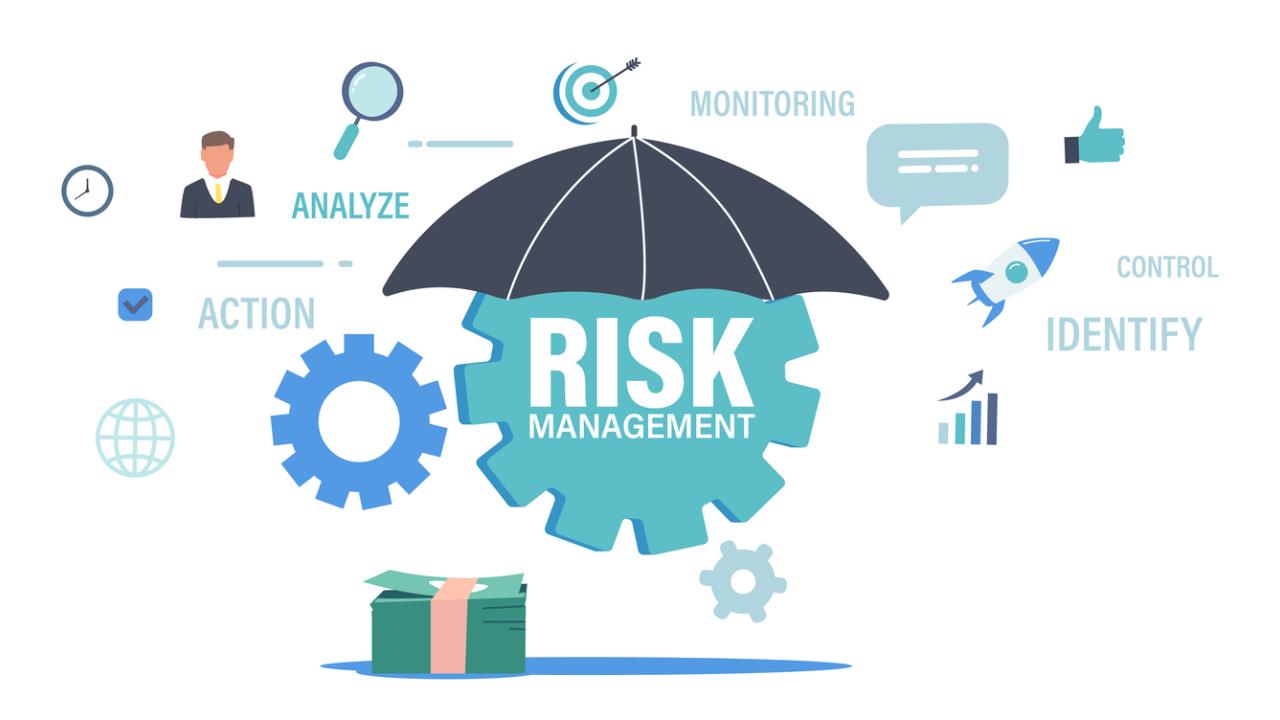
Risk Management Using OneBusiness ERP
Introduction
Effective risk management is essential for every organization because projects can face unexpected challenges that may affect cost, schedule, quality, resources, and overall business performance. Identifying potential risks at an early stage and taking appropriate corrective action can help organizations minimize losses and improve project success.
OneBusiness ERP offers an integrated Portfolio to Payment software solution developed using PHP Laravel technology. Organizations can choose between cloud-based and on-premise deployment based on their business requirements. The user-friendly and easy-to-navigate application supports several important business processes, including portfolio management, project management, Agile methodology, budgeting, timesheets, project risk management, procurement, sales orders, reports, and dashboards.
One of the significant features of OneBusiness ERP is Project Risk Management. The Risk Management module helps users identify, evaluate, monitor, and control risks associated with projects. It provides a structured approach to managing risks throughout the project lifecycle.
The Project Risk Management feature consists of three major elements:
-
Risk Register
-
Quantitative Risk Analysis
-
Qualitative Risk Analysis
These features allow project teams to maintain risk information, evaluate potential impacts, and develop suitable mitigation plans.
Risk Register
The Risk Register provides a centralized dashboard where users can view projects and their associated risks. It gives project managers a consolidated overview of important risk information, making it easier to monitor and manage risks from a single location.
The dashboard can display information such as:
-
Risk Category
-
Risk ID
-
Project ID
-
Risk Status
-
Risk Score
-
Risk Description
-
Mitigation Plan
Users can view, edit, or delete existing risks from the risk dashboard. The system also allows users to filter risks based on relevant information, making it easier to locate specific risks across multiple projects.
A project can have multiple risks, and each risk can be assigned to an appropriate risk category. By maintaining a centralized risk register, organizations can ensure that project risks are properly documented and continuously monitored.
The Risk Register also helps project managers identify high-priority risks and take timely action before they have a significant impact on project objectives.
Quantitative Risk Analysis
Quantitative Risk Analysis helps organizations evaluate risks using measurable financial or numerical values. This approach can be useful when project teams need to understand the potential financial impact of a particular risk.
In OneBusiness ERP, users can maintain relevant risk information based on the estimated loss associated with a risk. Based on the entered values, the system can calculate the risk score.
The calculated risk score helps project teams understand the potential severity of a risk and prioritize their response accordingly. Higher-risk items can be monitored more closely and assigned appropriate mitigation actions.
Users can also maintain and track the risk status and mitigation plan. This makes it easier to monitor whether the planned actions have been completed and whether the risk continues to require attention.
Quantitative risk analysis can support better decision-making because project managers can evaluate potential losses and allocate resources toward risks that may have a greater financial impact.
Qualitative Risk Analysis
Qualitative Risk Analysis evaluates risks based on factors such as likelihood and consequences. Instead of focusing only on financial values, this approach helps project teams assess how likely a risk is to occur and how serious its impact could be.
In OneBusiness ERP, the risk score can be automatically calculated based on the likelihood and consequences entered by the user. This simplifies the risk evaluation process and provides a consistent method for assessing project risks.
Every risk is associated with a specific project. A project can contain multiple risks and different risk categories. Users can maintain the risk details and continuously track the associated mitigation plan.
For example, a project team may identify a risk that has a high likelihood of occurring and a significant consequence. The system can help identify the risk score so that the project team can prioritize it and take appropriate preventive or corrective action.
Qualitative risk assessment is particularly useful during the early stages of project planning because it helps teams identify and prioritize risks even when precise financial information is not available.
Risk Mitigation and Monitoring
Identifying a risk is only the first step in effective Project Risk Management. Organizations must also define appropriate mitigation strategies and continuously monitor the status of identified risks.
OneBusiness ERP allows users to maintain mitigation plans for project risks. Project teams can track the progress of these actions and update risk information as the project develops.
Regular monitoring helps organizations determine whether a risk is increasing, decreasing, or has already been resolved. This provides project managers with better visibility and allows them to take timely action when required.
Risk Management Reports
OneBusiness ERP also provides additional reports related to Risk Management as part of its reporting module. These reports can help management and project teams analyze risk information and monitor project risk performance.
By combining risk registers, quantitative analysis, qualitative analysis, mitigation planning, and reporting, OneBusiness ERP provides organizations with a structured approach to managing project risks.
Conclusion
Effective Project Risk Management helps organizations reduce uncertainty, minimize potential losses, and improve project outcomes. OneBusiness ERP provides an integrated solution that allows organizations to identify, assess, monitor, and manage project risks from a centralized platform.
With features such as the Risk Register, Quantitative Risk Analysis, and Qualitative Risk Analysis, project teams can evaluate risks based on different criteria and develop suitable mitigation plans. The centralized dashboard and reporting capabilities also provide greater visibility into project risks.
By using OneBusiness ERP for risk management, organizations can improve project monitoring, support informed decision-making, and take proactive action against potential risks.
For more information about OneBusiness ERP Risk Management, please visit the OneBusiness Risk Management page.
Follow KSA Tech Consulting on social media for updates, ERP insights, and business technology information:
Facebook: KSA Tech Consulting on Facebook
LinkedIn: KSA Tech Consulting on LinkedIn